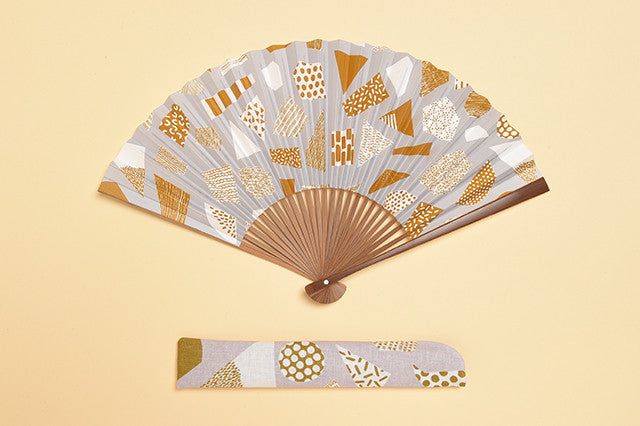
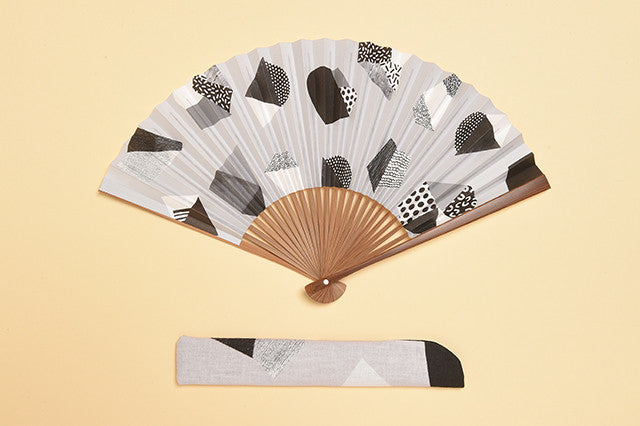
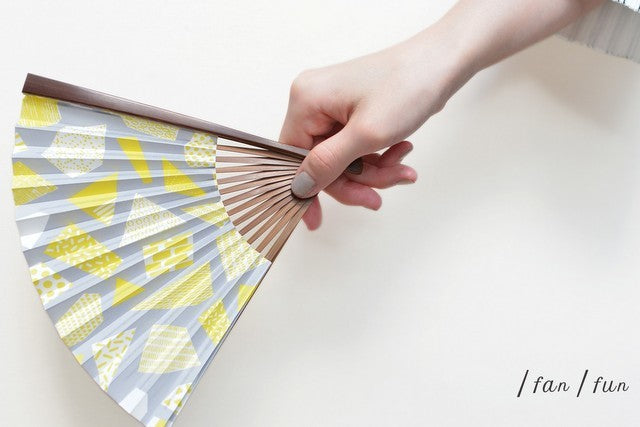
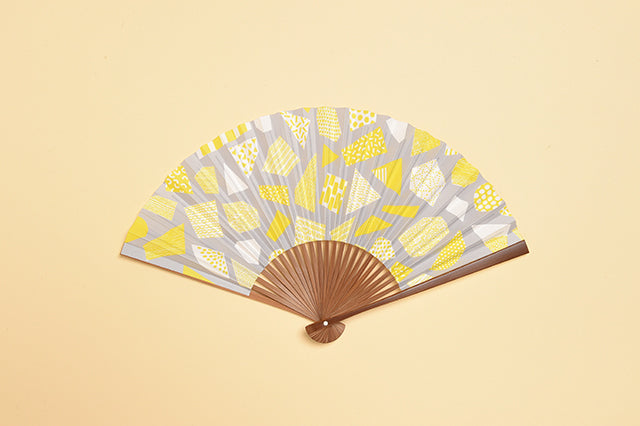
/fan/fun: Kyoto Folding Fans, Made by Hand
We visited Minoya Senpo, a long-established folding fan maker and wholesaler in Kyoto, founded in 1894. In 2017, it launched its first-ever own brand, /fan/fun. We learned about Kyoto fans, the story behind the brand, and watched them being made.

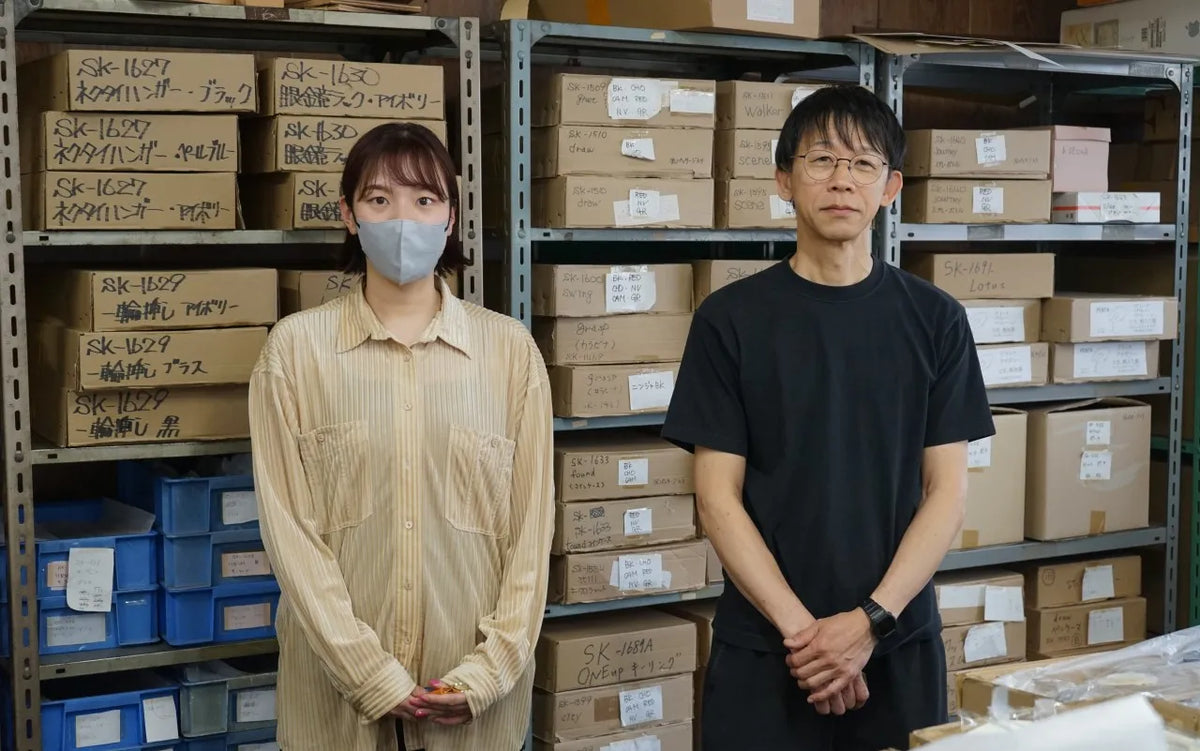
Mr. Chiba, the son, leads the new brand, while his father supports him warmly, if with a little worry.
87 pairs of hands
Kyoto fans are made through a division of labor, with so many steps that a fan is said to pass through craftsmen's hands 87 times. Broadly, there are craftsmen who make the bamboo ribs, those who make the paper, and those who join the two. Minoya Senpo does the final joining and finishing, and every /fan/fun fan goes through the same process.


More than just gluing
We had imagined paper simply glued onto ribs. In fact, the fan paper is three layers: a core sheet sandwiched between two outer sheets. That is part of what makes a fan send such a pleasant breeze.

A thin bamboo tool is pushed into the exact center of the layers to open a slot for every other fold, quickly and precisely. The more folds, the harder this step. Glued bamboo ribs are then slid into each slot. One slip and the fan is ruined. Mr. Chiba inserts the ribs and passes the fan to his father, who adjusts each rib by feel so it sits right in the center. That sense of "somehow comfortable" in your hand comes from careful work like this.


The perfect snap
Another quality we take for granted is the crisp snap when a fan closes. Without the final step, a fan would close loosely. The two outer guard sticks are heated, once over charcoal and now electrically, until hot to the touch, then bent inward. Each craftsman has his own way of bending; Mr. Chiba uses a method he customized himself. The difference is clear: a tighter, more beautiful fan, and a satisfying close.


Fans sold in winter
Fans did not begin as something to cool yourself with. Their roots lie in wooden tablets held by nobles, and over the centuries they were used to hide one's face, to show status, and later in Noh, rakugo and the tea ceremony.
Minoya Senpo has mainly made fans that sell in winter. In the tea ceremony, a fan is essential etiquette, placed in front of you as a sign of humility, and at the first tea gathering of the new year, teachers traditionally give fans to their students. So demand peaks in winter, leaving the workshop with time in summer. That is when it began making summer fans under its own brand.

Becoming a fan of fans
Even in Kyoto, craftspeople are aging and successors are few. Passing on techniques matters, but so does making the craft attractive to younger generations. The /fan/fun concept: "Enjoy fans. Enjoy fanning. We hope you become a fan of fans." Working with designers, the brand aims to bring fans to people who have never used one.

You can buy a fan for almost nothing today, and any fan will move air. But a fan made with care by Japanese craftsmen is different: a softer breeze, years of durability, and a comfort that is hard to put into words. "A real fan can only be made by people," Mr. Chiba says. We hope you will feel that difference for yourself. Our thanks to everyone at Minoya Senpo.