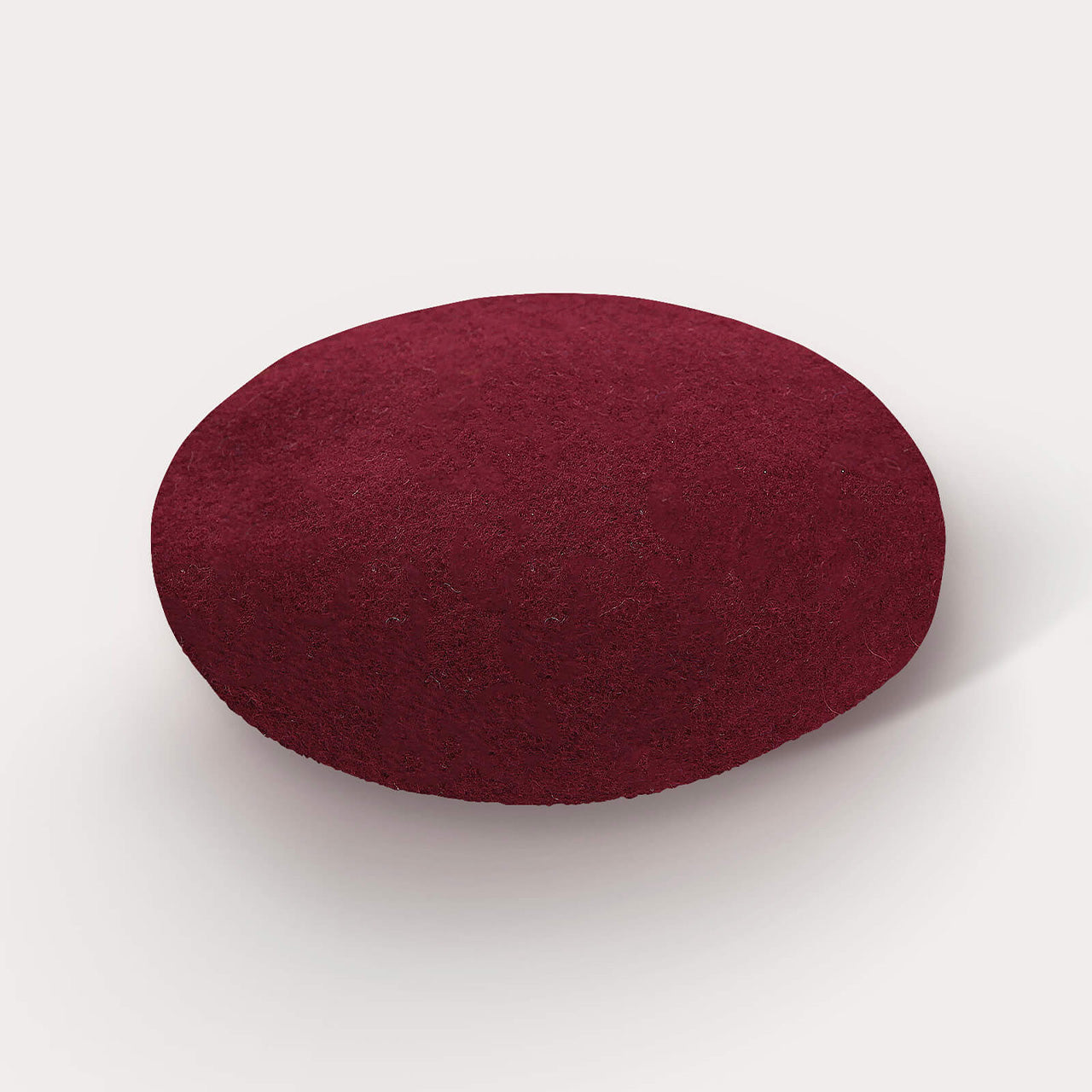
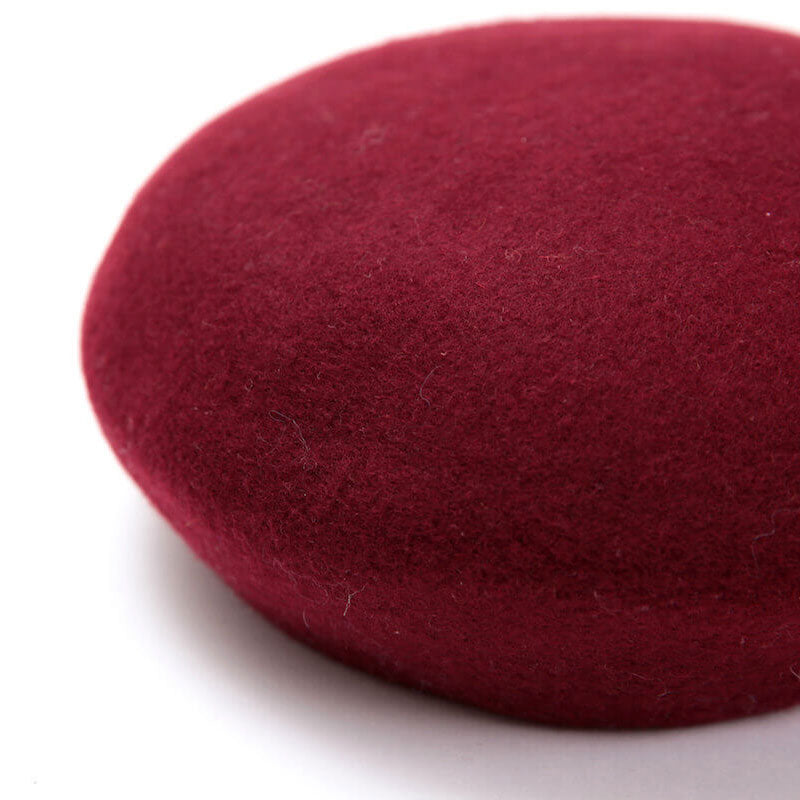
Beret is flamingo: Pure Wool Berets from Kumamoto
Osaka-based Yoshida is Japan's leading beret maker, and Beret is flamingo is the brand into which it pours all its care. Its berets are made at a factory in the Aso mountains of Kumamoto, a place rich in spring water. We visited the factory and spoke with the president, Mr. Yoshida.

A history of beret making
The company's roots go back to 1967, when its founder built his own hand-operated knitting machine. "After the war, he saw an old man knitting berets by hand and wondered if there was a faster way, so he developed a beret knitting machine." With his electrical know-how, Japan's first beret knitting machine was born. Production grew and berets were even exported, until a strong yen and changing times brought many twists and turns.

"I originally worked for a company supplying hat materials, and dealt with this factory as a supplier. Then, through a family connection, I took over the business." From supplier to maker: without that connection, the factory might not be what it is today.
One factory, every step
As cheap imports surged, the company tried producing overseas, but keeping quality consistent proved too hard. It chose to keep making in Japan. Today it is one of very few factories in the country that handles dyeing, knitting and sewing all in one place. "Most places divide the work by process. Here, we can adjust quickly." If something is not right, it can be checked and fixed on the spot, and later steps can be adjusted to how earlier ones turned out. That responsiveness is what protects quality, for its own brand and for the many fashion brands it makes hats for.


Many steps, many hands
Making a beret takes far more steps than we imagined. Machines are used where they help, but wherever fit and texture are concerned, the factory takes time and uses human hands.
- Interlining and cutting. Interlining is heat-bonded to fabric where structure is needed, such as UV-blocking interlining in brims, then the fabric is cut into parts.
- Knitting. Computer-designed patterns are knitted on custom machines, shaped in three dimensions with stitches decreasing toward the crown. A whole-garment machine knits a beret in about 35 minutes; surprisingly, an older machine run by a skilled craftsman takes just 7 to 8 minutes, so both are used together.
- Linking. Edges are joined stitch by stitch on a linking machine. One misaligned stitch ruins the beret, but because it joins loops rather than sewing a seam, there is no bulky seam allowance, for a smooth silhouette and comfortable fit. The crown is then closed by hand.


100% wool, done the hard way
Beret is flamingo's wool berets are pure wool. Many makers blend in polyester for body; this brand gets the same firmness through careful choice of materials and extra steps.
- Felting. Berets are tumbled for about two hours in water around 50°C, shrinking the wool into a soft, dense felt. Water volume and movement are adjusted every time.
- Dyeing. Colors are dyed slowly in spring water from the Aso mountains. Insides are dyed slightly darker so the whole looks even, and colors are judged knowing they look different wet and dry.
- Planking. A step most berets now skip: the berets are rolled up and pressed between rollers to knead them, giving the wool body and resilience.
- Drying and shaping. After drying outdoors, each beret is set on a metal form and dried at about 160°C to fix its shape.
- Finishing. The surface is trimmed with clippers to remove fuzz, every beret is checked for color and flaws, and each passes through a needle detector.


Truly made in Japan
By efficiency alone, all of this might seem unnecessary: use polyester, let machines do more. But something would be lost. Small differences add up over years, and lost skills are hard to recover. A beret passed carefully through so many hands is one you will cherish for a long time.

The Merino Wool Basque Beret we carry is made from 100% merino wool: fine, soft, warm, moisture-regulating and resistant to odor. Linking by hand, dyeing in Aso spring water and finishing with clippers bring out the best of it. A favorite hat is hard to part with, perhaps because the craftspeople's skill reaches you even where you cannot see it. Our thanks to Mr. Yoshida and everyone at the Kumamoto factory.