
Made by YAMATSUKA HAMONO · Sakai, Osaka
Hand-Forged Japanese Santoku Knife 18cm | YAMATSUKA HAMONO
We will do our best to follow your wrapping preferences, but depending on the shape of the item or other circumstances, we may not always be able to meet them. We are unable to accept returns or exchanges because the wrapping differs from your request.
Ships from Japan by EMS with tracking
In-stock items ship within 3–5 business days. Made-to-order items may take longer — we will email you if so.
Shipping credit on larger orders: ¥1,000 off over ¥20,000 — up to ¥2,500 off over ¥50,000.
Shipping is calculated by weight at checkout. See estimated rates →
Pairs well with
Meet the maker
Sakai, Osaka
A blacksmith workshop in Sakai, Osaka, one of Japan's most renowned knife-making towns. Its master smith, Yamatsuka Shoga, a certified traditional craftsman,...
Choose options
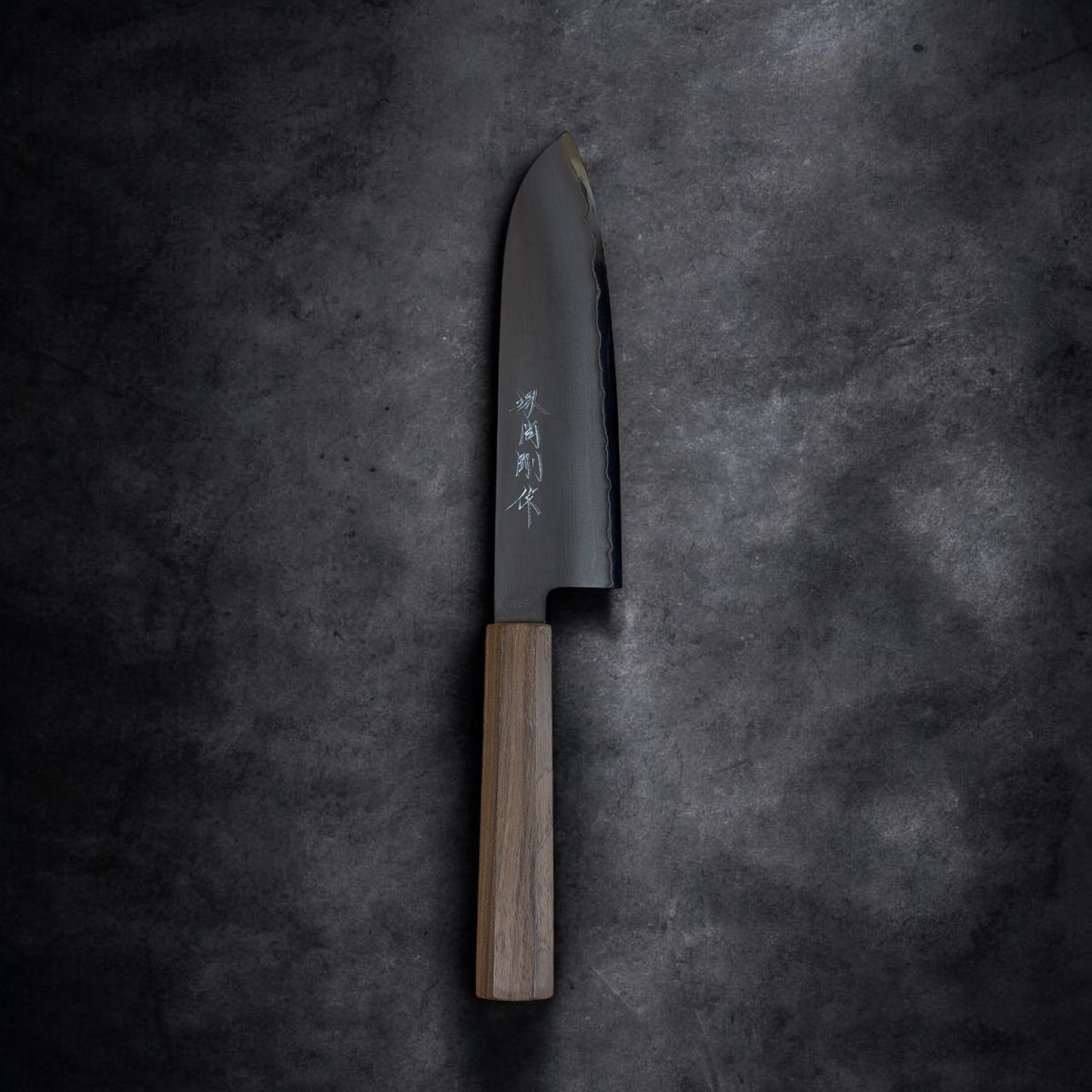
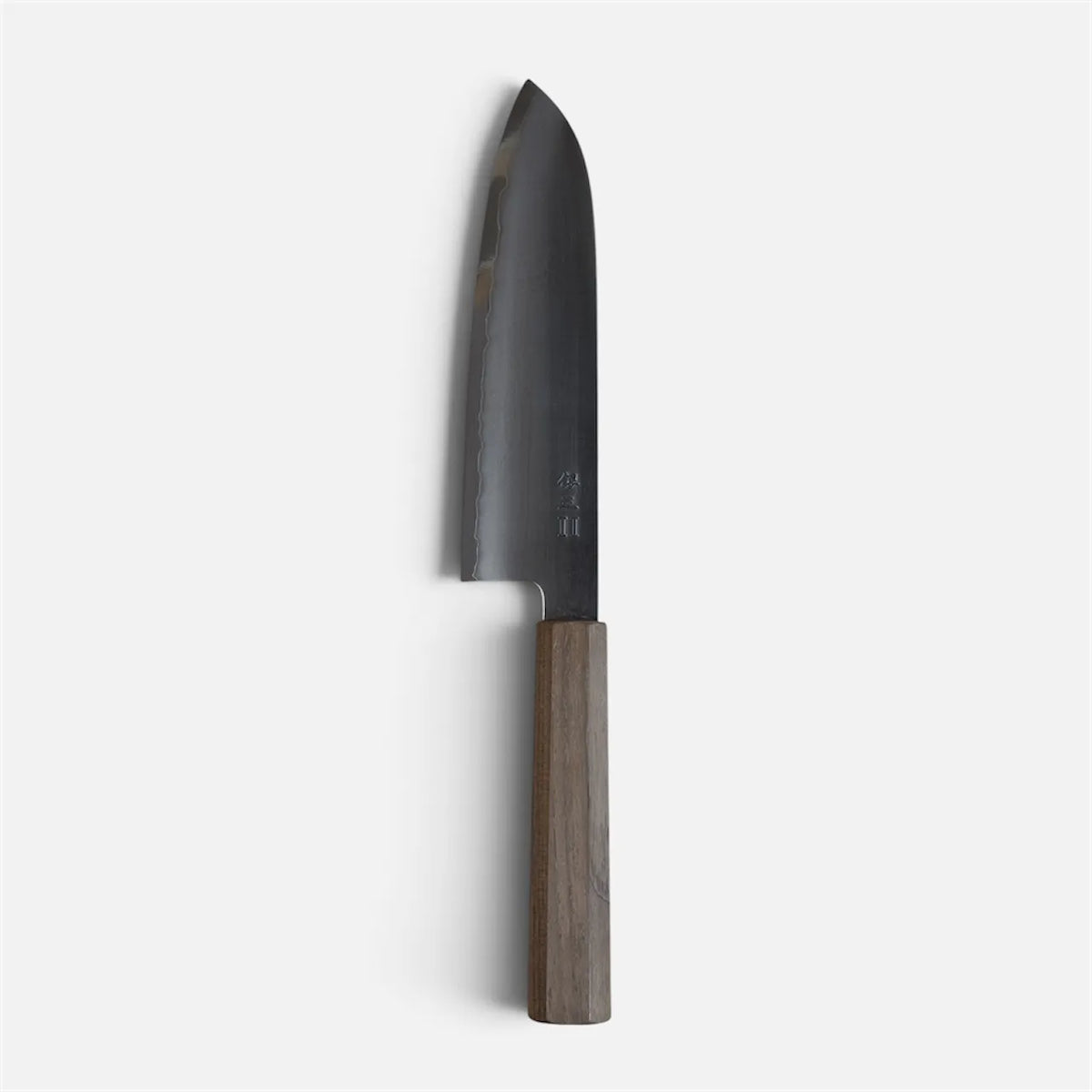
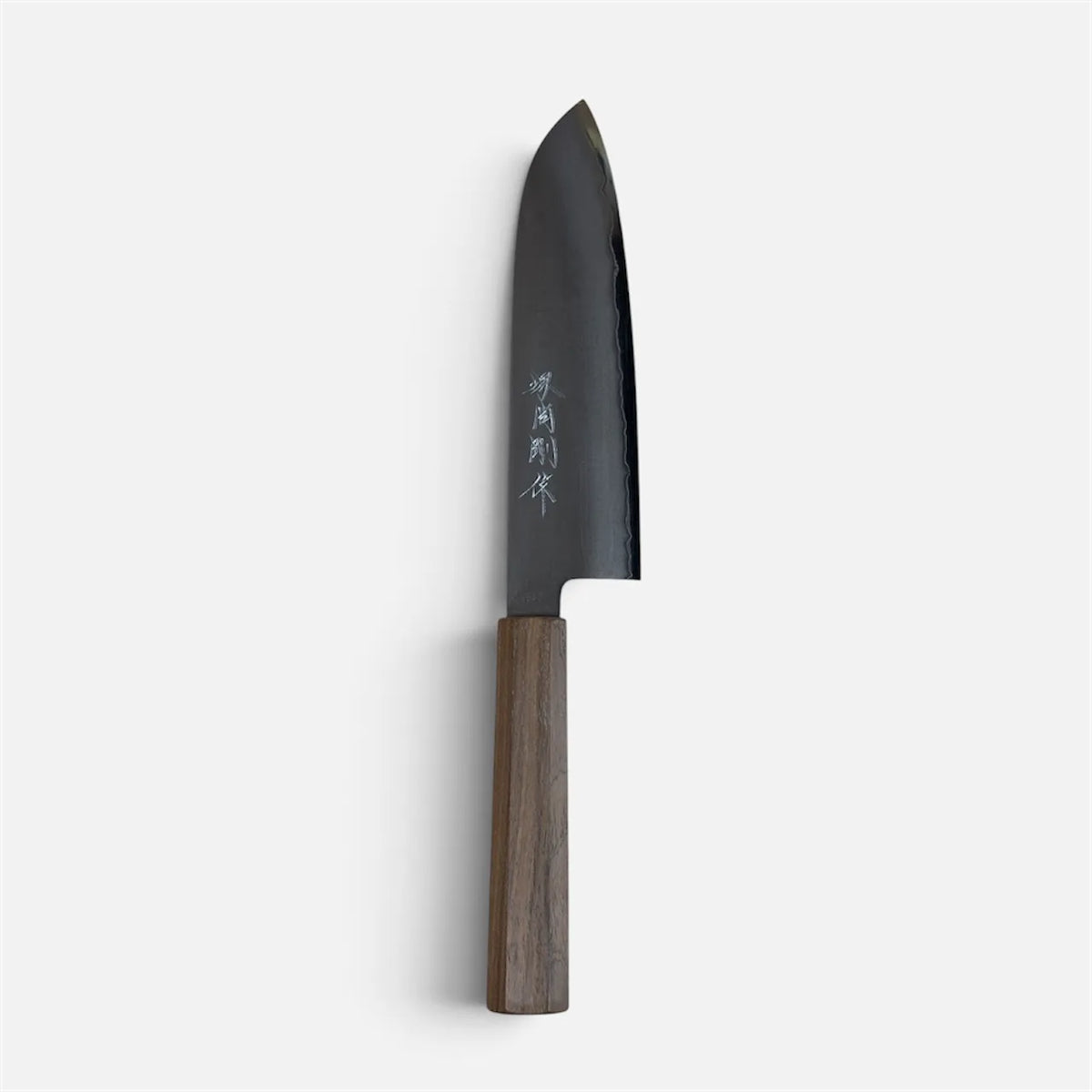
A hand-forged santoku with the keen edge of carbon steel and the easy care of stainless

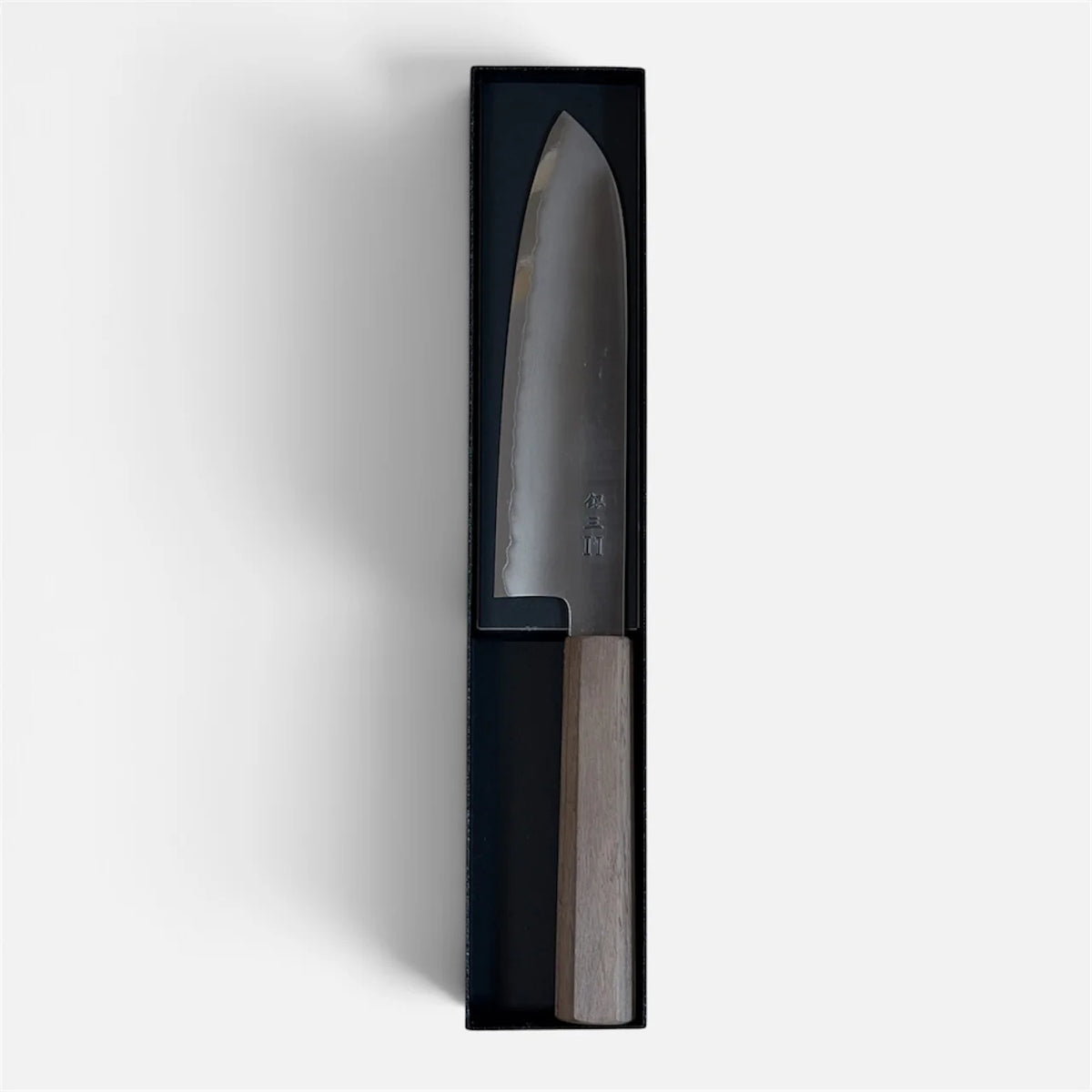
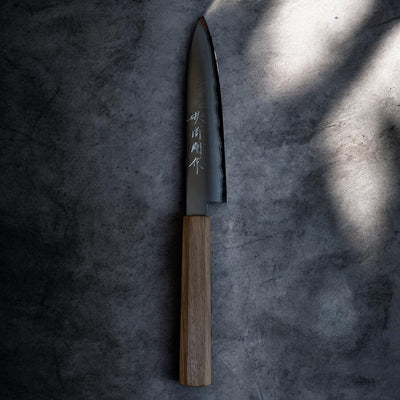
An original knife developed together by NIHON IIMONOYA and YAMATSUKA HAMONO, a blacksmith workshop in Sakai, Osaka. Ginsan stainless steel is hand-forged by master smith Yamatsuka Shoga, then fitted with an octagonal walnut handle made in Sakai.
About YAMATSUKA HAMONO
Sakai, Osaka, is one of Japan's great knife-making towns, trusted by professional chefs across the country. In Sakai, the name Yamatsuka is the one people mention when it comes to forging stainless steel. The workshop's master smith, Yamatsuka Shoga, a certified traditional craftsman (dento kogeishi), established his technique for fire-forging stainless steel through years of trial and error, and continues to shape each blade by hand at the forge.
The best of carbon steel and stainless
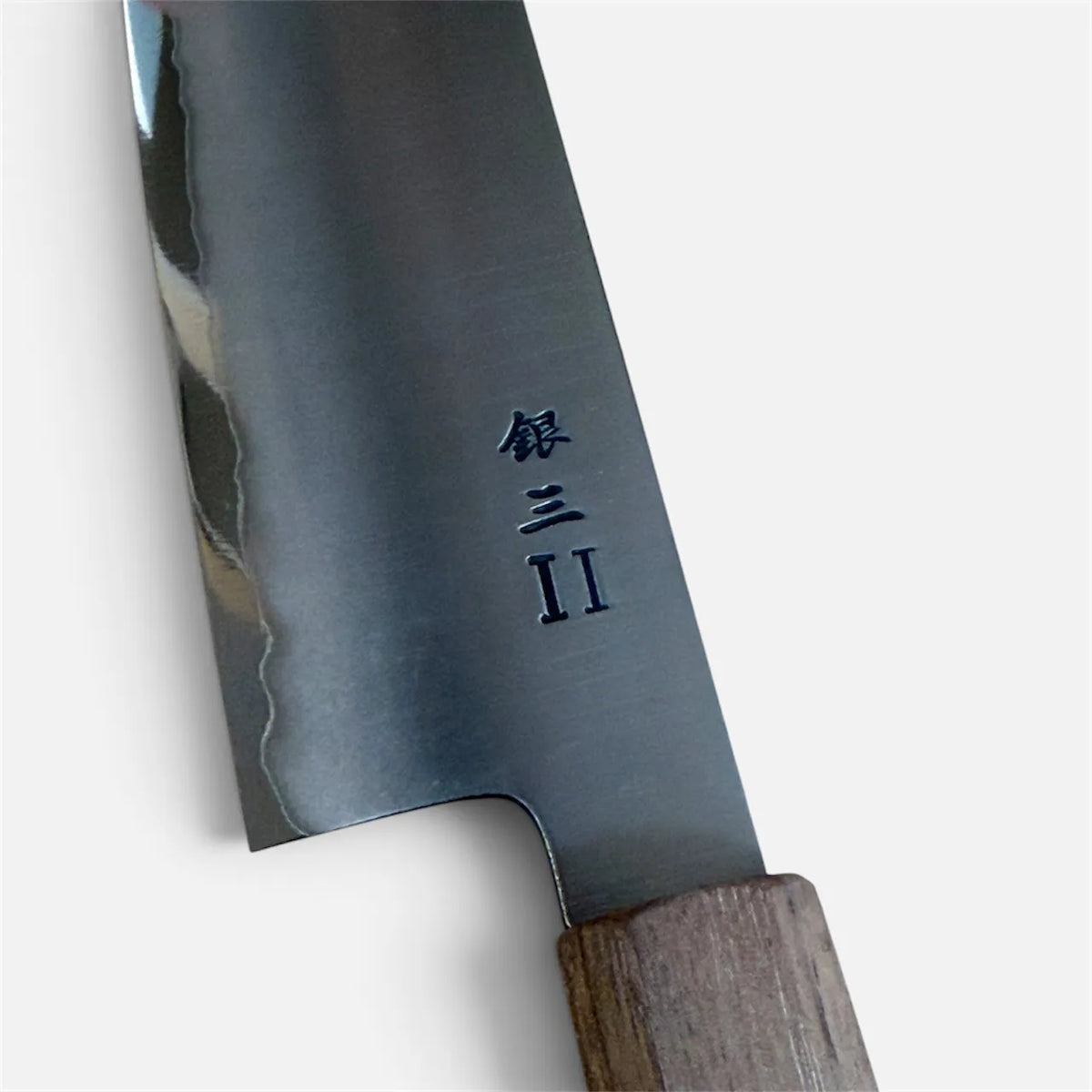
"The sharpness of carbon steel" and "the easy care of stainless steel" are what every keen cook wants in a knife. This knife brings the two together through Ginsan steel (Gingami No. 3), a high-grade Japanese blade steel, and the smith's hand-forging. The material alone is not enough: it is the craftsman's skill that draws out this cutting edge.

Is Ginsan stainless steel or carbon steel?
By classification, it is stainless steel: steel containing about 10.5% chromium or more is called stainless, and Ginsan contains about 13.0 to 14.5%. In composition, it is close to a high-purity carbon steel such as Shirogami No. 2, with chromium added for rust resistance. That is why it cuts cleanly and takes an edge easily on a whetstone like carbon steel, while resisting rust, citrus acid and meat fat like stainless.
Ginsan compared with other knife steels
| Ginsan | Shirogami / Aogami (carbon steel) | Common stainless (VG10, etc.) | |
|---|---|---|---|
| Sharpness | Very high | The highest | High |
| Rust resistance | High (easy care) | Low (rusts quickly) | High |
| Edge retention | High (when hand-forged) | High | Very high |
| Ease of sharpening | Easy | Easiest | Hard (very hard steel) |
| Everyday use | Ideal for daily cooking | For professionals; needs regular care | Suited to daily use |
Hand-forged in Sakai
Most stainless knives are stamped out by machine. Stainless steel is hard and its forging temperature is difficult to control, so only a small number of skilled smiths in Japan can hand-forge it. Heated in the forge and hammered blade by blade, the steel becomes denser, giving the blade remarkable toughness and an edge that stays sharp longer.

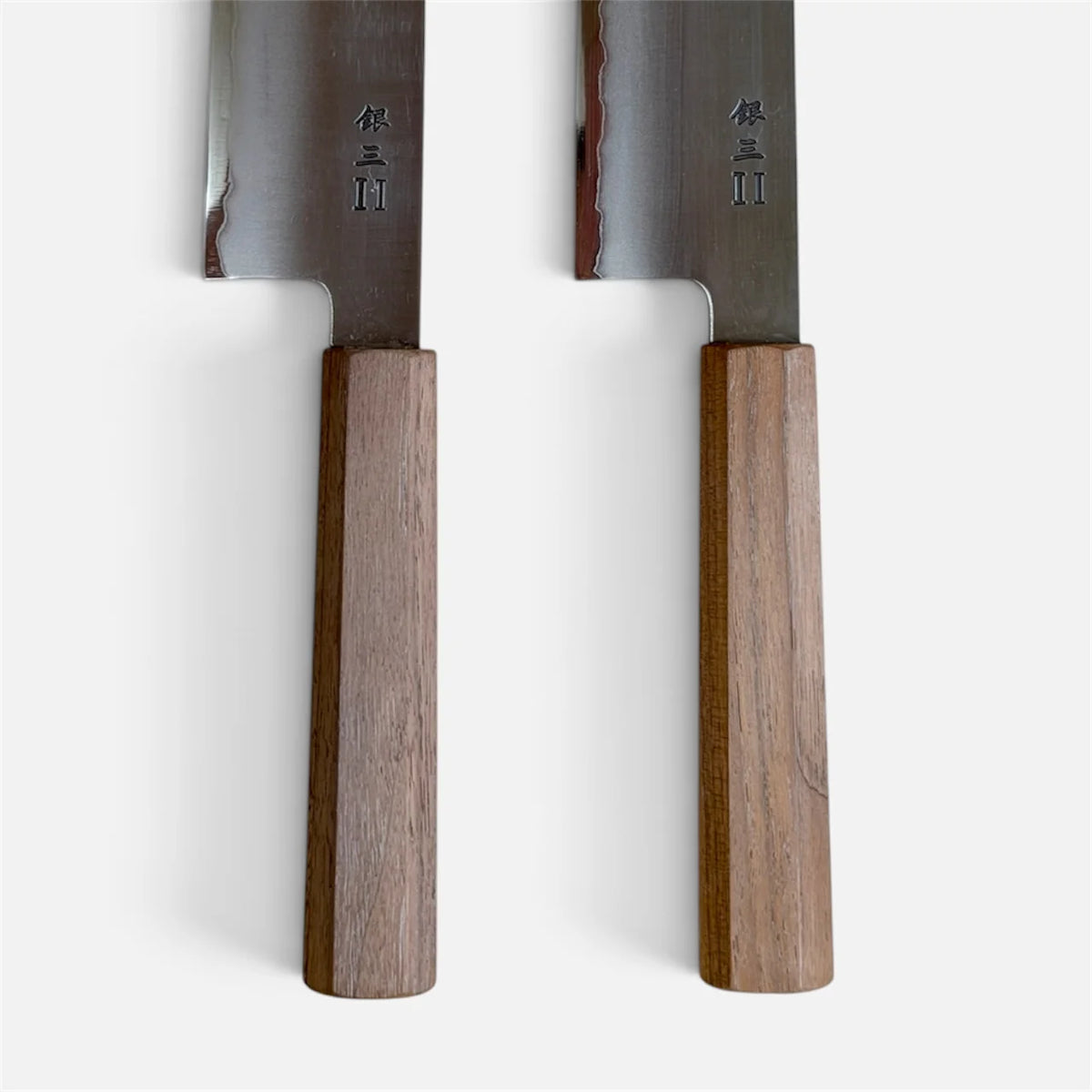
An octagonal walnut handle, made with a Sakai handle maker
The handle was developed with Tatsumi Mokue, a long-established maker of knife handles in Sakai. Each one is shaped by hand into a smooth octagon, balanced against the weight of the blade. We chose walnut, one of the classic fine woods, for good reasons:
- Stable and crack-resistant: walnut changes very little as it dries, so gaps and cracks are less likely even with daily washing and drying.
- A secure grip: its natural oils and smooth grain give a sure hold, even with wet or oily hands.
- Well balanced: neither too heavy nor too light, it keeps the knife's center of gravity steady and your hand less tired.
- Stains show less: the deep brown hides water marks and food stains better than pale traditional woods.
- Ages beautifully: with use and care, the grain deepens and takes on a soft sheen.

Each handle has its own grain.
Signed by the smith
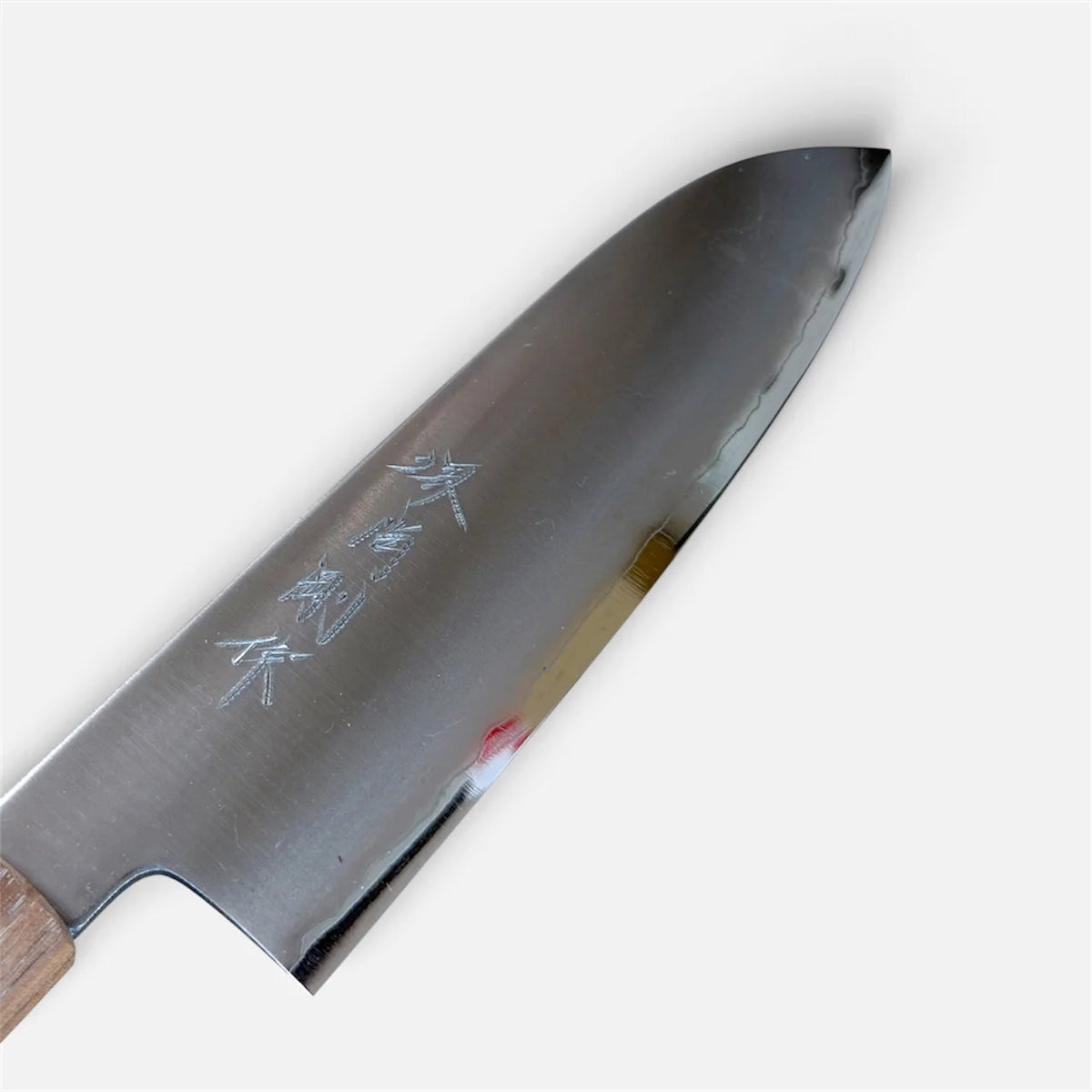
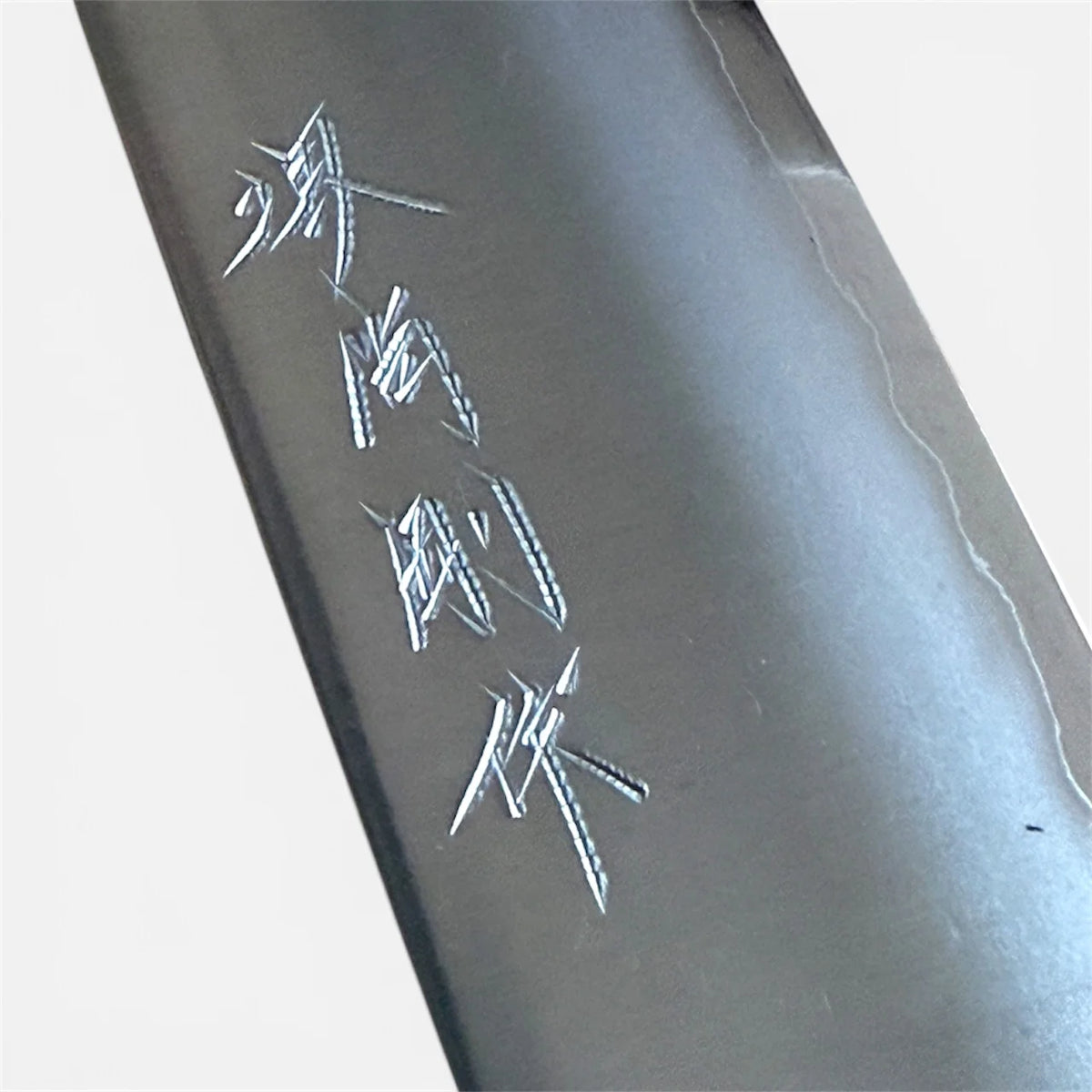
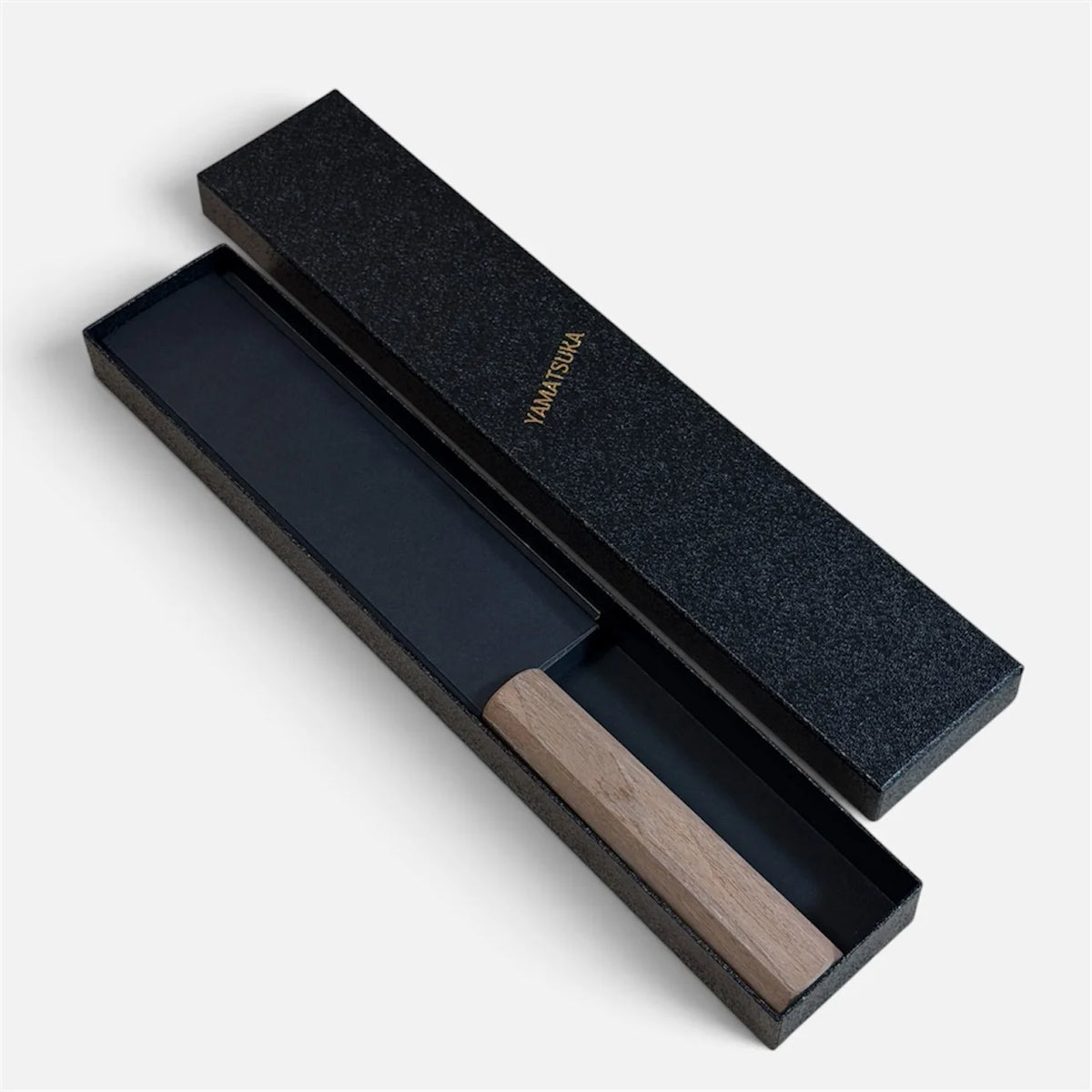
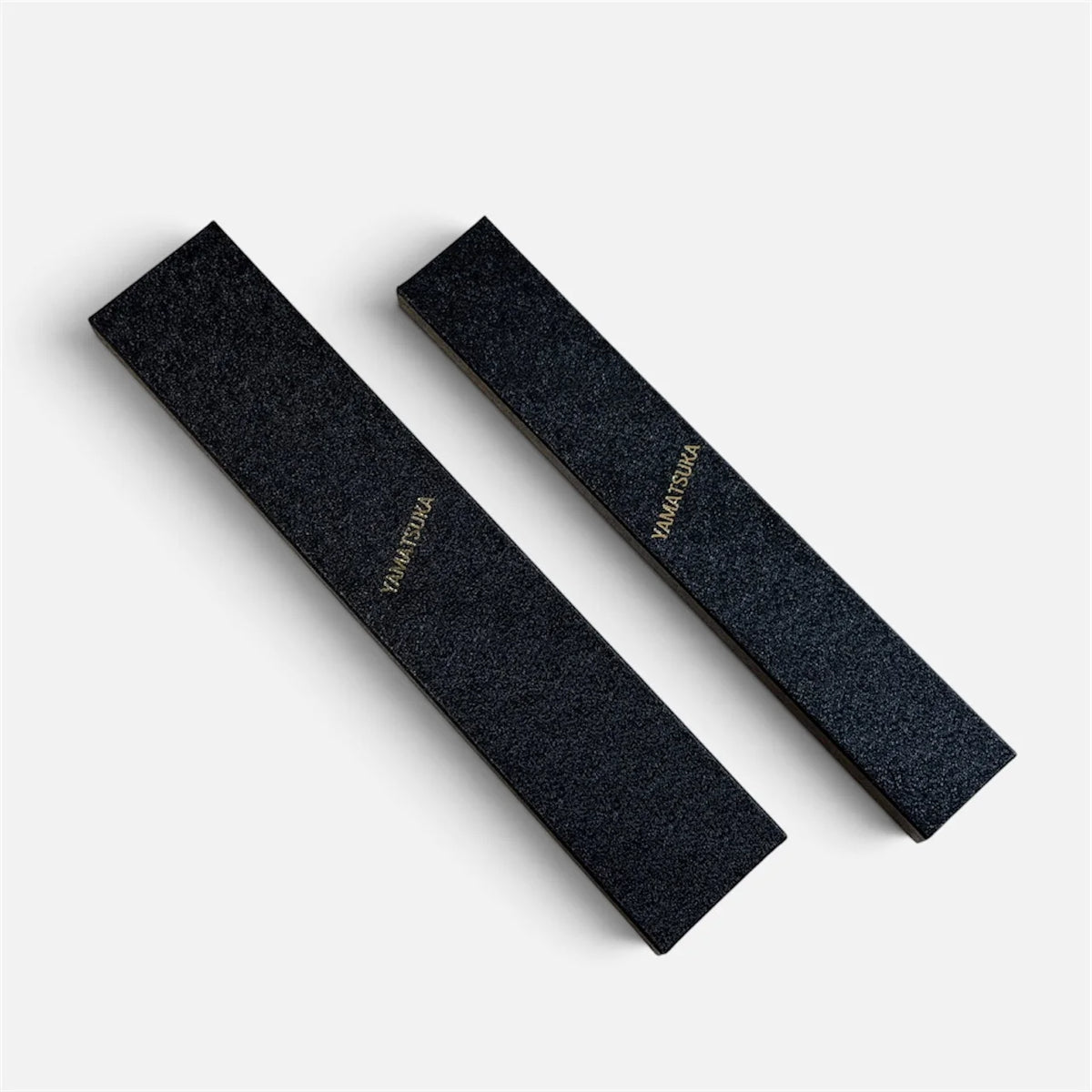
Every knife sold on this site is hand-engraved with the smith's signature in Japanese characters, cut into the blade with a chisel. It comes in a black gift box with gold YAMATSUKA lettering, ready to give.

A knife to keep for life
Unlike very hard stainless steels such as VG10, Ginsan is easy to sharpen on a home whetstone, so you can bring back a fine edge again and again. It is a knife that grows with you over ten or twenty years.
The santoku
The classic all-purpose Japanese kitchen knife, for meat, fish and vegetables alike. From halving a cabbage to portioning large cuts of meat or fish, it is a true main knife for anyone who loves to cook.

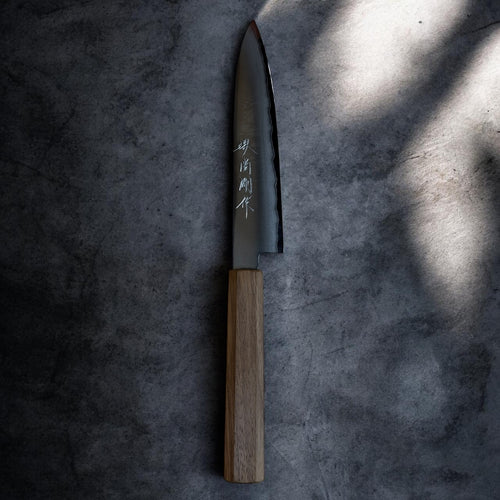
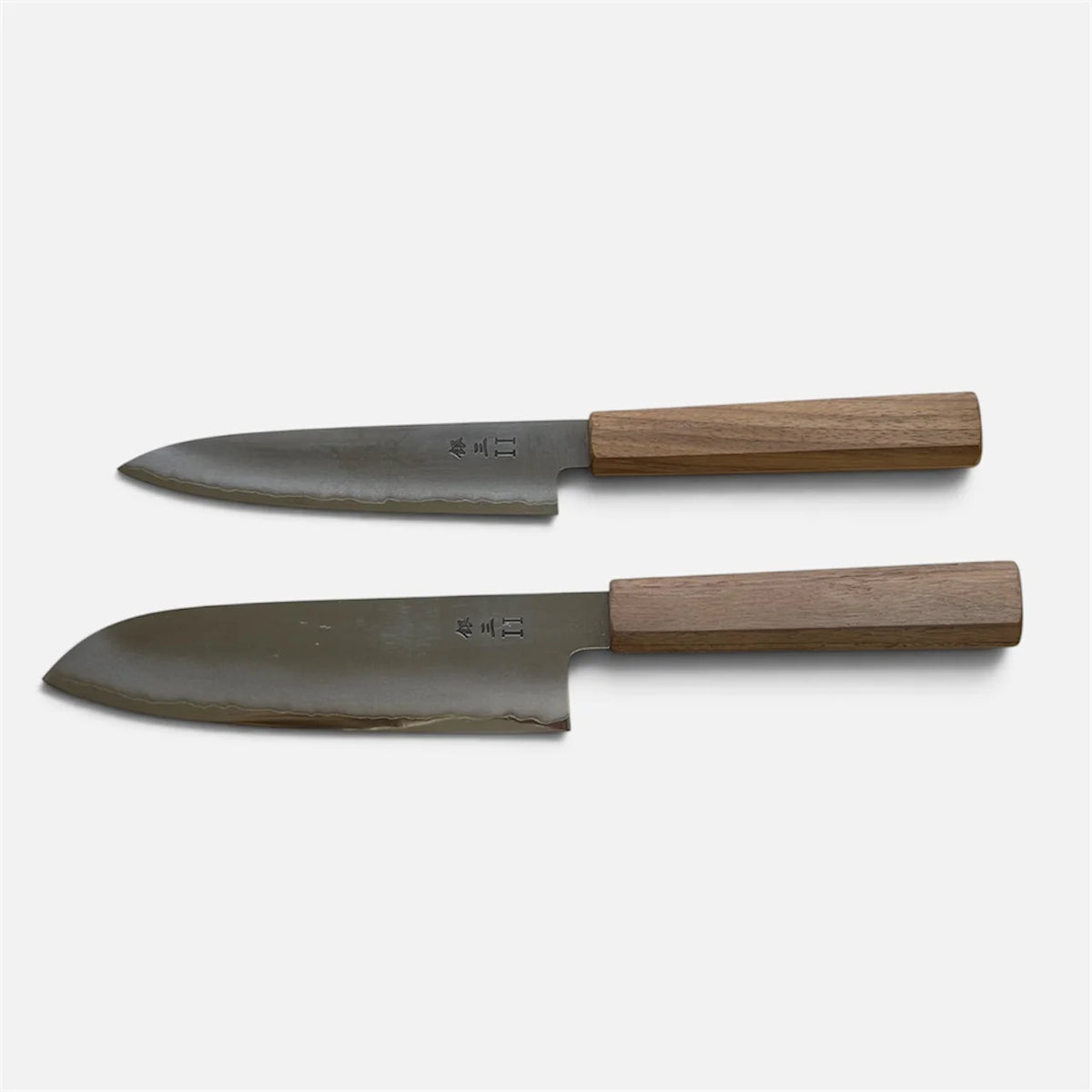
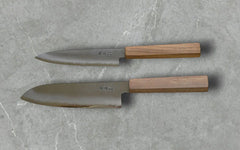
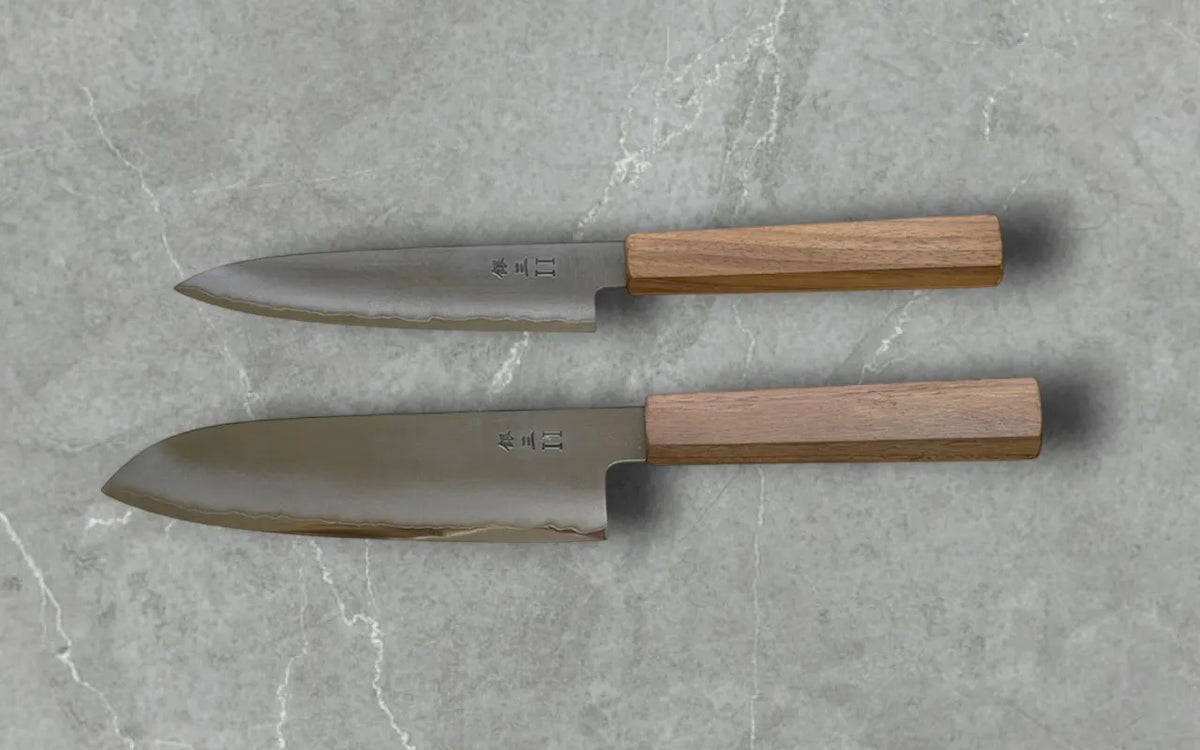
Top: petty knife (15 cm blade) / Bottom: santoku knife (18 cm blade)
Specifications
- Blade length: Approx. 18 cm (7.1 in)
- Handle: Approx. 13 cm (5.1 in), octagonal walnut
- Overall length: Approx. 31 cm (12.2 in)
- Weight: Approx. 160 g (5.6 oz); approx. 250 g (8.8 oz) with box
- Blade steel: Ginsan (Gingami No. 3 / Silver #3) stainless steel, hand-forged
- Edge: Double bevel
- Engraving: Smith's signature (hand-engraved)
- Smith: Yamatsuka Shoga, YAMATSUKA HAMONO (certified traditional craftsman)
- Handle maker: Tatsumi Mokue
- Packaging: Gift box
- Made in: Sakai, Osaka, Japan

Care
- Wash by hand and wipe dry right after use. Ginsan resists rust, but it is not rust-proof.
- Do not use a dishwasher or bleach; they can damage the blade and the walnut handle.
- Do not cut frozen food, bones, hard squash skin or shells, which can chip the edge.
- When the edge dulls, sharpen it on a whetstone.
Please note
- Knives in stock ship right away. When a knife is out of stock, it is made to order by hand and usually ships in about one month after your order.
- Because each knife is handmade, dimensions and weight vary slightly from piece to piece.
Frequently asked questions
Q. Which should I choose, the santoku or the petty knife?
A. The santoku (18 cm blade) is a true all-purpose main knife that handles everything from halving a cabbage to portioning large cuts of meat or fish. The petty knife (15 cm blade) is nimble and easy to handle, and also works well as the main knife for a small household or a compact kitchen. Together, the two cover everything from large ingredients to fine prep work. See the petty knife
Q. Will it rust?
A. Ginsan is one of the most rust-resistant stainless knife steels, but it is not rust-proof. Wipe it dry after use and it will stay beautiful for years.
Q. Can I sharpen it at home?
A. Yes. Unlike very hard stainless steels such as VG10, Ginsan takes an edge easily on a home whetstone, so you can restore its sharpness again and again.
Q. Is it dishwasher safe?
A. No. A dishwasher can damage both the blade and the walnut handle. Please wash it by hand.
Q. Can left-handed cooks use it?
A. Yes. The blade has a double bevel (sharpened on both sides), so it can be used with either hand.
Q. How long does it take to ship?
A. Knives in stock ship right away. When a knife is out of stock, it is made to order by hand and usually ships in about one month after your order. We will let you know the expected shipping date after you order.
The maker behind this piece
YAMATSUKA HAMONO
Sakai, Osaka
A blacksmith workshop in Sakai, Osaka, one of Japan's most renowned knife-making towns. Its master smith, Yamatsuka Shoga, a certified traditional craftsman, is known throughout Sakai for hand-forging stainless steel, a technique he established through years of trial and error.