ITO BINDERY: Memo Pads Made from Paper and Bookbinding Skill Alone
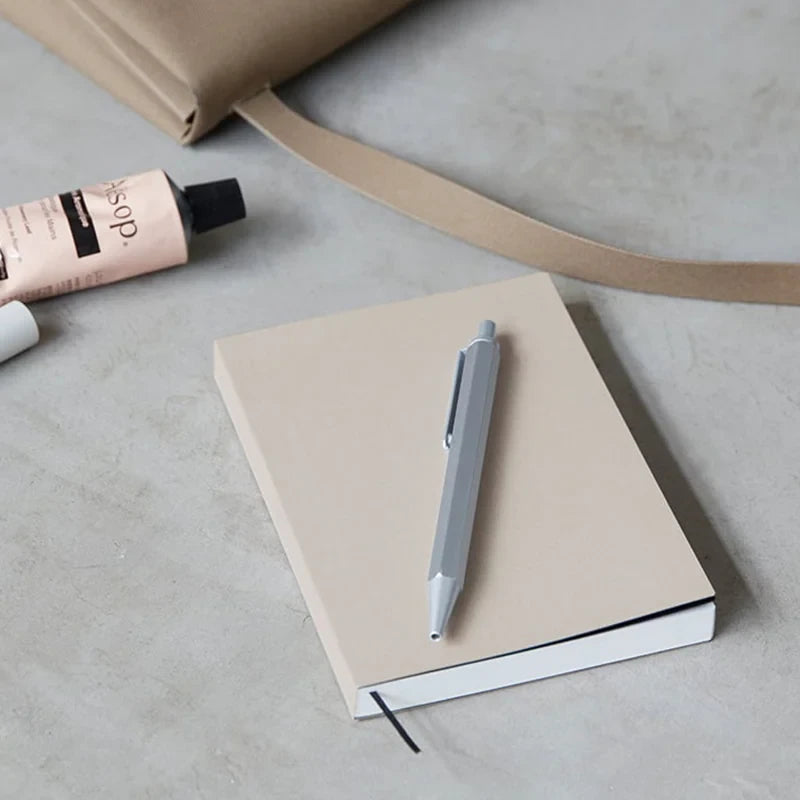
Do you still keep a paper memo pad on your desk? The best ones sit within easy reach, ready the moment an idea arrives, look good enough to leave out all day, and feel smooth under the pen.
The memo pads of ITO BINDERY were made with exactly that in mind. Created by a neighborhood bookbinding company in Tokyo together with a designer, they are carefully made from fine Japanese paper and are now used by creative people around the world.
We visited the workshop in Sumida, Tokyo, and spoke with Mr. Ito, the company's president, about how the brand began and what paper means to him.

A bookbinder with more than 80 years of history
Ito Bindery's story began in 1938, when it was founded in Edogawa, Tokyo, as a small paper workshop that cut flyers and bound university notebooks. During Japan's postwar economic boom, it grew into a mass producer of corporate catalogs and brochures, working mainly for local printing companies.
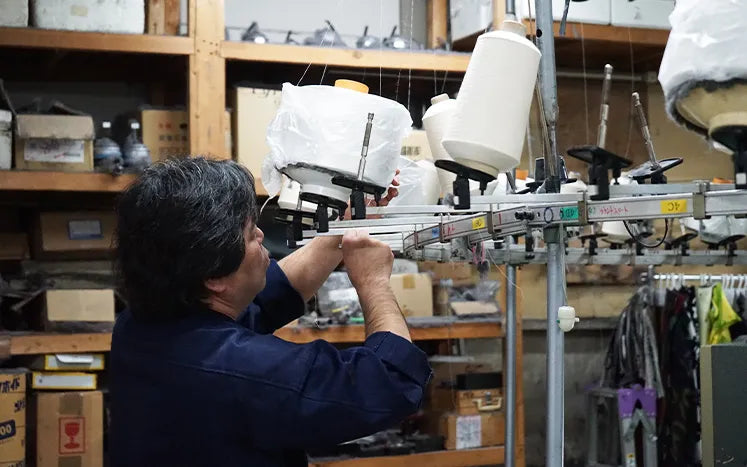
In 1982 the business took its current name, Ito Bindery Co., Ltd. Today, based in Sumida, it produces promotional materials, office supplies and stationery. During our visit we watched craftspeople working carefully on long-serving machines.

Times have changed. People once picked up a printed catalog before buying a car; now almost everything, even a quote, is viewed on a computer or smartphone. Ito Bindery has kept adapting its shape as the world around it has changed.
"Working for corporate clients, I was worried about paper's shrinking share. Made-to-order work is something we can't control ourselves," says Mr. Ito. "I wanted something we could hand directly to the people who use it. That was the starting point for creating our own brand."
That was more than ten years ago. Even now, few bookbinders sell directly to consumers, which says a lot about Mr. Ito's speed and willingness to move.
An original brand, born from a meeting with a designer
Around 2008, as construction of the Tokyo Skytree was beginning in Sumida, the ward launched a project that matched local factories with designers to develop new products. Ito Bindery raised its hand, and there it met the designer with whom it would build the brand.

"Our craftspeople can make products with their years of skill, but they aren't design professionals, so it's hard for them to move forward with confidence," Mr. Ito explains. "If you're in a hurry to make money or become popular, you drift toward whatever is easiest to produce. That doesn't reach customers, so we made sure not to waver."
The designer toured the factory, and together they worked out what to make: a properly made memo pad. No printing at all, just paper and bookbinding skill. The result was a high-quality, carefully designed tool for creative professionals.

Taking the brand to the world
The brand went on to win a Good Design Award. When ITO BINDERY exhibited at a major gift trade show in Tokyo, it caught the eye of overseas visitors as well as Japanese buyers. Mr. Ito was delighted that, while many conversations in Japan began with price, people from abroad started by talking about the value of the design.
That interest led the company to exhibit at Maison&Objet in Paris every year from 2012 until 2019. "It's a lot of work," Mr. Ito admits. "It costs a great deal, and the preparation is hard. We start designing the booth six months ahead and begin building it two months before." Before the first show the company had no overseas business at all; it learned everything, including how to explain shipping costs to buyers, while keeping up its regular work.

"The same kind of person uses our products in every country," he says. "People who live in cities, often creators working at architecture firms or design studios. Computers may be the norm now, but creators still write things down before they type."
Today ITO BINDERY works with customers mainly in Europe, as well as in the United States and the Middle East. Exhibiting abroad means high costs and no guarantee of results, yet the products have found their audience, proof of a design that speaks beyond language.

A properly made memo pad
ITO BINDERY's memo pads are used both in Japan and abroad, and overseas customers now outnumber domestic ones. Why? "Japanese paper really is good," says Mr. Ito. "It's uniform and the quality is stable. I think there's a big difference compared with paper from other countries."
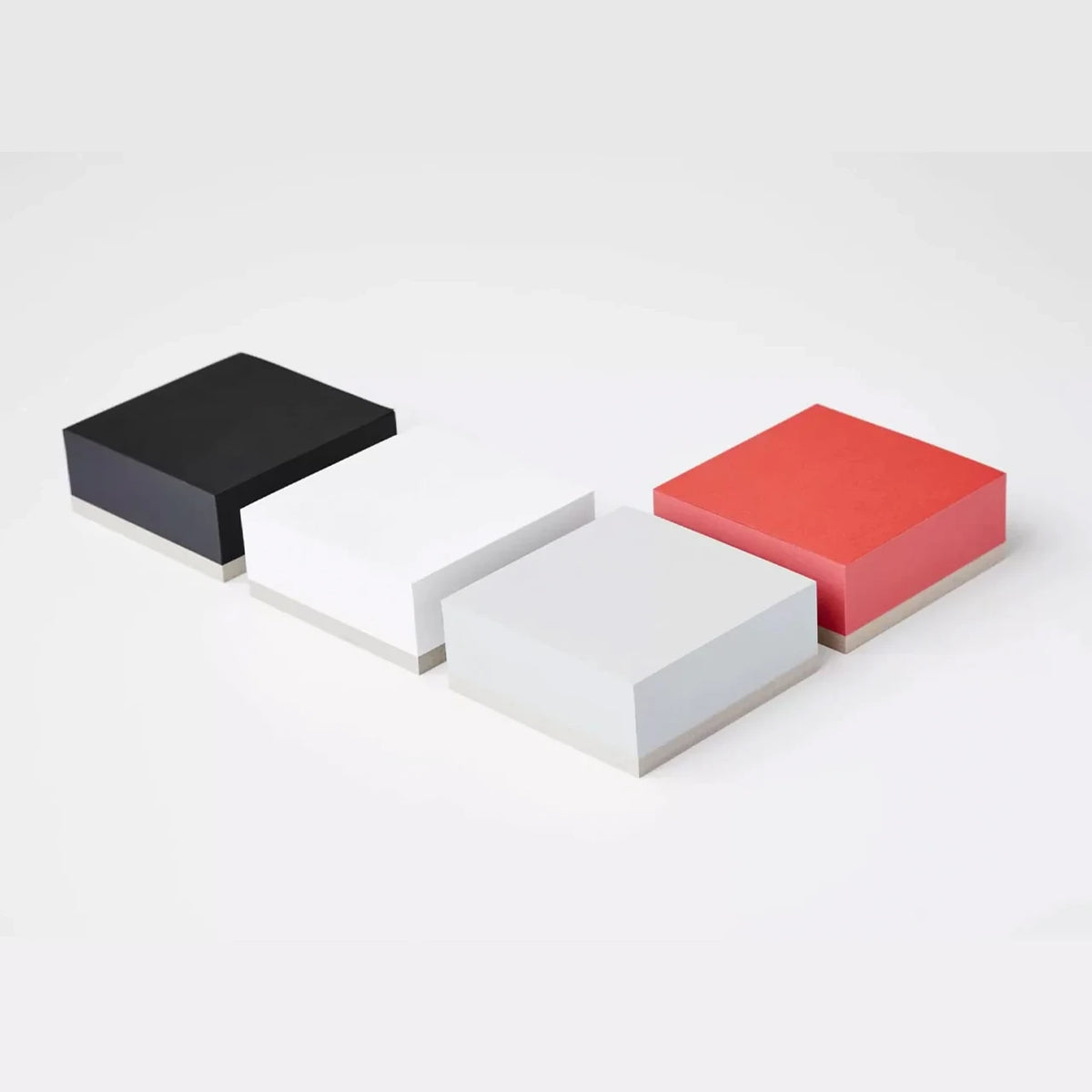
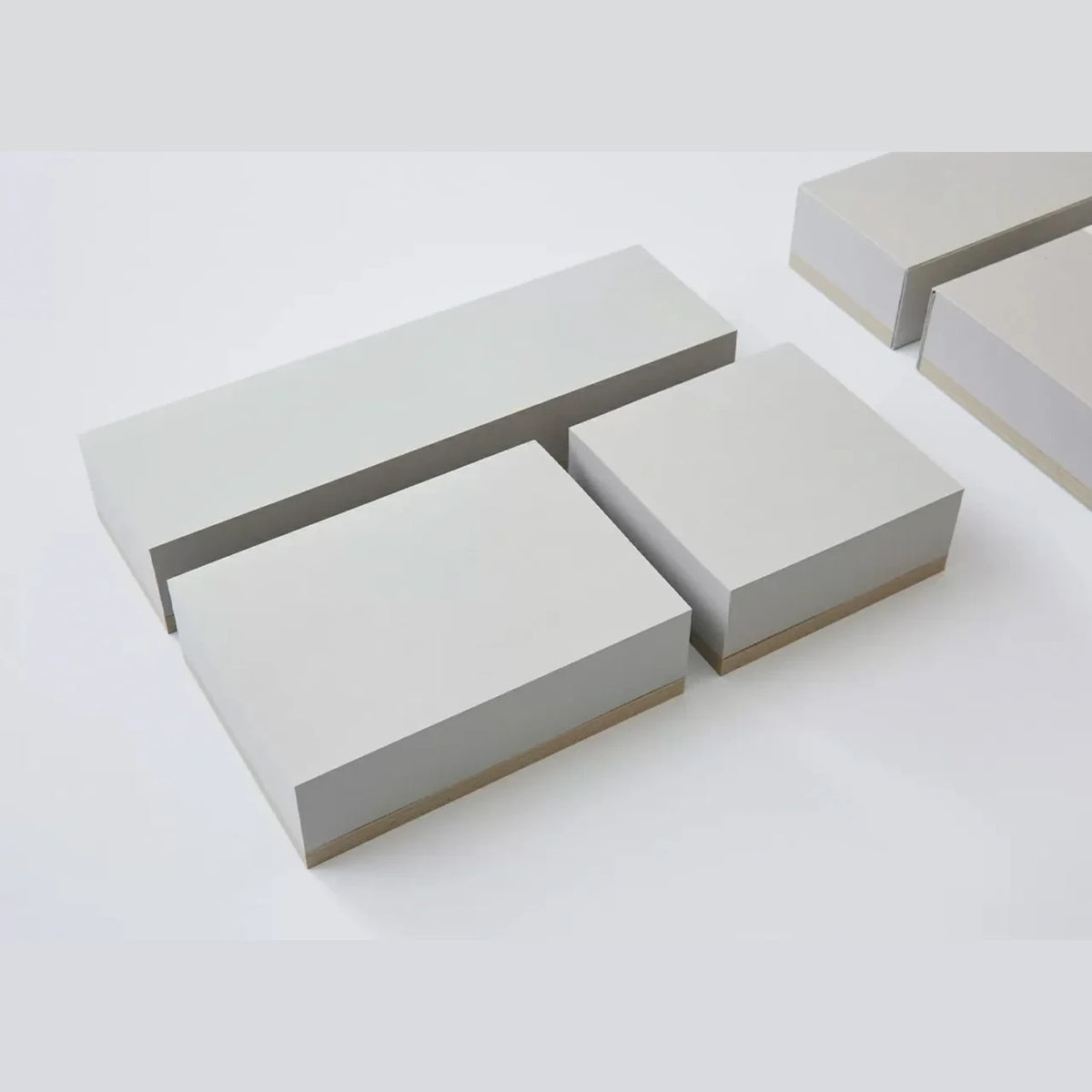
The memo blocks have no cover, so you can start working right away. The paper has a fine, even texture that makes writing smooth, and the sides of each block are silky to the touch and perfectly even in color.


They are more than stylish. The drawing pad in particular is a showcase of bookbinding technique.

The bound edge is finished with micro-perforation, so a sheet tears away cleanly when you pull it to the side, leaving a sheet of standard paper size.

These fine perforations are made with blades like these.

A thick backing board gives each block stability and a pleasant writing feel. With no logo or character on the front, the simple design looks good on any desk and lifts your mood when you sit down to work.
Made by machine and by hand
Walking through the workshop, it is clear that nothing here is made by machines alone. In front of the long-serving equipment stand experienced craftspeople.

The paper is cut carefully so that no unevenness forms on the sides.

The cutting is done in two stages, with a craftsperson guiding the paper by hand.

The words "ITO BINDERY" are blind-embossed into the backing board of each pad. The craftspeople press them one sheet at a time using this hand-operated machine, a scene with a wonderfully nostalgic feel.

On every ITO BINDERY memo pad, the embossed name sits on the back. "People who use it don't want to see a logo," says Mr. Ito. "We don't even print ruled lines, so they can simply focus on writing." Most brands are eager to show their logo; here, patience and thought for the user win out, which explains why the brand has so many fans among creators.

Packaging, too, is done by hand, one item at a time.

The company once used plastic packaging but switched entirely to paper a couple of years before our visit, out of concern for the environment. Plastic would be cheaper and easier to handle, but the priorities here are clear and unwavering.
Keeping the value of paper alive
When we asked about the future, Mr. Ito said, "We're still not known to most people around the world, or even to many people in Japan. I'd like our pads to become something people simply use every day."
"Rather than adding new lines, our goal is to keep making the products we have, carefully. It sounds simple, but it's difficult. Since the pandemic, more and more papers are being discontinued. Paper makers used to produce all kinds of paper, but when demand shrinks they stop making them. The question is how we add value and how we keep finding ways."

Built up patiently over the years, the original brand has become a pillar of Ito Bindery's business, and it has also brought new corporate clients through the people it has introduced the company to.
"These are difficult times for the printing industry. Even as information moves to websites and demand for paper shrinks, I believe good things will always remain, so we have to give paper real value."
"I hope people can start their work in a good mood and that something new is born there," he said with a smile. "Our pads are used not only by graphic and product designers but also in meetings. I've heard that discussions get livelier when people sketch on the drawing pad as they talk, and that makes me happy." The pads are even placed in some hotel guest rooms.
A beautiful memo pad on the desk puts you in a good mood. A plain sheet that lets you focus on writing helps you start work comfortably and create something new. We saw how such a thoughtful pad is made and protected by Mr. Ito, the designer and the craftspeople. It is easy to think of paper as just paper, but there is good paper and ordinary paper, and choosing the things we use by our own judgment may matter more than ever. Perhaps forward-looking creators are already doing just that.
Our sincere thanks to Mr. Ito and everyone at ITO BINDERY for their cooperation with this interview.