Article: TEORI: Laminated Bamboo from Grove to Furniture in Okayama
TEORI: Laminated Bamboo from Grove to Furniture in Okayama
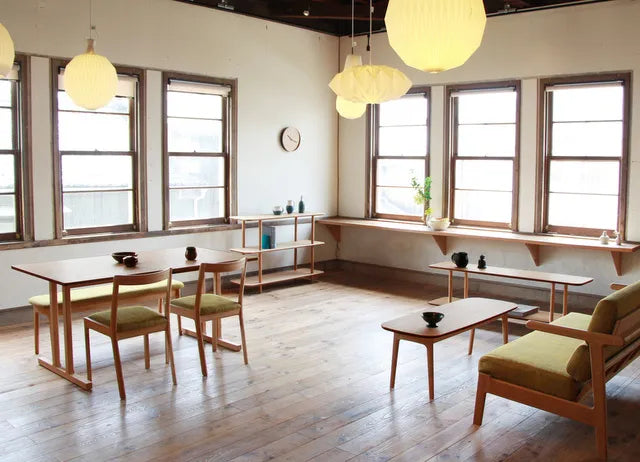
For this interview we visited TEORI, a maker of bamboo furniture and homeware in Mabi, a quiet town in Kurashiki, Okayama Prefecture, in western Japan. The company name comes from a German word the founders take to mean “basics, origins, and the beginner’s spirit,” and that idea of returning to the fundamentals runs through everything they make. Working with bamboo, a fast-growing and eco-friendly material, TEORI draws out its natural character in pieces made, as they put it, “with heart, passed from hand to hand.”
A maker with something to say
When we choose products to introduce, one of the things we care about most is the people behind them. At small and medium-sized Japanese companies, the attitude and convictions of the president and the craftspeople are reflected directly in what they make.
We first met Mr. Nakayama, the president of TEORI, at a trade show, and by the end of our conversation we knew we wanted to introduce his work. One big reason was a document he showed us: a hand-drawn guide, made by Mr. Nakayama himself, explaining how bamboo grows, is harvested and is used in a sustainable cycle.

Everyone who makes things has something they want to share, but the depth and passion vary. Taking the time to explain it carefully by hand showed us how strongly Mr. Nakayama feels about bamboo. Surrounded by TEORI’s refined furniture and interior pieces, he spoke about bamboo with real enthusiasm. At first glance TEORI looks like a design-led brand, but behind that polished image is a straightforward craftsman with a deep love of bamboo. That contrast gives the brand its depth and its solid foundation.

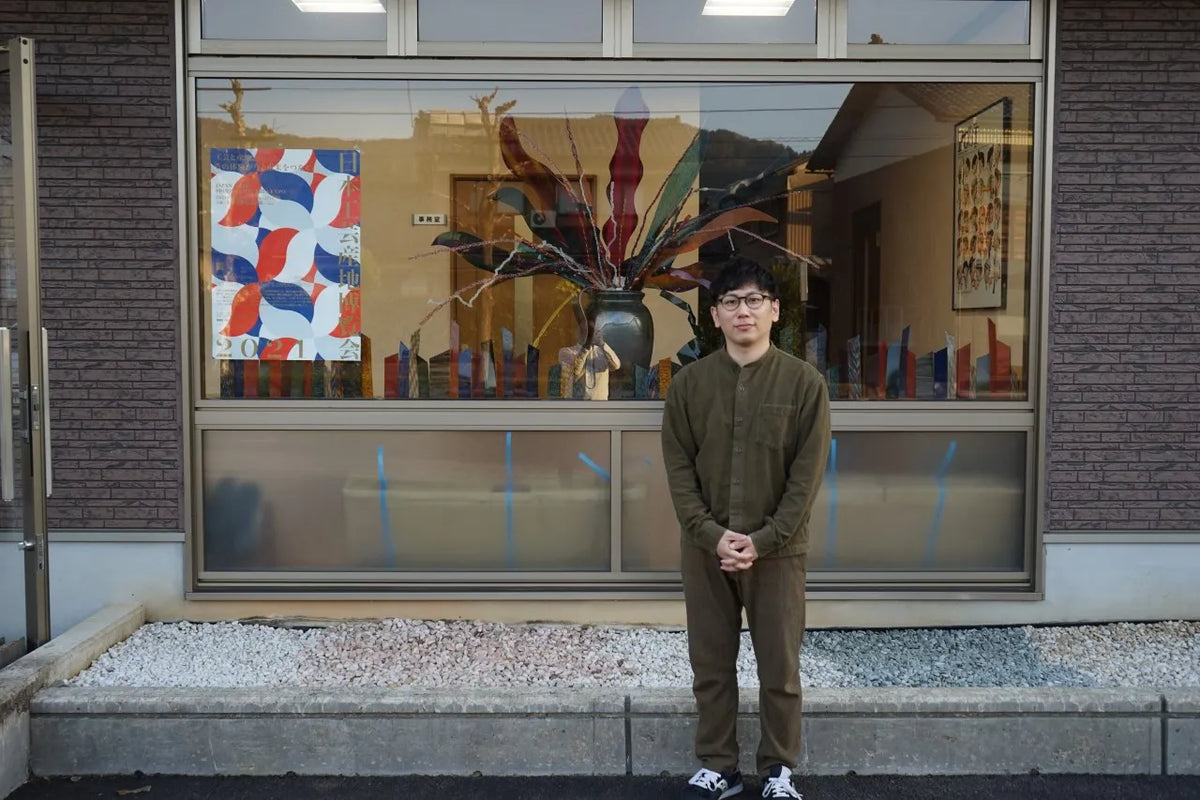
Center: Mr. Nakayama, the president. Left: the sales manager. Right: the factory manager.
What is laminated bamboo?
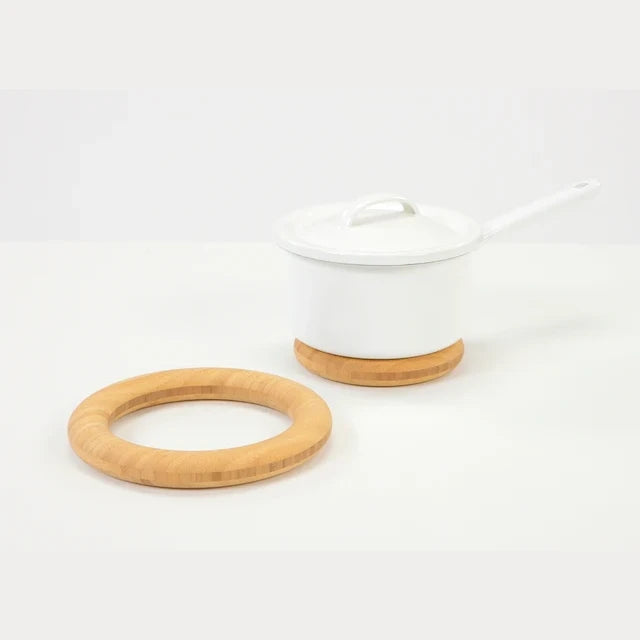
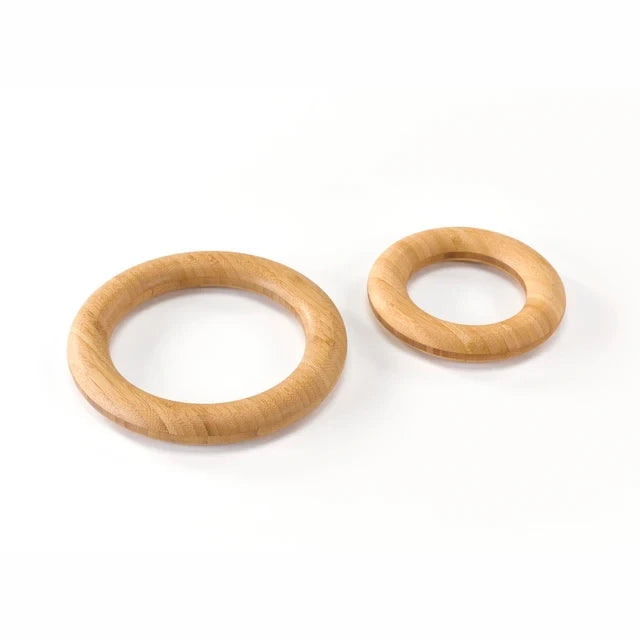
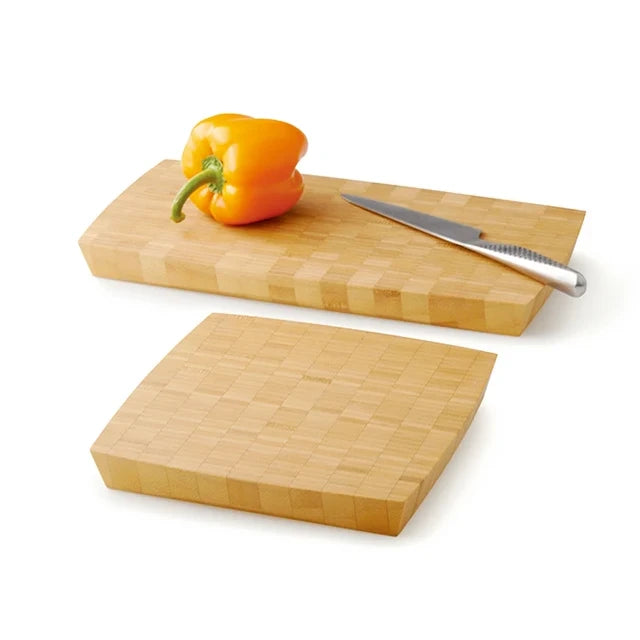
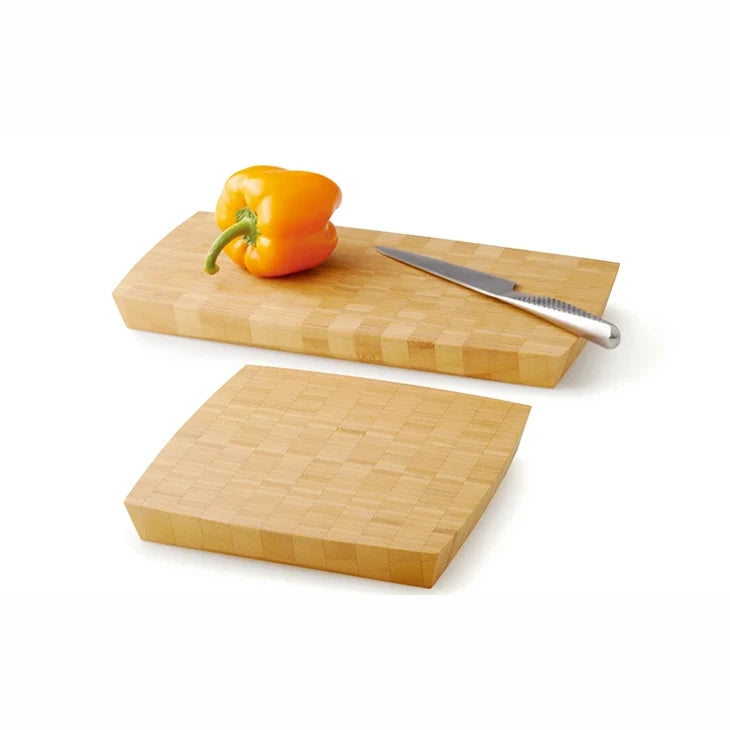
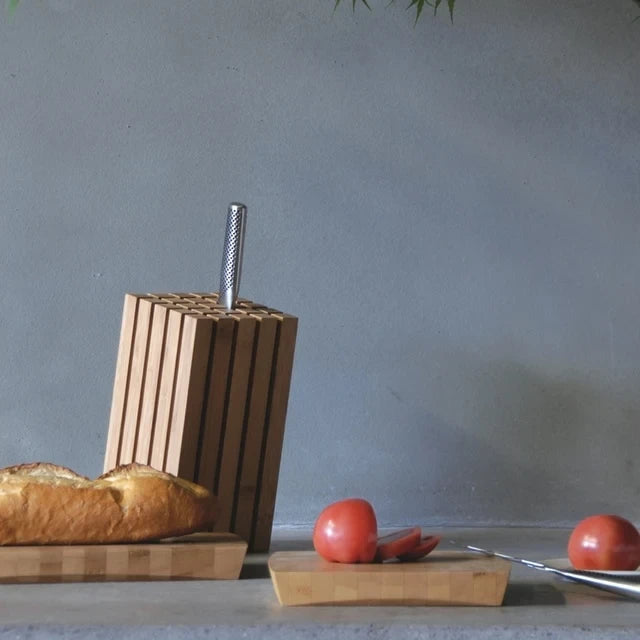
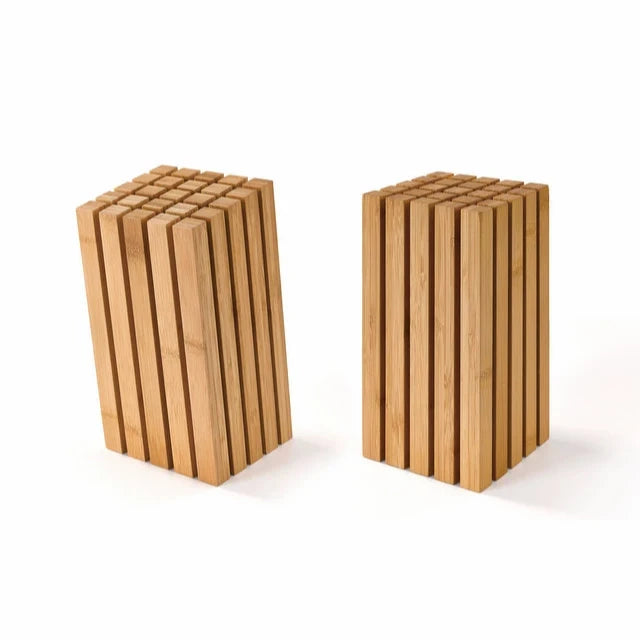
TEORI’s products are made from take shūseizai, or laminated bamboo. Bamboo is a hollow, relatively thin-walled plant, so you cannot cut a wide board from it the way you can from a tree. Instead, the culms are split into narrow strips, planed flat, and then glued together, layer upon layer, into solid boards and blocks that can be worked just like timber.

Turning raw bamboo into these boards takes many steps, but the result is a material that can be made in large sizes and that keeps the best qualities of bamboo: its flexibility, its beautiful straight grain, and its remarkable strength.
TEORI uses Japanese bamboo from its own bamboo groves and carries out every stage of production in its own factory, so the whole process stays within sight of the company. Some bamboo is also bought from grove owners around Mabi who ask TEORI to take it.

TEORI’s own bamboo grove. Each culm is numbered and managed.
Using every part of the bamboo
Bamboo regrows on its own without replanting and can be used as a material after just three to five years. It also has natural antibacterial properties, which is part of why it is valued as an environmentally friendly material.
Sharing the potential and the many benefits of bamboo is an important part of TEORI’s mission. In its factory, the company has introduced a range of machinery so that every part of the plant, from the leaves down to the sections near the root, can be put to use.

Bamboo leaves, improved with TEORI’s own technique, are also sold as fertilizer.
How laminated bamboo is made
Here is a look at how the laminated bamboo itself is produced. This is only the preparation: making the actual products comes afterwards. But it is a very important preparation.
- Splitting. The bamboo is sawn into strips of even width.

- Rough planing. The strips are rough-planed to remove the nodes.

- Carbonizing. To remove unwanted nutrients and harden the bamboo, the strips are carbonized in a kiln. This also changes their color to a warm caramel tone.


- Drying. The strips are first dried naturally in the air, then dried again in a drying machine.


- Finish planing and sorting. The strips are planed to their final size and sorted.

- Gluing. Adhesive is applied to the strips.

- Bonding. The strips are bonded together using high-frequency heating, and finally become laminated bamboo, ready to be worked.


When a larger size is needed, the panels are glued together again. Where extra strength is required, the layers can be bonded in alternating directions, depending on how the material will be used.

Laminated bamboo is the result of a long process that takes considerable time, and because TEORI starts by growing the bamboo itself, even more time and care go into it than these steps show. Put the other way round, laminated bamboo is worth all that effort, because its functionality and beauty are hard to find in any other material.
Meeting good design
Valuable as bamboo is, TEORI felt that one more step was needed for people to truly appreciate it. Around 2006 the company started the “Laminated Bamboo Project,” developing products together with six designers with ties to the local area.
The project led to products that balance originality, function, cost and beauty. Pieces developed through it have since won a number of awards, and many remain long-selling favorites today.

The ZERO mirror: seen from the side, the bamboo ring appears to float.
Companies with strong technical skills often leave design for later. Mr. Nakayama did not stop at showing how good laminated bamboo is; he worked with designers to turn it into products people actually want. That forward-looking openness to new things may be what has shaped TEORI as it is today.

The TENSION chair makes use of both the flexibility and the strength of bamboo (Good Design Award).

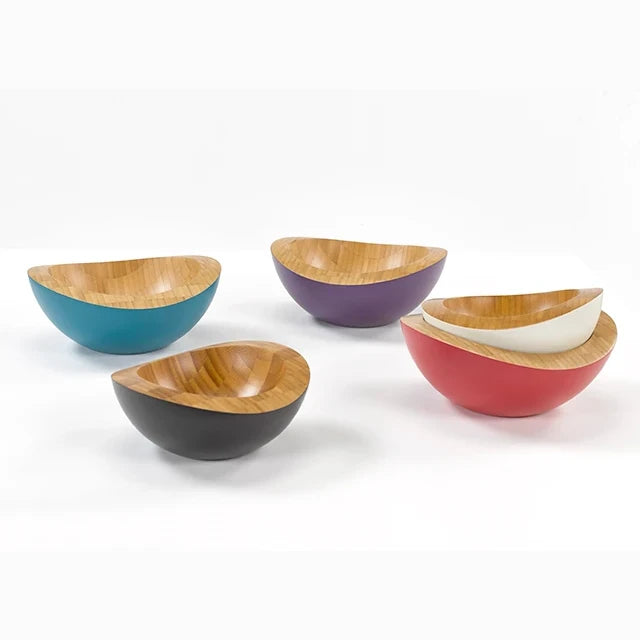
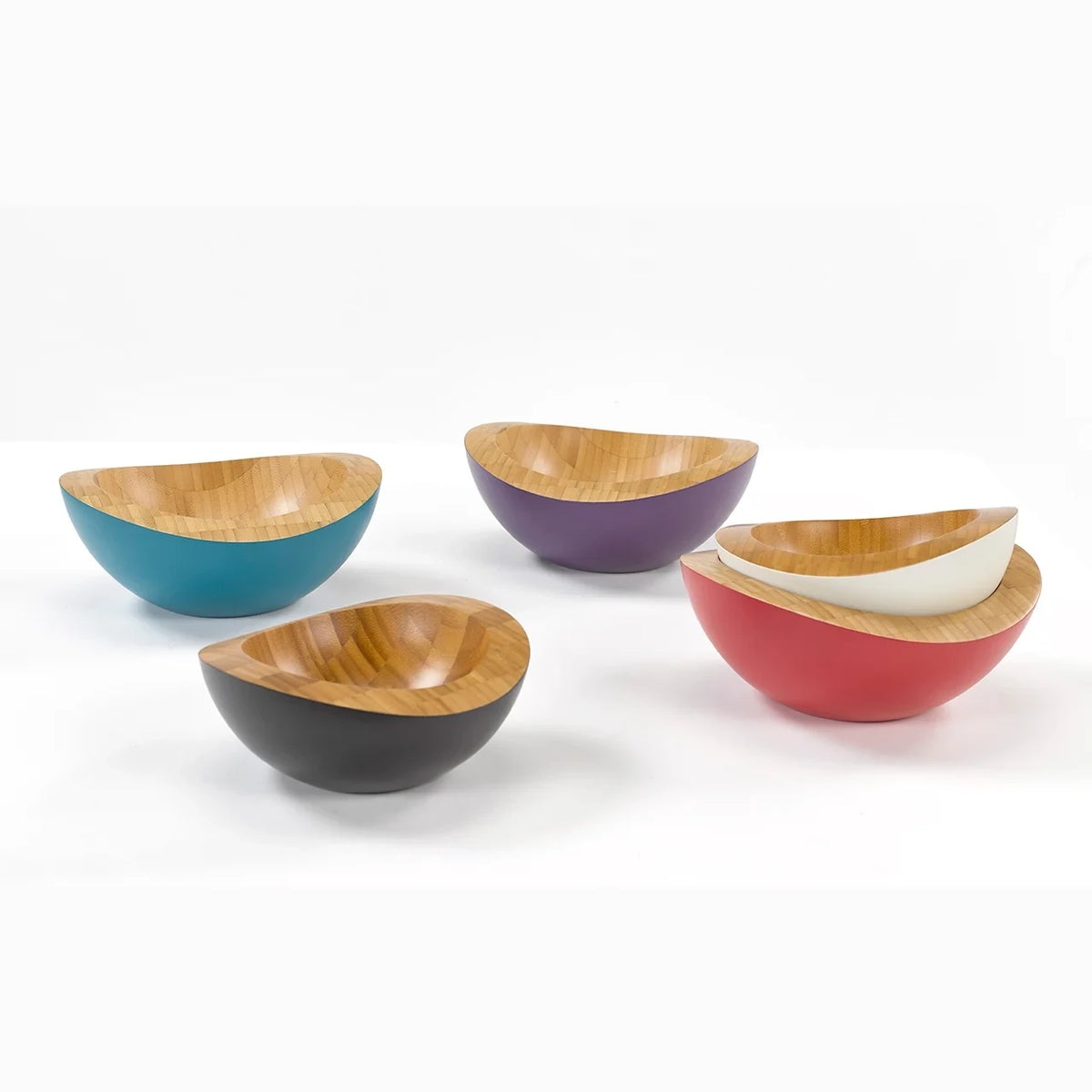
The NUTS bowls show off the distinctive pattern of laminated bamboo (Good Design Award).
A long-held dream, step by step
TEORI was founded in 1989 as a company that machined furniture parts. Because laminated bamboo is flexible and strong yet can be worked in so many ways, the business grew by making library bookshelves, display fixtures and OEM furniture for house builders.
From the very beginning, however, Mr. Nakayama’s dream was to produce laminated bamboo and bamboo products entirely in-house, taking responsibility for every step from start to finish. The equipment required a huge investment, so it took many years, but in 2017 TEORI finally began operating its own laminated bamboo factory.

Mr. Nakayama and TEORI are turning their convictions into reality one step at a time, and we have great respect for both their craftsmanship and their attitude. We hope they will keep spreading the appeal of laminated bamboo, and of bamboo itself, in Japan and around the world.
Our heartfelt thanks to everyone at TEORI for taking the time, despite their busy schedules, to show us around so carefully.