Kamezaki Senko: Hand-Dyed Fishing Flags from Kagoshima
Ichikikushikino, a port town in Kagoshima facing the East China Sea, is known as a tuna town. Here, Kamezaki Senko has been dyeing cloth since 1869. For over 150 years, the workshop has made tairyo-bata, the bold, colorful flags fishing boats fly to celebrate a big catch, along with warrior banners for Boys' Day, happi coats and noren curtains. Its tairyo-bata and Boys' Day banners are designated Traditional Crafts of Kagoshima Prefecture.

We spoke with Mr. Kamezaki, the fifth-generation dyer and president, about how he approaches the craft in a time of rapid change.

What is shirushi-zome?
The workshop specializes in shirushi-zome, a traditional Japanese technique for dyeing names, crests and designs onto cloth. When we arrived, Mr. Kamezaki was at work on a fishing flag, drawing lines of resist paste onto white cloth with a cone-shaped tool called a tsutsu. The paste, made from rice flour, rice bran and lime, keeps the dye out so that the outlines appear crisp and white in the finished flag.

This resist step is the heart of the technique: the key is how cleanly you can keep the undyed areas. The pink underdrawing he was tracing was drawn by his father, the fourth generation, with the lettering done freehand. Lettering is part of each dye works' character, and while many now use digital fonts, Kamezaki Senko still draws its own.

He draws the lines with ease, but it is said to take half a year to draw a straight line and a year to draw everything, and much longer to make every line even. The paste also changes with weather and time, and blurs if it dries too soon, so the work demands both care and speed.

A vessel for someone's feelings
Fishing flags and warrior banners are gifts, made to order to celebrate a new boat, a launch or a child's birth. Ichikikushikino has one of the largest fleets of deep-sea tuna boats in Japan, and Kyushu celebrates Boys' Day with enthusiasm, so the orders once kept the workshop constantly busy.

Surprisingly, Mr. Kamezaki's approach has been to work with an empty mind, and simply make each piece beautiful. "Honestly, we don't have time to pour our hearts into it," he laughs. "The customer is the one putting their feelings into the gift. Our job is to make a beautiful vessel for those feelings."
Keeping handwork alive
In recent years, orders have fallen sharply. There are fewer fishing boats, and lifestyles have changed. Even small Boys' Day banners for balconies are ordered less, as families worry about displaying a child's name or advertising that there is a baby in the house.

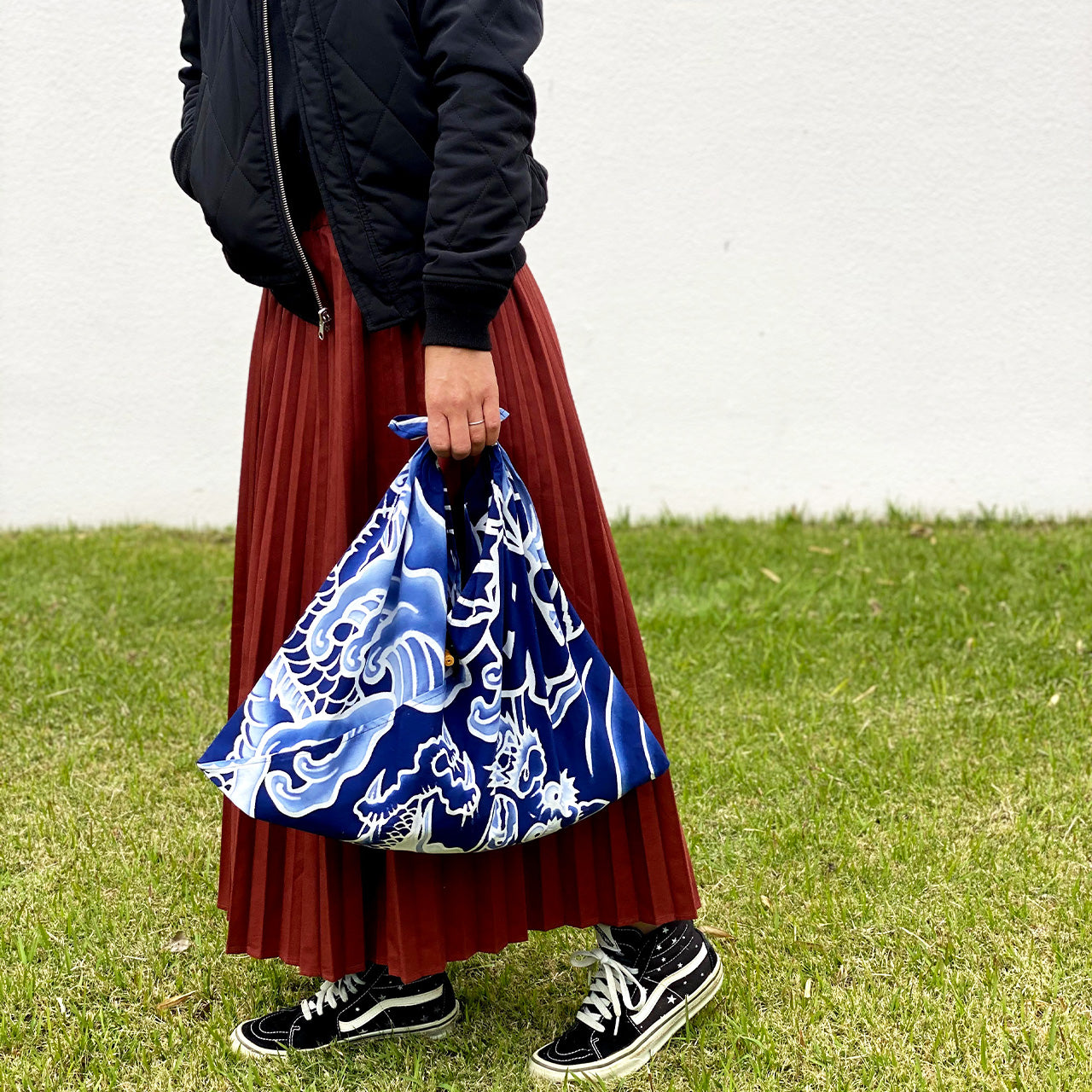
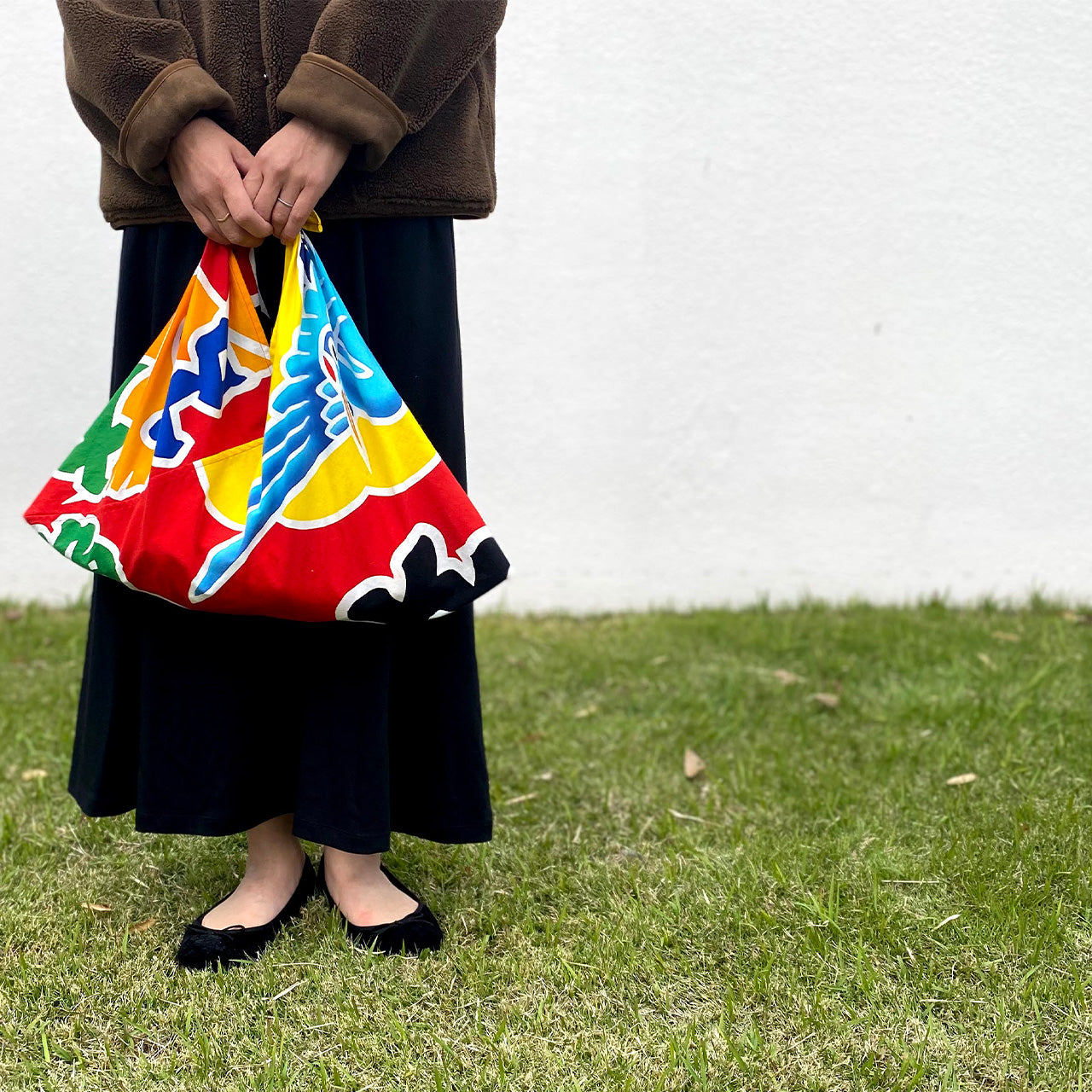
As many dye works closed, Mr. Kamezaki decided not to just wait for orders, and began making retail products using traditional techniques, to keep the handwork alive. Drawing the paste by hand is actually faster than making a stencil, and more flexible for original designs. In 2023, he launched Kamezomeya, a retail brand that brings shirushi-zome into everyday life.

What must not change, and what must
To respond to the times, Mr. Kamezaki asked his father to hand over the business, promising to take responsibility. Since then he has worked with outside designers, used digital tools for design and dyeing, and even brought AI into business planning. Moving from made-to-order work to stocked retail products was not easy, and at first his father opposed it. Today retail is about 20% of sales, and he aims to grow it further. "I think we've survived because we've adapted to every era," he says.

His second son has joined the business, and young staff are thriving. Mr. Kamezaki is also looking abroad: in 2017 he exhibited at Japan Expo in Paris with a dyeing workshop, and was then invited to Japan Touch in Lyon. He has also helped a group in Taiwan revive hand-dyed fishing flags, a tradition that reached Taiwan in the early 20th century. "There are parts that must not change, and parts that have to," he says. He thinks of the whole industry, not just his own company.

Choosing the family craft
He did not always feel this way. "When I was young, I was always thinking about when to run away," he laughs. As the eldest son, he had heard "you're the successor" for as long as he could remember. Marriage, and the responsibility it brought, changed that. "We say thank you to our customers, but they say thank you to us so often too. I came to feel this is really good work." Now a father of four sons, he speaks of wanting to pass the craft on, for the industry and for the next generation.

Craft and feeling, dyed together
As we talked, the fishing flag was finished: crisp white lines, even color, a true union of the dyer's skill and the giver's wishes.

Mr. Kamezaki does not simply protect the old ways. He is willing to change so they can be passed on. Calm as he is, there is a strong will behind his work, and we hope his hand-dyeing continues for many generations. Our thanks to Mr. Kamezaki for his time.