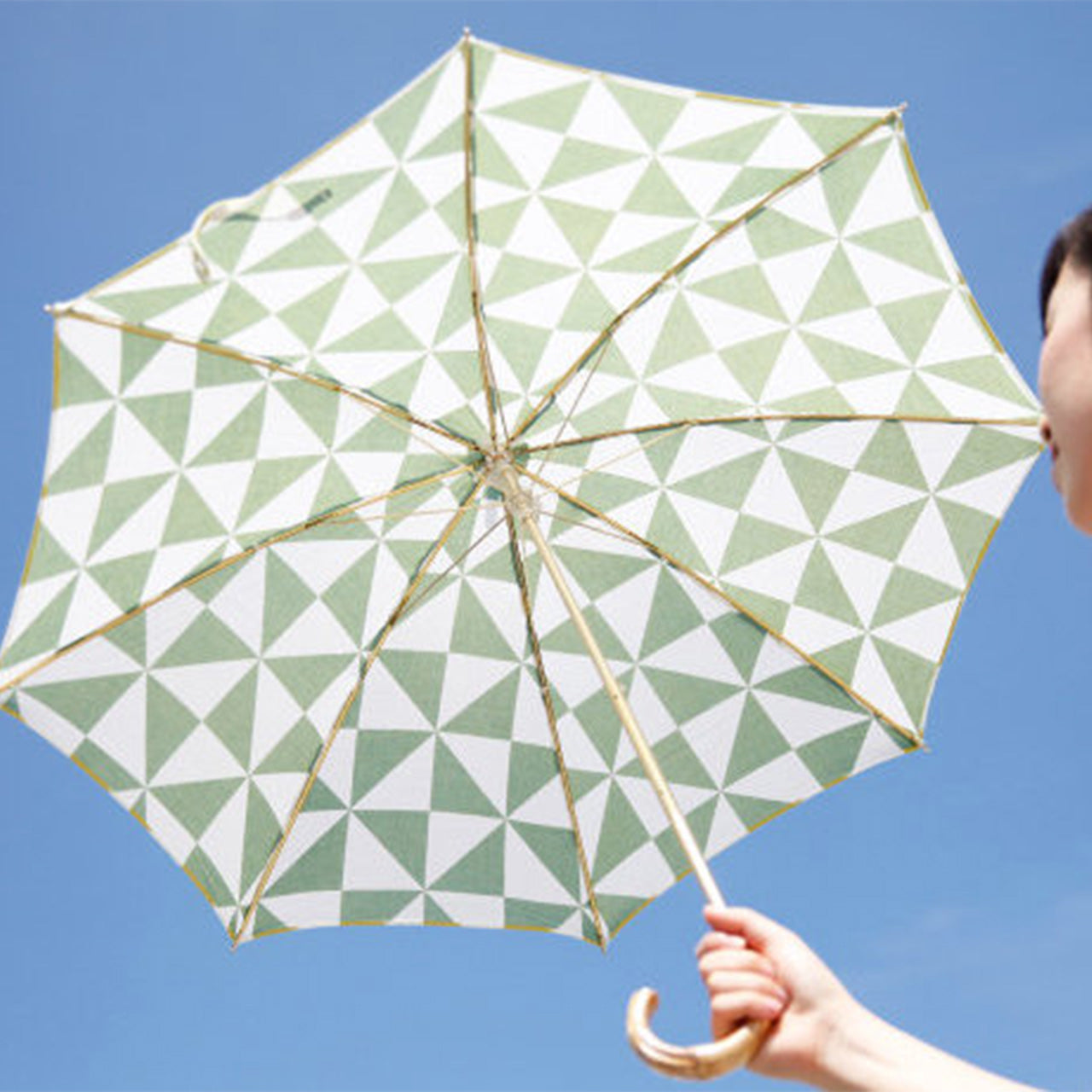
hirali: The Rare Art of Roller-Printed Tenugui
hirali and its sister brand Oo are made by Takeno Senko, a tenugui maker in Sakai, Osaka, founded in 1961 and known for its exceptional skill in roller printing. We visited to learn about a technique that is often misunderstood, and that turned out to be nothing like what we imagined.

Three ways to dye a tenugui
Sakai has been famous for tenugui, the traditional Japanese cotton cloth, for centuries, and still produces more than anywhere else in Japan. Yet workshops, output and craftspeople are all in decline. Tenugui are dyed in three main ways:
- Chusen, the oldest, is dyed by hand, pouring dye through stacked cloth.
- Screen printing pushes pigment or dye through a mesh screen. It is flexible and does not require great skill.
- Roller printing, Takeno Senko's specialty, uses a huge machine and demands deep experience and intuition. Traditionally used for runs of ten thousand or more, it fits poorly with today's smaller orders.


Learning the machine first
Mr. Terada, the president, joined the company at 24 after his father passed away. He could have become president immediately, but chose to train on the machines first. "The veteran craftsmen won't listen to someone who doesn't know the technique or the machines." When he became president at 27, only a handful of roller-printing workshops were left in Japan. Afraid the technique would disappear completely, he set out to find what else it could do.

The machine uses engraved rollers. Dye is applied to the roller, a blade scrapes off the excess, and the roller presses the design into the cloth. This machine has three tiers, printing three patterns at once. It sounds simple, but every step depends on the craftsmen's experience; a mistake ruins tens or hundreds of meters of cloth.

Dye, not print
Screen printing usually uses pigment, which sits on the surface and leaves cloth slightly stiff. Roller printing uses dye, which soaks into the fibers and keeps the softness of the traditionally bleached cotton. That is why roller printing is really dyeing, not printing. And because the roller presses dye into the cloth, the pressure controls how deeply it penetrates. Mr. Terada saw possibility there.
Breaking the rules of roller printing
His first breakthrough was a roller-printed tenugui with the same pattern on both sides, something thought possible only with chusen. By pressing the roller firmly, the dye penetrated evenly through to the back. The pressure is adjusted by hand wheels on each side of the machine, by feel. Getting there took several years.

Something only they can make
But doing what other techniques could already do would not save roller printing. So Mr. Terada and his craftsmen took on something far harder: tenugui with a different color on each side. It took about three years to produce reliably.

Each cloth is dyed three times instead of once, and the pattern must line up perfectly front and back. It is then steamed, a step most makers skip, which fixes the dye so firmly that, unlike most dyed tenugui, these do not need to be washed separately at first. Color was another challenge: each side's color is affected by the color behind it, and the colors change completely after steaming. The dye recipe was refined through endless trials, with no more than 0.2 g of error allowed per bucket.


The result was two brands, hirali and Oo, launched in February 2017: products that only Takeno Senko, and only roller printing, can make.

Why it matters
Above all, Mr. Terada wants people to understand roller printing. The name suggests something quick and mechanical, but it can only be done by skilled craftsmen with patience and ingenuity. Without them, it disappears. The average age of the craftsmen here is about 60. He hopes that, through these products, more people will discover the technique, and some will want to become roller-printing craftsmen themselves.

The craft in the details
Freshly dyed cloth winds around drum dryers heated from inside, with the flame adjusted to each job. The scraping blades are made by the craftsmen themselves, and their shape affects the result. Every lever matters to within a few centimeters, and the pressure wheels at each corner decide how deeply the dye soaks in. In the end, it all comes down to the craftsman's fingertips.


This visit completely changed how we think about printed cloth. Chusen, screen printing and roller printing each have their own character, and tenugui that look similar can be entirely different. Our thanks to Mr. Terada and the team at Takeno Senko for their time.