MokuNeji: Where Wood Turning Meets Precision Engineering
MokuNeji adds precise, industrial-style screw threading to the traditional craft of wood turning, opening new possibilities where craft meets industry. We visited Taniteru Kogei, the workshop that makes its products.
Making with the region
MokuNeji was created by Kotoriku, a producer whose concept is to make things together with craft regions. Kotoriku handles design and planning; Taniteru Kogei completes the products. But this is not a simple maker-and-subcontractor relationship. Kotoriku believes that shining a light on craftspeople is the way to bring light to a region. So let us focus on the craftsmen.

Doing what no one else does
Taniteru Kogei specializes in lathe-turned woodwork in Yamanaka, Ishikawa: a father and his two sons, who looked a little intimidating but explained everything with great kindness. Yamanaka is Japan's leading center for kiji-rokuro, lathe-turned wood bases; even famous lacquer regions like Wajima, Aizu and Echizen send their round work here. How do you survive in such a place? "Do what other craftsmen would never do." For them, that meant bringing numerical control (NC) machining into a traditional craft.

Beyond tradition
The idea came from the two sons, who joined around 2000. After ten years of mastering the basics, they planned to introduce NC machining, normally used for metal and precision parts, to cut accurate threads. In a world that prizes handwork, it was almost heresy. NC made possible precise threads, including triple-start threads impossible by hand, and made the workshop not just number one, but the only one.


NC is used only for threading. Everything else depends on the craftsmen's skill, including setting up each piece to within fractions of a millimeter before machining, and knowing wood well enough to apply NC to it at all.

Trial and error
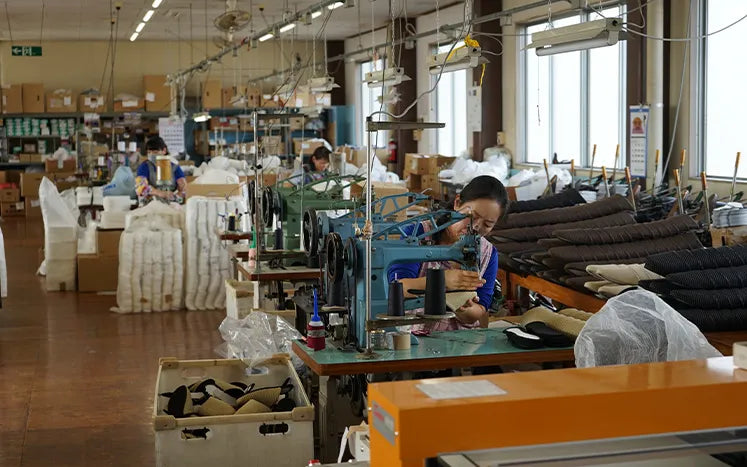
The workshop looks nothing like a traditional one: the sons work at computers. "You only need to understand the parts you use," one said; to us, it was a mystery. "At first, every order we delivered came back," they laughed, and learning NC from zero was a struggle. But at heart, they love a challenge: "I want to do work I've never done," "I want to do harder things."

Wood fitted to other materials
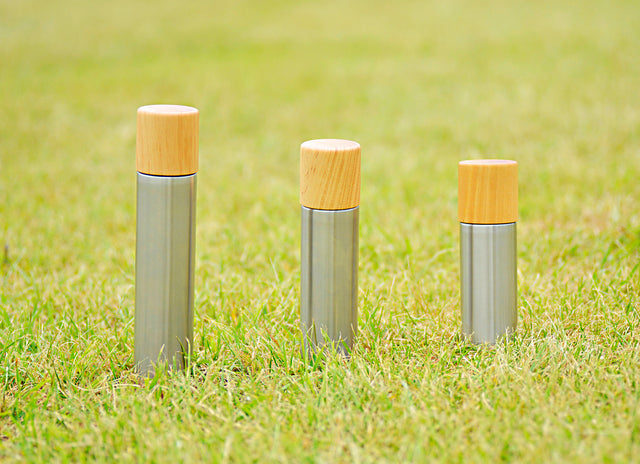
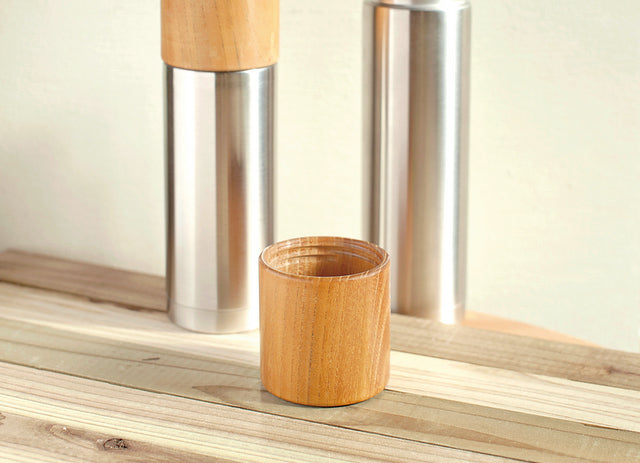
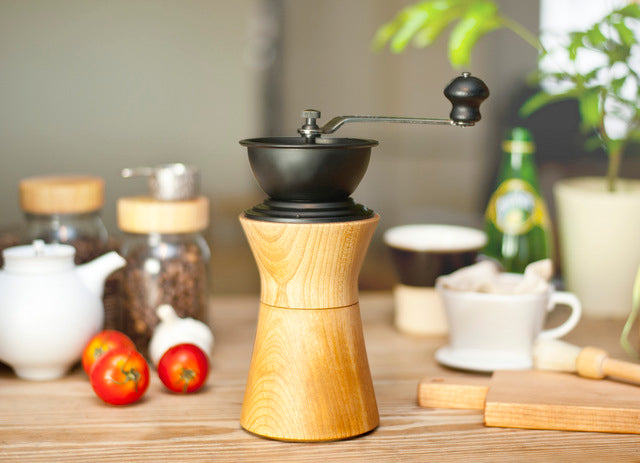
Precise threading truly shines when wood is combined with other materials, and that is MokuNeji's appeal: iron grinding parts from a coffee-equipment maker in the coffee mill, glass in its jars, stainless steel in its bottle. The wood is turned to fit each material exactly. Wood expands, contracts and warps, and the other materials can vary by fractions of a millimeter, so matching them is true craftsmanship.


"When we're asked, 'Can you do this?', we say, 'We'll try.' We take on even impossible-looking work and figure it out. Our skills improve, and that's fun." Most craftsmen avoid time-consuming jobs that might fail; here, they welcome them. "Kotoriku's requests are hard," the sons say, "and that's why they're fun."

A hint for revitalizing craft regions
Craft regions everywhere face a lack of successors. When we asked to interview MokuNeji, Kotoriku happily arranged for us to meet the makers, which is exactly what shining a light on craftsmen means. Seeing the next generation talk so joyfully about their work, we felt young people's image of craftsmen could change. Our thanks to the Taniguchi family of Taniteru Kogei.