Odate Kougeisha: Magewappa and the Story of Blanc Pa
With their gentle curves and fine wood grain, magewappa, bentwood boxes made from cedar, have been part of Japanese life for more than a thousand years. Magewappa from Odate, Akita, are the only bentwood ware in Japan designated as an official Traditional Craft. We visited Odate Kougeisha, which has been making magewappa in Odate for 65 years, to learn about their craft and the story behind their new line, Blanc Pa.

Made entirely in-house
Before magewappa, the company made folk crafts such as small triangular dolls inspired by children in snow country, as well as lanterns. It began making magewappa between 1955 and 1964. While many craft regions split the work between specialist workshops, Odate Kougeisha's own craftspeople handle every step, from start to finish.
The first products were trays and tea caddies. Customers soon asked for lunch boxes and tableware, and those followed. "Magewappa are beautiful, and the wood naturally regulates moisture," says Mr. Toshima, the company's president. "Even after plastic became common, people kept choosing them for both reasons." The bento box, used every day, is now the company's signature product.

Tradition and a new idea
Bentwood techniques existed across Japan as early as the Heian period. A replica of a lunch box found in Odate, thought to be 100 to 150 years old, looks almost exactly like the ones made today.
Odate Kougeisha uses Akita cedar that is 100 to 120 years old. Traditionally, only the reddish heartwood is used, and both the core and the pale outer sapwood, called shirata, are discarded, which means roughly half of each precious log was thrown away. "We felt we were wasting trees that had taken so long to grow," Mr. Toshima says.
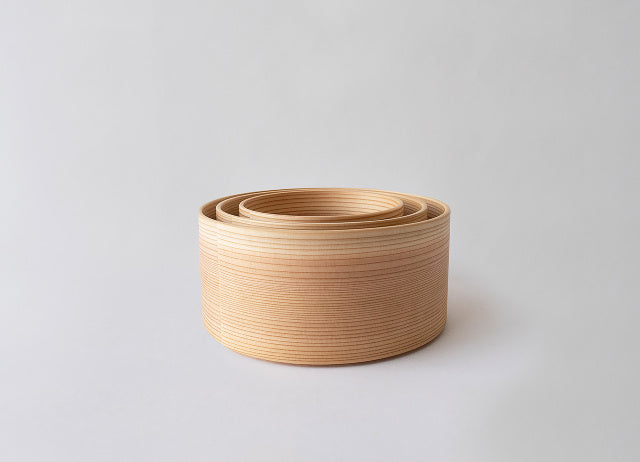
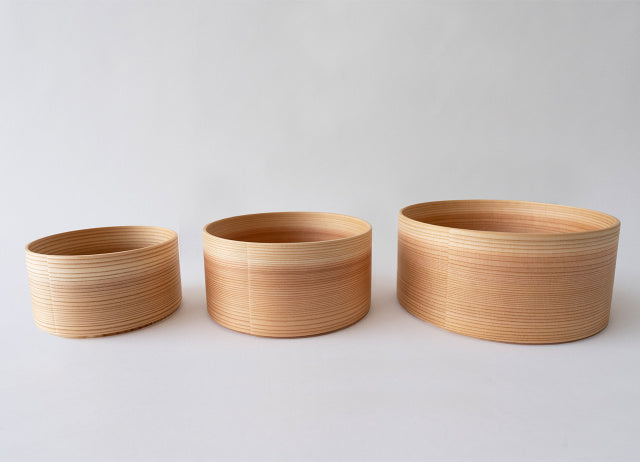
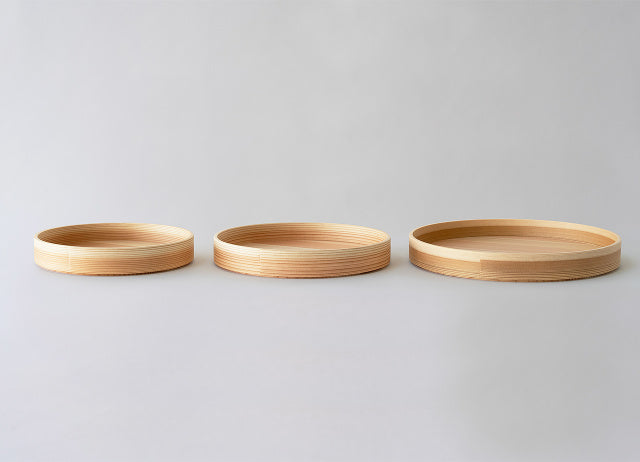
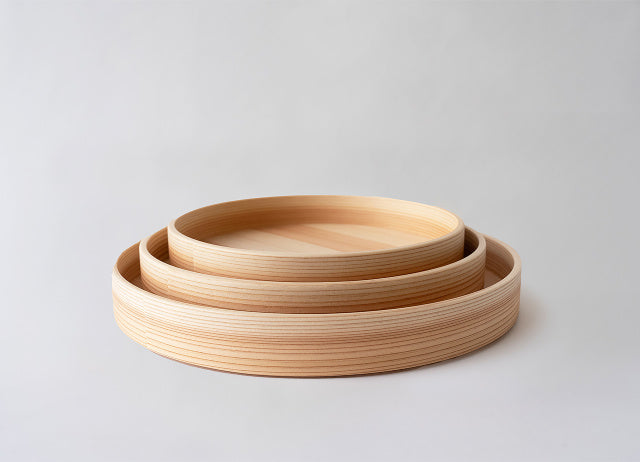
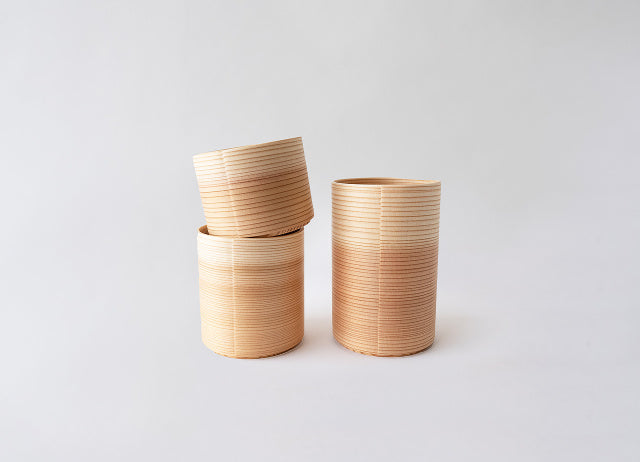
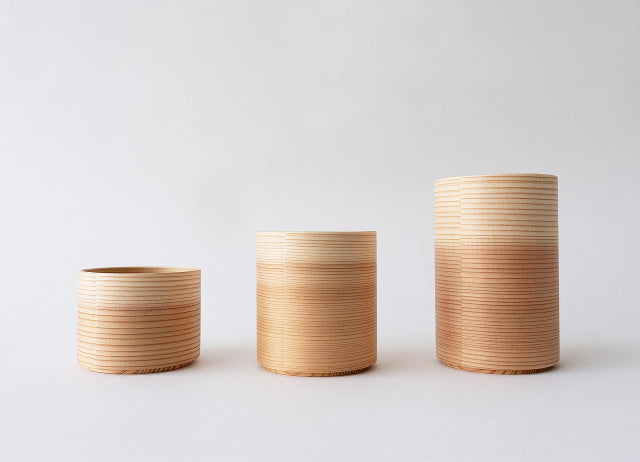
Blanc Pa was created to change that. Its name combines the French word blanc, white, with the "pa" of magewappa. Where traditional magewappa aim for uniformity, Blanc Pa celebrates the natural character of each log, including the shirata the industry long avoided. Using it reduces waste and lets the company make more pieces from each tree, but it also makes the work harder. Mr. Toshima calls it a challenge worth taking on.

Behind both lines is the same wish: that people use good things for a long time. Odate Kougeisha repairs its pieces, both classic and Blanc Pa, fixing stains, scratches and chips wherever it can. The brand was developed with a local designer, and new pieces are already in the works.
Why Akita cedar
Asked about the biggest challenge in his industry, Mr. Toshima does not name a lack of successors. He names wood. Odate Kougeisha has always used cedar from Akita, where long, cold winters and few sunny days make trees grow slowly, with tightly packed growth rings. Cedar from warmer regions can grow about twice as fast, with wider rings. That fine, even grain is what makes Akita magewappa so beautiful.
Because magewappa are made from boards split lengthwise from the log, the thicker the trunk, the taller the piece you can make. Even an 80-year-old tree is not big enough. Each box carries a century of growth, finished by a craftsperson's hands.

Every step by hand
Around thirty people work in the factory. In one corner, stacks of thin cedar boards soak in water heated to around 90°C over a fire for one to two hours, until they are soft enough to bend. Straight out of the hot water, a craftsperson wraps each board around a mold and clamps it in place, with quick, practiced movements that make it look easy.

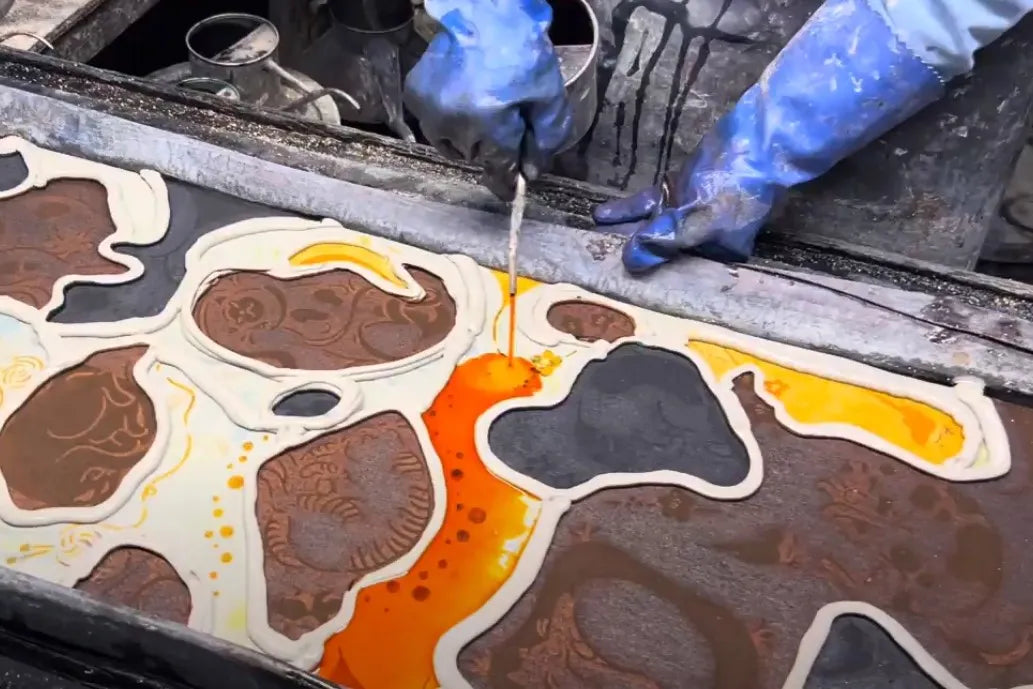
The overlapping ends are stitched with strips of cherry bark, a method unchanged since the Edo period that also gives magewappa their distinctive dark accent. This step is done by one of the company's five certified Traditional Craftspeople. The base is then fitted without gaps, the piece is sanded, and a urethane finish is applied in a fine mesh pattern: enough to resist oily foods, but thin enough to let the wood keep breathing.

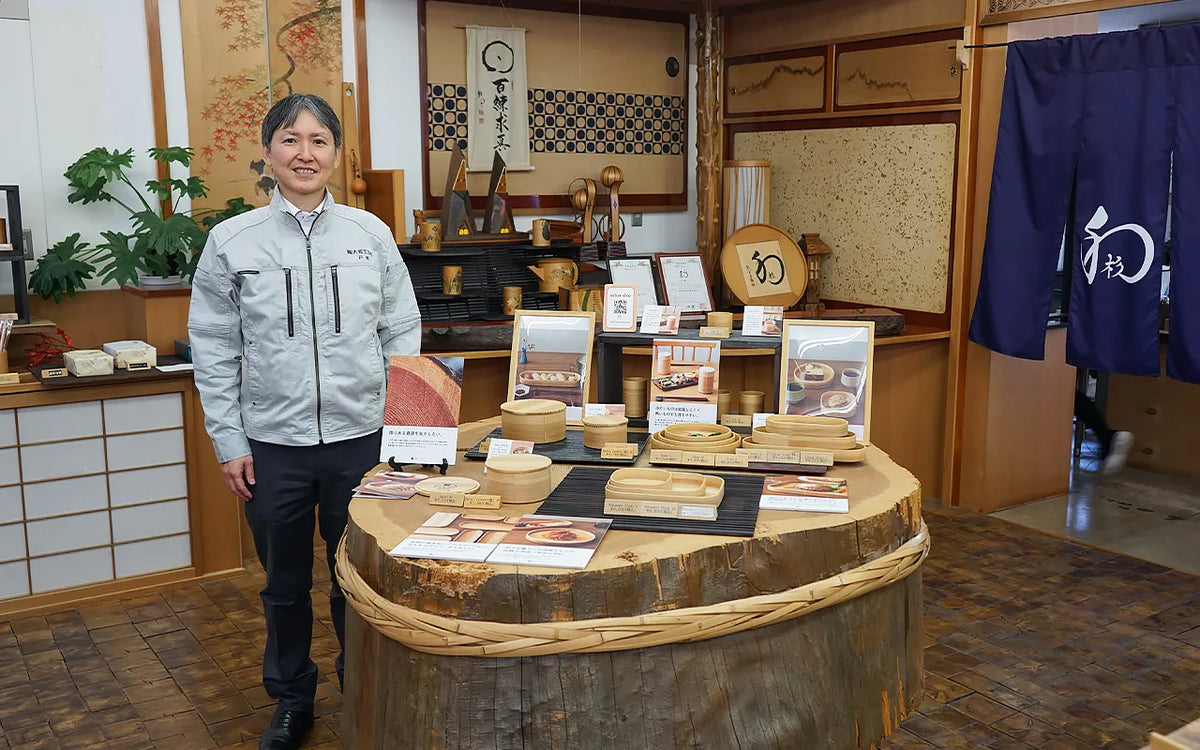
We were surprised to learn that the steps after bending take the most time. In the showroom, the floor is made from leftover heartwood and the display stand from a 250-year-old log. Looking at the pieces again after the tour, we felt the weight of those years, and of skills passed down unchanged. Our thanks to everyone at Odate Kougeisha.