Shitsurindo: Echizen Lacquer and a New Generation of Craftspeople
This was our second interview with Shitsurindo. When we first visited around 2014, as a brand-new shop, Toru Uchida welcomed us warmly. Now the eighth-generation head, he has grown alongside us, and we returned to look at how Shitsurindo has changed and where it is going. We also spoke with Natsumi Yamanishi, a young craftsperson who joined that year.

A family workshop
Echizen lacquerware is a traditional craft from Sabae, Fukui, Japan's oldest lacquer-producing region. Shitsurindo, in the Kawada district, began by making lacquerware for restaurants and now makes pieces for everyday home use. Lacquer hardens with humidity, so temperature and humidity must be managed with the seasons. "In winter, we have to turn the heating on around 5 a.m."

Surrounded by rivers, rice fields and mountains, with frequent cloudy skies, Fukui is ideal for lacquer. When Mr. Uchida joined, he worked with just his parents; thinking ahead, he began training young craftspeople. "We used to decide each morning what to work on as a family. Now we plan a week in advance, so no time is wasted." Orders have grown, and the workshop's atmosphere has completely changed.


Sharing the joy of making
Since 2015, Mr. Uchida has been a leading figure in RENEW, an open-workshop event across Sabae, Echizen City and Echizen Town where visitors can see lacquerware, eyeglasses, washi, knives, chests, textiles and pottery being made. While he is away, young craftspeople lead the workshop, and two more joined this year. Training successors independently is extremely hard; Shitsurindo's growth feels like an ideal model.

What today's craftspeople need
What does he look for in new hires? "Communication. People imagine craftsmen work in silence, but if you don't speak up, I can't tell what you're struggling with. Talking too much is better," he laughs. Brush pressure can only be learned by feel, but new steps are filmed so learners can study them. "Where I paint 100 bowls a day, beginners aim to paint 10 properly. I don't ask for speed at first."

From drop to finished bowl
A lacquer tree yields only about 200 g of sap, which serves as a coating, a reinforcement and an adhesive; with gold, it repairs ceramics in kintsugi. In the filtering room, lacquer is kept from drying under plastic wrap, where once oiled washi was used.


The inspection standards astonished us: bowls rejected for specks we could barely see even when they were pointed out. In the painting room, Mr. Uchida's gentle manner changed completely, as he took care not to break anyone's concentration or stir up dust. Painted pieces are turned slowly on rotating racks as they cure, so the lacquer does not pool.


"I couldn't imagine myself without lacquer"
Ms. Yamanishi studied lacquer through graduate school at an art university in Kyoto. "Since choosing my path in high school, I knew I'd work in art, traditional crafts or making things. I'm very lucky they hire new graduates." Did she consider any other job? "I couldn't imagine myself not working with lacquer." At her final interview in Sabae, she planned to wait in a café, "but there was nothing. That was my initiation," she laughs.

For now she prepares bowls for painting, removing every speck of dust and oil. "Lacquer repels oil, so even a little on the base ruins the finish. I'm not painting yet, but I feel I'm part of the finish." Her goal: "To be trusted with the top coat soon."


RIN&CO.
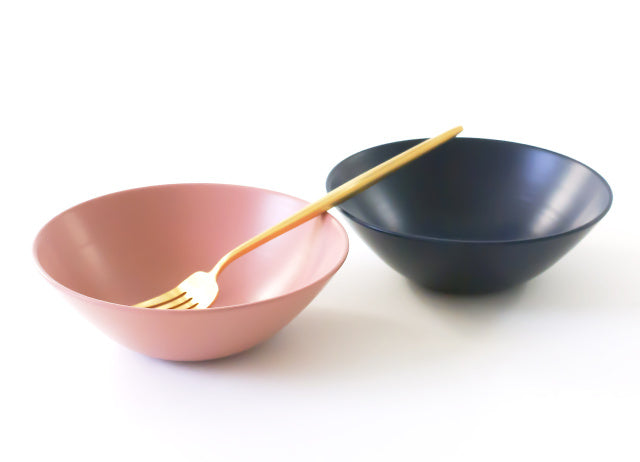
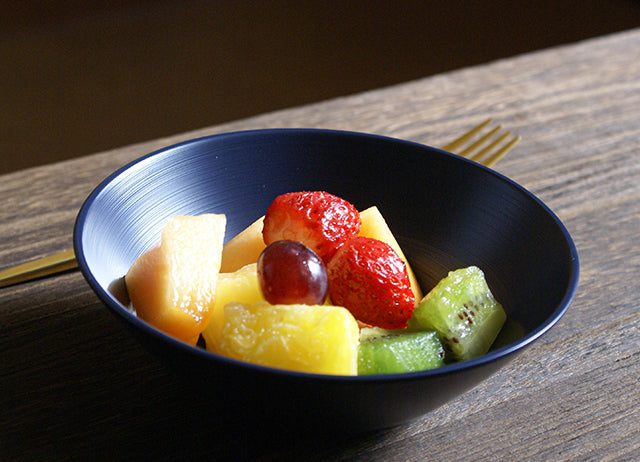
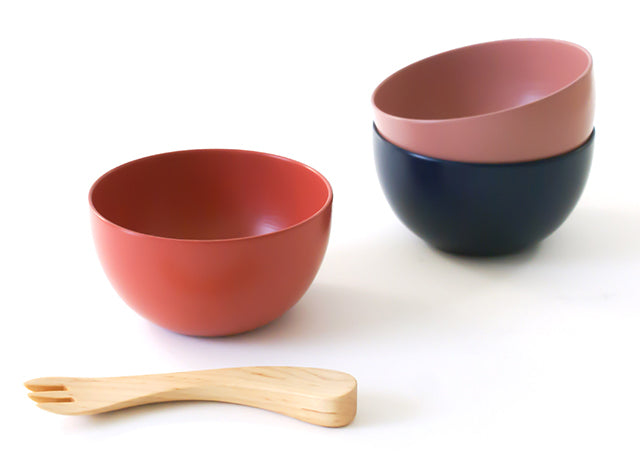
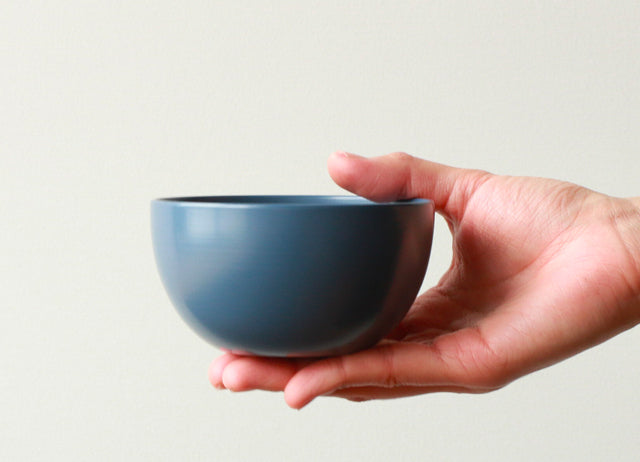
RIN&CO. expresses "making from the north": colorful bowls that evoke the glow of a warm room, shaped to feel more familiar every time you use them. Coated in tough Echizen hard lacquer with beautiful brush marks, they can even go in the dishwasher. "I served blanched rapeseed greens in a pink RIN&CO. bowl, and it felt like spring," says Ms. Yamanishi.

Days after our visit, a customer wrote to the workshop: "The vivid color and the size that fits my hand bring me joy every time I use them." "Nothing has made me this happy since I started," Mr. Uchida said. "I'm glad I've worked so hard at lacquer." Making people happy and enriching their lives: that is Shitsurindo. Our thanks to Mr. Uchida, Ms. Yamanishi and everyone at Shitsurindo.