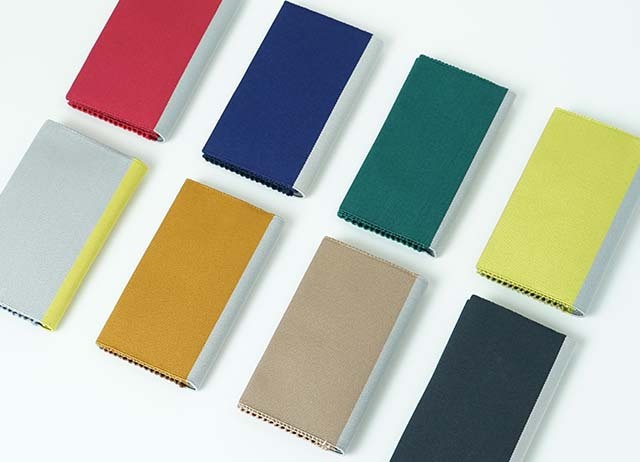
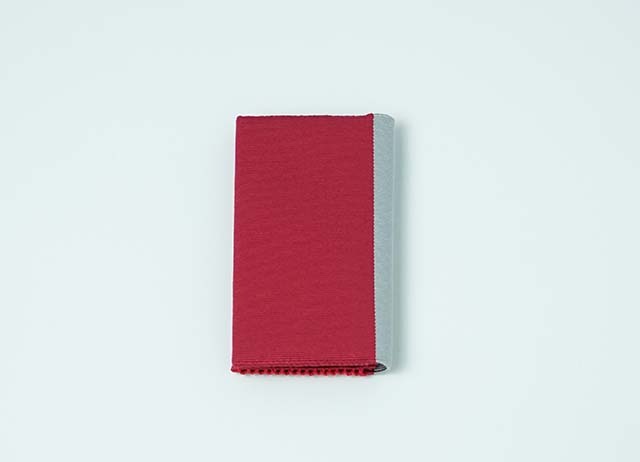
sufuto: Tsuzure Weaving, Woven with the Fingernails
sufuto is a brand of celebratory goods from Kiyohara Orimono, a family of weavers that has practiced tsuzure-ori, tapestry weaving, since the Muromachi period, making ceremonial wrapping cloths, obi sashes, festival hangings and theater curtains. Led by Mr. Kiyohara, the brand aims to carry a weaving tradition more than 4,000 years old into modern life. He guided us through the workshop.

A Nishijin house in Shiga
Kiyohara Orimono is a Nishijin-ori weaving house, a style associated with Kyoto, though the company is now based in Moriyama, Shiga. Like many weaving houses, it relies partly on debata: skilled weavers who work on looms installed in their own homes. Mr. Kiyohara's grandfather trained such weavers across Japan, many of them women in mountain villages. Today about 30 remain, all with long careers; the oldest is still weaving at 91.


Tsuzure weaving
Tsuzure weaving began in ancient Egypt and reached Japan along the Silk Road. Usually the weft thread is passed straight across; in tsuzure, it is passed diagonally, and the loose thread is packed down to wrap the warp completely, hiding it. This makes the cloth thick and extraordinarily strong, up to about five times stronger crosswise than leather. Kiyohara uses thick, high-quality silk that is glossy as thread and takes on a calmer tone when woven.


Woven with the fingernails
The finest form is tsume-kaki hon-tsuzure: weaving with the fingernails. Normally the weft is packed with a comb. For very detailed patterns, a comb cannot pack the thread precisely, and switching tools constantly is inefficient, so weavers file their own fingernails into comb-like teeth and use them instead. (Their biggest complaint: nails catching on clothes.) Work this fine may advance only about a centimeter a day, yet it can render intricate pictures and even curves. Because the warp is hidden, the back shows the same pattern, so a worn piece can be turned and used from the other side.


The floats of Kyoto's Gion Festival are called moving museums, and many of their most detailed hangings are woven in tsume-kaki hon-tsuzure, a testament to its beauty and durability.
The hopes behind sufuto
Mr. Kiyohara is proud to be a tsuzure weaver, but worries that the weave has become limited to luxury kimono and art, far from how people live today. "We should have done this sooner," he says. sufuto, the name drawn from sufu, "celebration cloth," is his answer: things that fit modern life.

He showed us a weaving shuttle; the word gave its name to shuttle buses and the space shuttle, things that go back and forth. "My dream is to send tsuzure weaving, which came to Japan from ancient Egypt, back like a shuttle, with new value added." That dream is already starting to come true. Our thanks to Mr. Kiyohara and everyone at Kiyohara Orimono.