Take Kobo Kisetsu: From Office Worker to Bamboo Craftsman in Kyoto
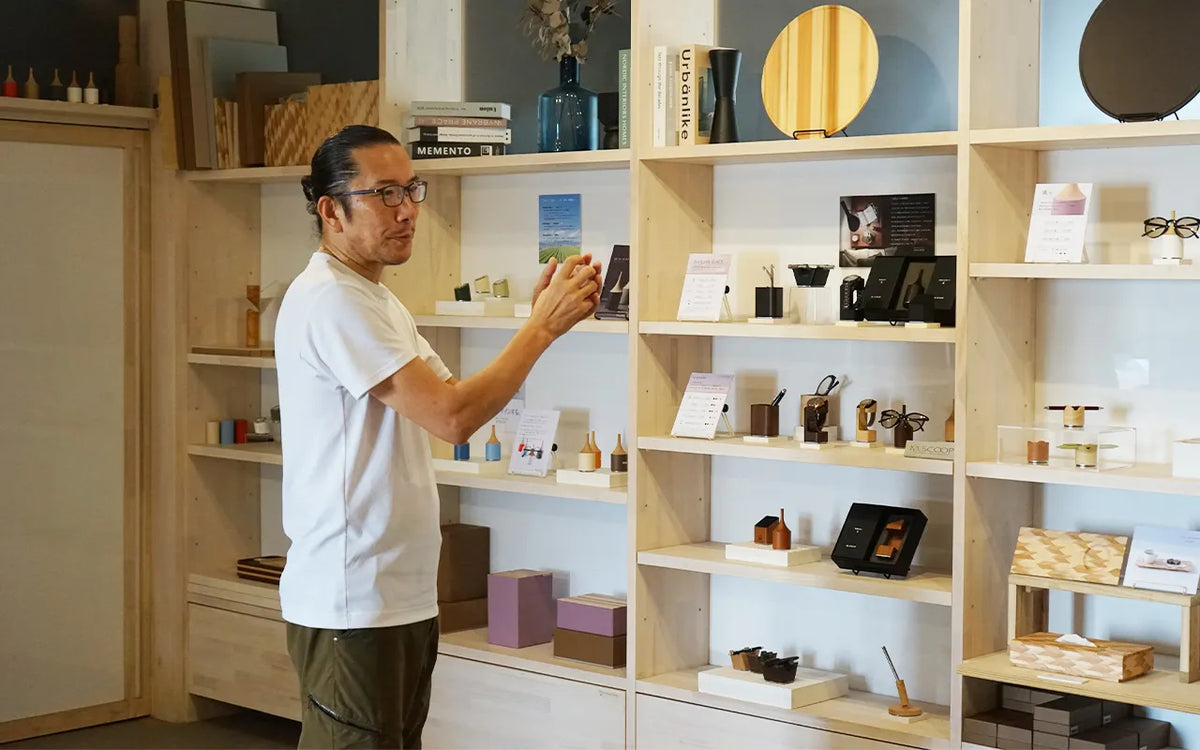
Bamboo craft in Japan often brings to mind tea ceremony utensils and flower baskets: formal pieces for special occasions. In Kyoto, one workshop makes something quite different: bamboo bags that sit perfectly with everyday modern clothes. This is Take Kobo Kisetsu, the bamboo studio of craftsman Mr. Hosokawa.

Mr. Hosokawa came to the craft late. He spent eleven years at a printing company before entering the world of traditional crafts at 31. Since then he has won numerous awards, including the Prime Minister's Prize at Japan's national competition for traditional crafts, and his bags now have a waiting list of around six months.
Ajiro weaving for modern life
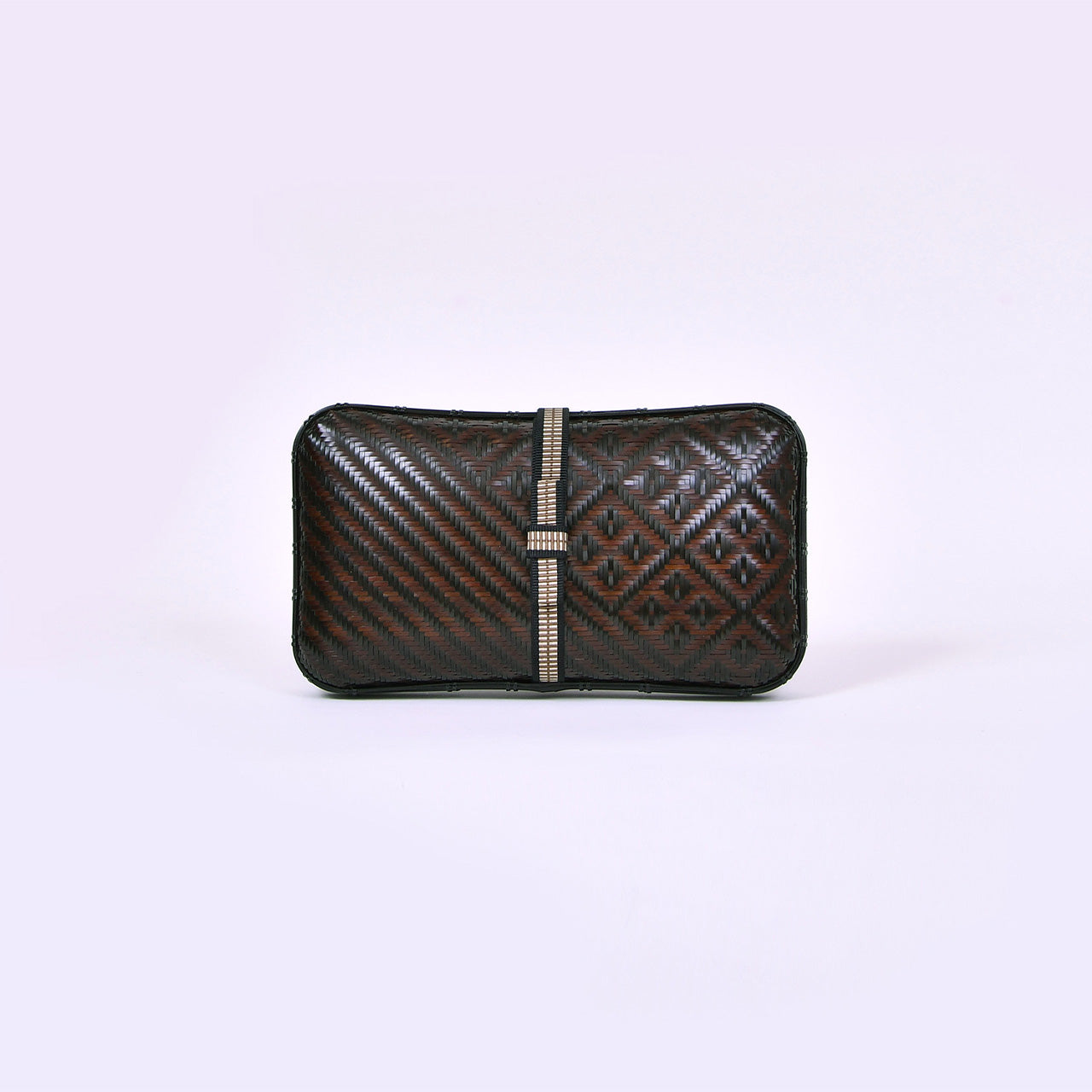
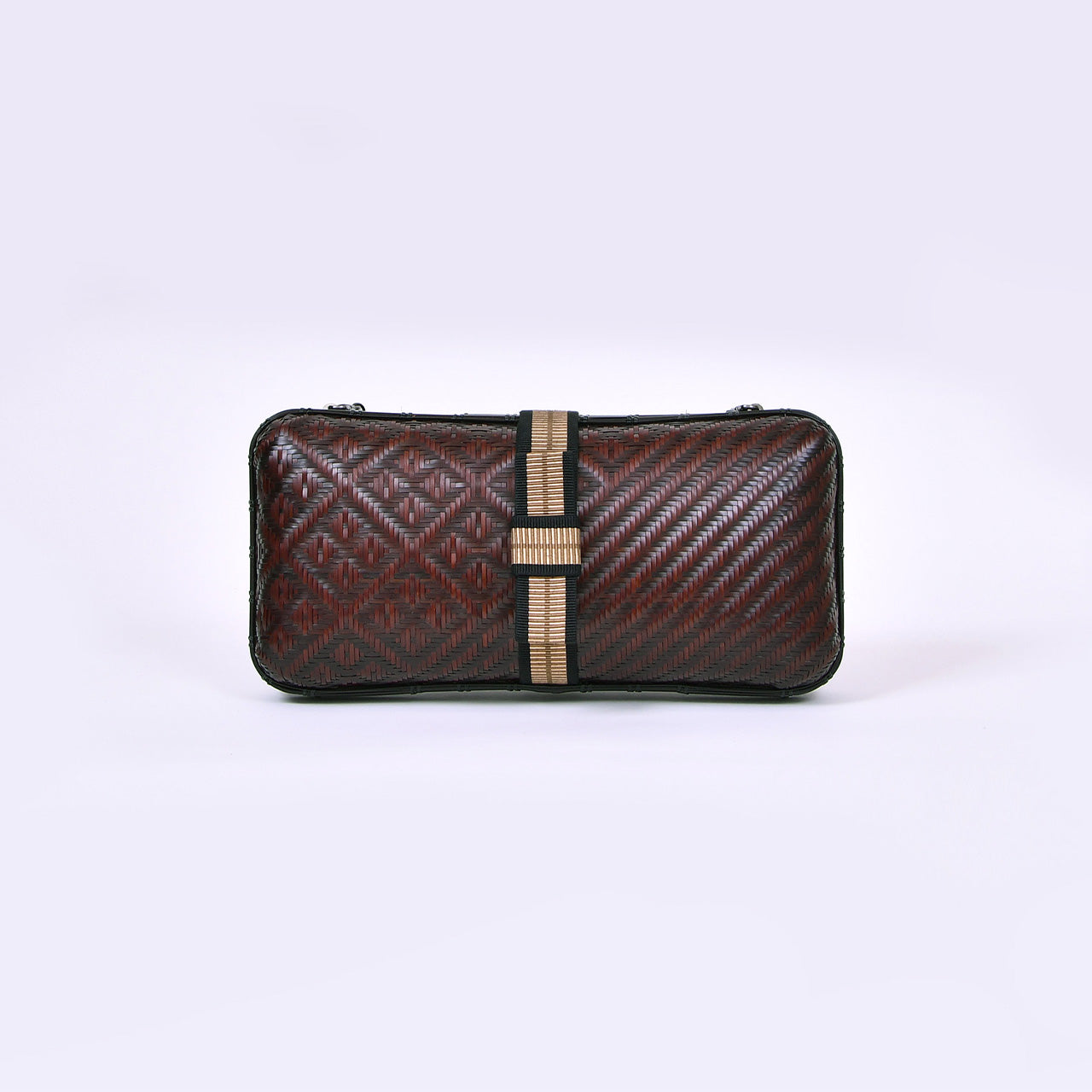
The studio sits on a quiet side street northwest of Nijo Castle, across from an elementary school. Here Mr. Hosokawa weaves bags using ajiro, a twill-like weave that has been used in Japan since prehistoric times, from fine strips of high-quality madake bamboo grown in Kyoto.

"In our work, preparing the material properly is everything," he says. The weaving draws the eye, but the most demanding step comes before it: splitting and shaving bamboo into strips whose thickness and width are matched exactly to each design. A trunk-style bag, for example, uses 156 strips, each 6.3 mm wide. Any variation changes the size of the finished bag, so millimeter precision is essential.
Bamboo is a natural material, and every stalk is different. "Even if you split it the same way, each piece of bamboo behaves differently. Once I've split some and get a feel for the day's bamboo, I adjust my hands to match it." The results are so precise that people often ask whether the bags are made by machine.

A new path at 30
At the printing company, Mr. Hosokawa came to care deeply about making good work, but in a large organization the result was never his alone. As 30 approached, he asked himself what he really wanted to do. "I wanted work where what I made reached the customer directly, and whatever the result, good or bad, came back to me."

He had always loved making things, and could watch artisans' demonstrations in department stores for hours. He enrolled at the Kyoto Institute of Traditional Crafts and chose bamboo, the one craft he could find no hobby classes or how-to books for. As a boy he had carved bamboo-copter toys in the park, trying to make them fly higher. "I had a vague feeling that bamboo suited me." Unlike wood, bamboo's long fibers allow no going back once you cut. That constraint, he says, means you decide your direction clearly and commit to it.
Two years of total immersion
The school is in the countryside of central Kyoto Prefecture, an hour by train from the city. With no income in his first year, he lived on his savings, his severance pay and the money from selling his car, and later worked four days a week at a lunch shop next to his apartment. Every other hour went to bamboo: early mornings at school, evenings until closing, more work at home, weekends in the studio. "People asked me if I lived at the school."

A bag-shaped basket is not a bag
When he graduated, almost no workshops were taking apprentices. Taking on work through school and personal connections, he began developing bags based on the trunk he had made for his graduation project, which had been highly praised. In 2011, at 37, he founded Take Kobo Kisetsu.

Running a business brought its own lessons, starting with bookkeeping and tax returns. The products were a challenge too. "A bag-shaped bamboo basket isn't a bag. It has to work as a bag and be easy to use." When he showed a prototype briefcase to department store buyers, every comment was about the leather and the metal fittings, not the bamboo. "If you sell it as a bag, you can't say 'that's not my specialty.'" He studied, and found specialists for the parts beyond bamboo. Through it all, he says, he has never once wanted to quit. "I'm doing what I wanted to do, and I can keep doing it. I can't imagine anything happier."

A craftsman, not an artist
"I see bamboo craft as a skill for making everyday tools," Mr. Hosokawa says. "I'm a craftsman, not an artist. A craftsman listens to what people want and uses his skills to make it. If nobody wants what you make, there's nothing to make."

Are bamboo bags strong enough for daily use? Bamboo is one of the most durable natural materials, and he works backward from each bag's purpose and size to choose the strips and weave. He pointed to a trunk on display: he has used it for over ten years, including on trips abroad. It looked almost new, and was remarkably light in the hand.

The bags also change with use. There is an old saying that bamboo baskets are finished by the oils of the hand. Dyed bags slowly lighten toward a warm brown, while natural white bamboo deepens to a rich amber. For anyone who loves leather goods that age with their owner, it is a real pleasure.

Truly made in Kyoto
All the bamboo the studio uses comes from Kyoto. Many Japanese crafts now depend on imported materials, but Kyoto still has rich bamboo groves. "A Kyoto craftsman making crafts entirely from Kyoto bamboo: that's a huge strength. I can say 'Made in Kyoto' with pride." He is now also working with Kyo-meichiku, Kyoto bamboo processed with traditional techniques, hoping to raise the value of bamboo itself and of the craft as a whole.

Beyond loving the work
Mr. Hosokawa also wants more people to work in bamboo craft. His apprentice is now in their seventh year, and he hopes to build a system where the whole industry can train and employ young craftspeople.

What does it take to become a craftsman? Not simply being good with your hands, he says. "Even a piece you created because you wanted to make it, you'll get tired of if you make it long enough. But as long as there are orders, you have to make it. The question is whether you can keep going past liking or not liking it, whether your body just starts moving. That's what makes a craftsman." And age? "Younger is better for learning, but when it comes to motivation, age doesn't matter. If you're interested, you already have the aptitude. Whether you turn it into something real depends on your effort."

Strong, supple and straight, much like bamboo itself, Mr. Hosokawa's bags carry both his skill and his care for the people who use them. They are made not just for special days, but to grow old with you through everyday life. Our thanks to Mr. Hosokawa for his time.