

m+: Leather Goods That Their Owners Complete
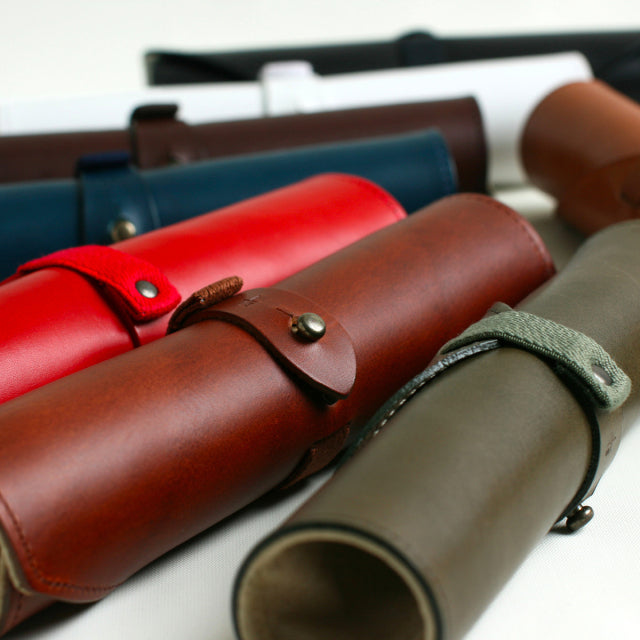
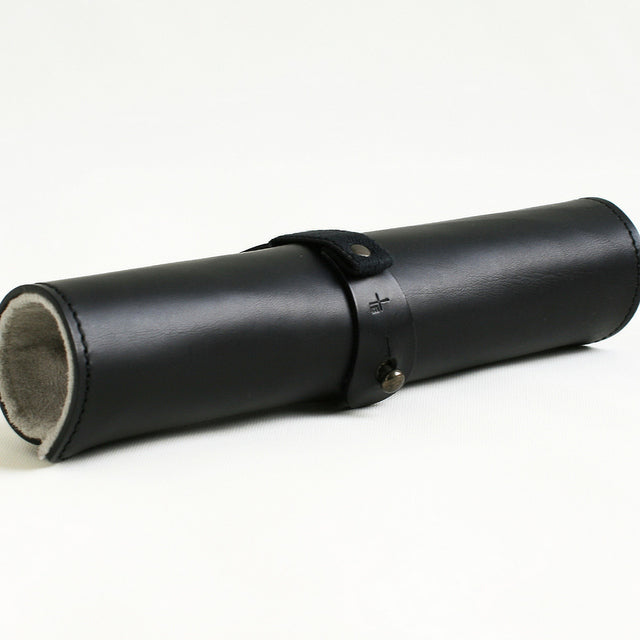
We visited m+ (emmepiu) and spoke with its founder, Mr. Murakami. The brand is based in Kuramae, in Tokyo's Taito ward, a district long known for small workshops and wholesalers, and now for shops full of character. When a local business partner told us, "There's a place making really good things," we were instantly won over by the design, function and beautiful aging of its leather goods.


What "m+" means
Mr. Murakami believes a leather item is only complete once someone uses it, as it ages and takes on its owner's character. The "m" is his initial; the "+" is someone else. m+ is a brand its users complete.
From architect to craftsman
Before m+, Mr. Murakami was an architect, and something nagged at him. "Architects don't design everything themselves, and you work within a budget. It was interesting and rewarding, but it didn't feel clear-cut." He wanted simpler work: make a product, set a price, and let customers decide. To this day, he generally does not take custom orders.
Why leather? "I considered leather, iron and wood," all materials that age beautifully. "Iron needs a lot of equipment, and so does wood. Leather was the easiest to start with," he laughs. He had already been making small leather goods as a hobby, to good reviews.

Training in Italy
A leather vocational school in Tuscany offered free tuition, with just two places for Asian students and dozens of applicants. "The exam date was pushed back so far that everyone else gave up and looked elsewhere. Only two of us were left." After a year of study, he spent another year working for a subsidiary of a major Italian fashion company before returning to Japan.
The birth of a classic
Success did not come immediately. While making furniture and school bags for other companies, he developed what became the brand's signature: the Mille Foglie wallet. Laying out coins, cards and bills, he asked what structure would be easiest to use and most compact. For the closure, he tried hook-and-loop, magnets and elastic before settling on a brass stud, placed on the side so it slides smoothly in and out of a back pocket. The brass ages with the leather, is very strong, and allows slight adjustment. After a newspaper feature, word spread, and demand now outpaces production.

Leather that ages beautifully
m+ uses leather from top tanneries that supply luxury brands, such as Buttero, a premium vegetable-tanned leather from Tuscany. It also insists on dye finishing. Dye soaks into the leather and shows every mark, so only the best hides can be dye-finished, but it ages beautifully. Pigment finishes coat the surface like paint, hiding flaws but wearing off over time.


Two kinds of expertise
The Mille Foglie fits neatly in a back pocket, yet opens to show everything at a glance, with a coin pocket as easy to search as a coin purse. Perhaps only a former architect, used to designing structure and function, could have created it. What looked like a detour became the path to something new. "I want to create at least two more pieces like the Mille Foglie," he says. We look forward to them. Our thanks to Mr. Murakami.



%20and%20spoke%20with%20its%20founder,%20Mr.%20Murakami.%20The%20brand%20is%20based%20in%20Kuramae,%20in%20Tokyo's%20Taito%20ward,%20a%20district%20long%20known%20for%20small%20workshops%20and%20wholesalers,%20and%20now%20for%20shops%20...)