Takaokaya: The Art of Relaxing, from a Kyoto Futon Maker
Relaxing at home is precious, yet after a while on the sofa or floor, your legs and back start to ache. How can we relax comfortably for longer? Takaokaya, a cushion and futon maker in Kyoto, has thought seriously about that question for decades. We spoke with Mr. Takaoka, the president, and Ms. Takaoka from the team.

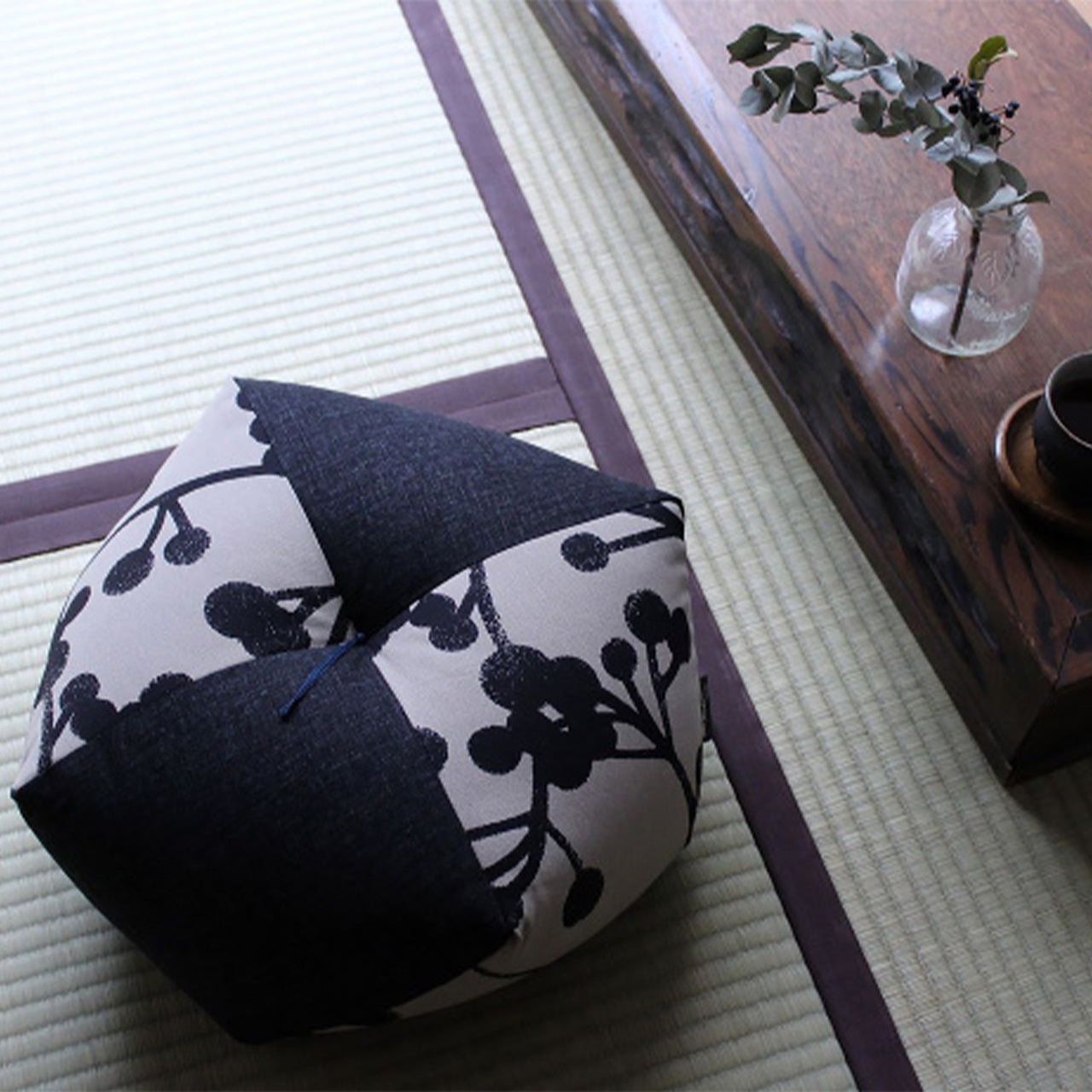
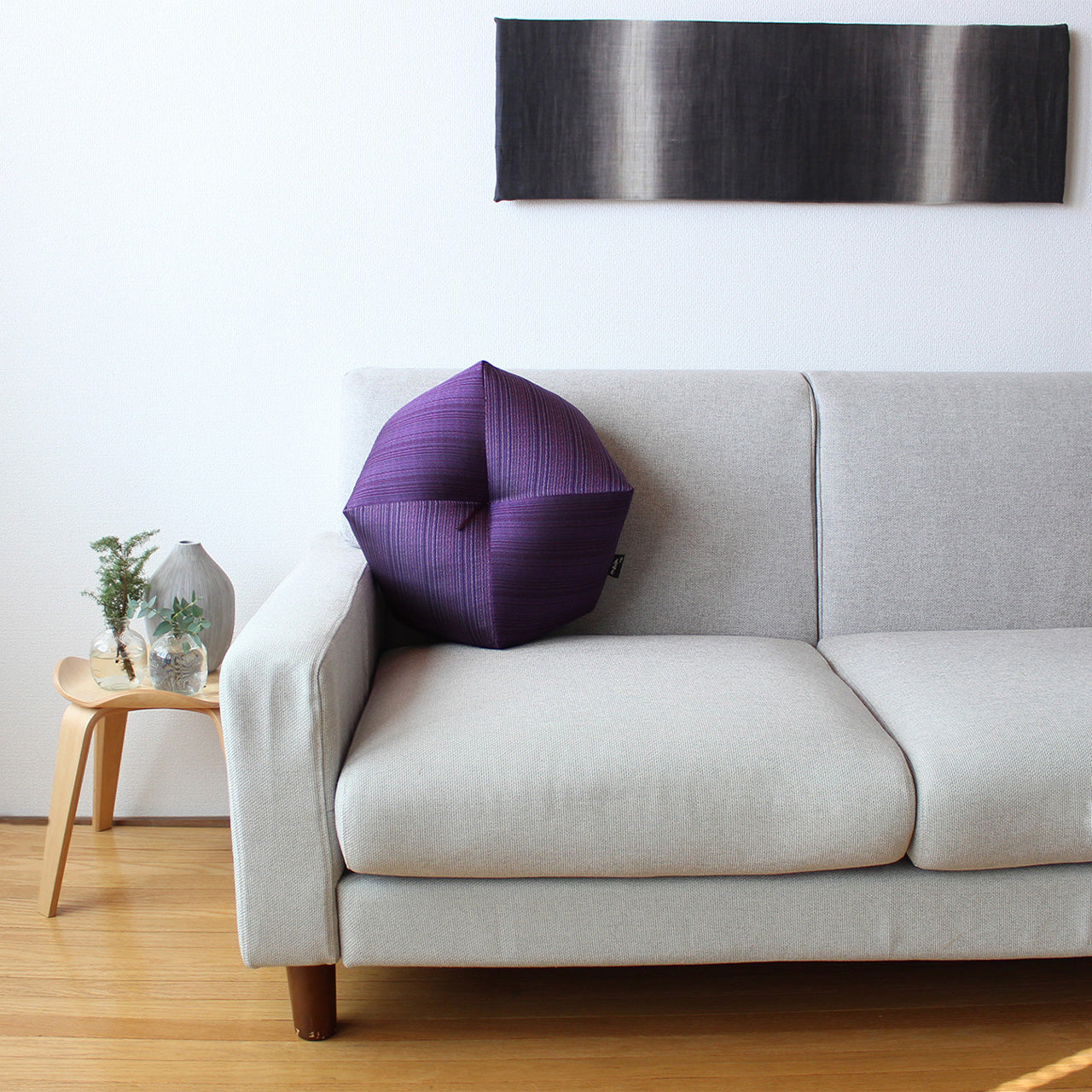
Takaokaya makes many "tools for relaxing." Its signature is the Ojami cushion: easy to sit on, charmingly round, and covered in stylish fabrics, it brightens any sofa or floor. Its large, round Senbei cushion makes adults and babies alike smile.


From futons to relaxation
Founded in Kyoto in 1919, Takaokaya began by making handcrafted futons for a department store. After the war, mass-produced blankets and down quilts took over, and traditional futon makers disappeared one after another. "Times were hard. People said harsh things, and sometimes I thought, 'Just watch!'" Mr. Takaoka laughs.

"We had craftsmen, so we wanted to use their futon skills to make something else, not something a machine makes at the push of a button." Thinking about how Japanese people relax, they arrived at the floor cushion. The first series, Goro-ne, is the size of three cushions laid in a row, with the top one folded as a pillow: perfect for lying down. Step by step, the company shifted from things for sleeping to things for relaxing. "Those hard times made us think. If we'd kept doing the same thing, we'd have struggled in a shrinking market. Now I'm grateful even for the harsh words."


Cushion or zabuton?
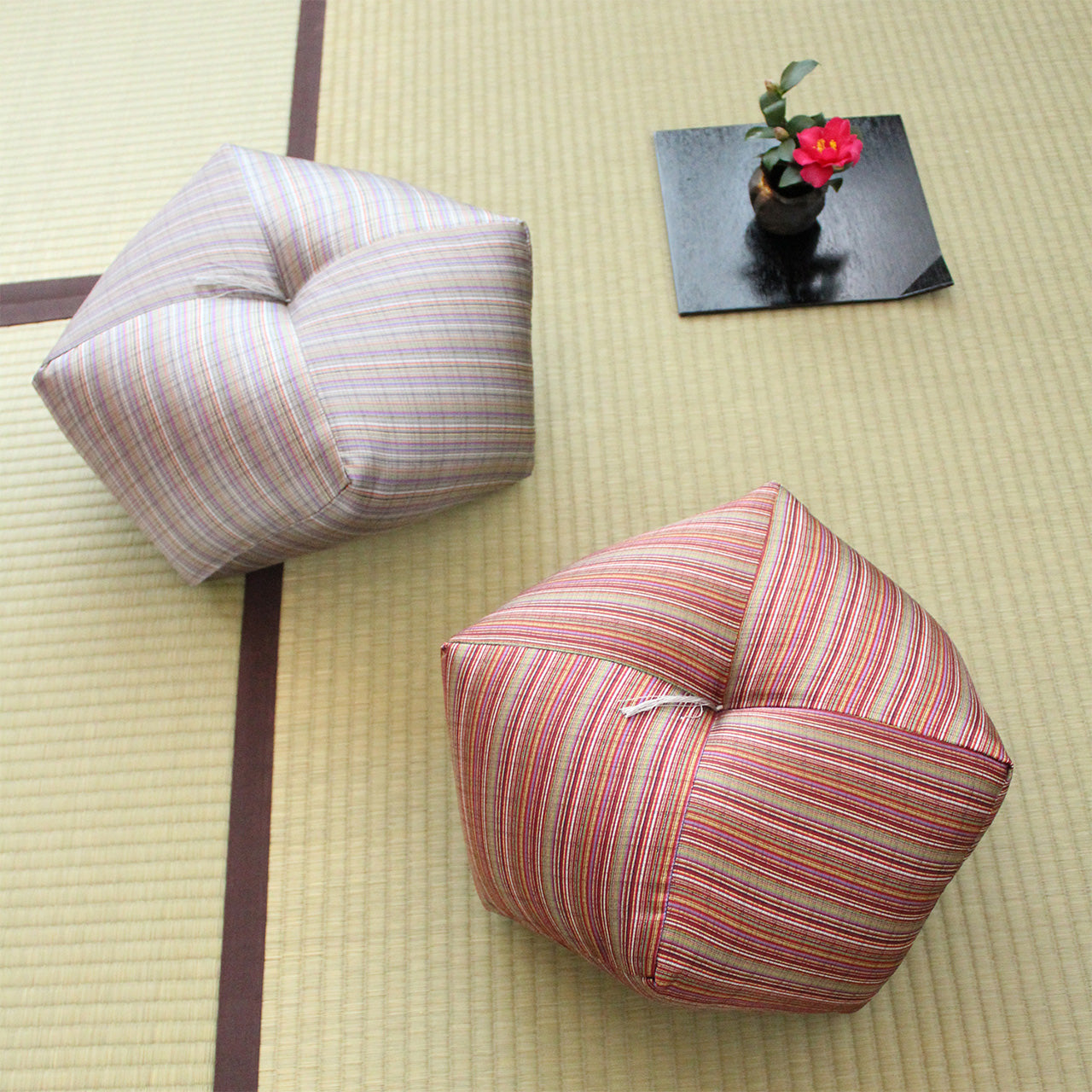
"A cushion is stuffed; a zabuton is filled with batting shaped first, then inserted." A zabuton must be made for someone sitting on it, so the batting is formed into a dome, thick in the middle and flat underneath, before going into the cover. "A good zabuton flattens evenly with use. One that's simply stuffed goes lumpy."

Lift your hips to sit longer
As tatami gave way to wooden floors, sitting on the floor for long periods became harder. "At a banquet, I folded a cushion in half under my hips. Everyone does it. Lift your hips a little and it's so much easier." That inspired a taller cushion: raising the hips naturally straightens your back, so you can sit comfortably for longer. We tried it ourselves, and our posture straightened without any effort. On a sofa or chair, place an Ojami against the curve of your back.


Inspired by a beanbag
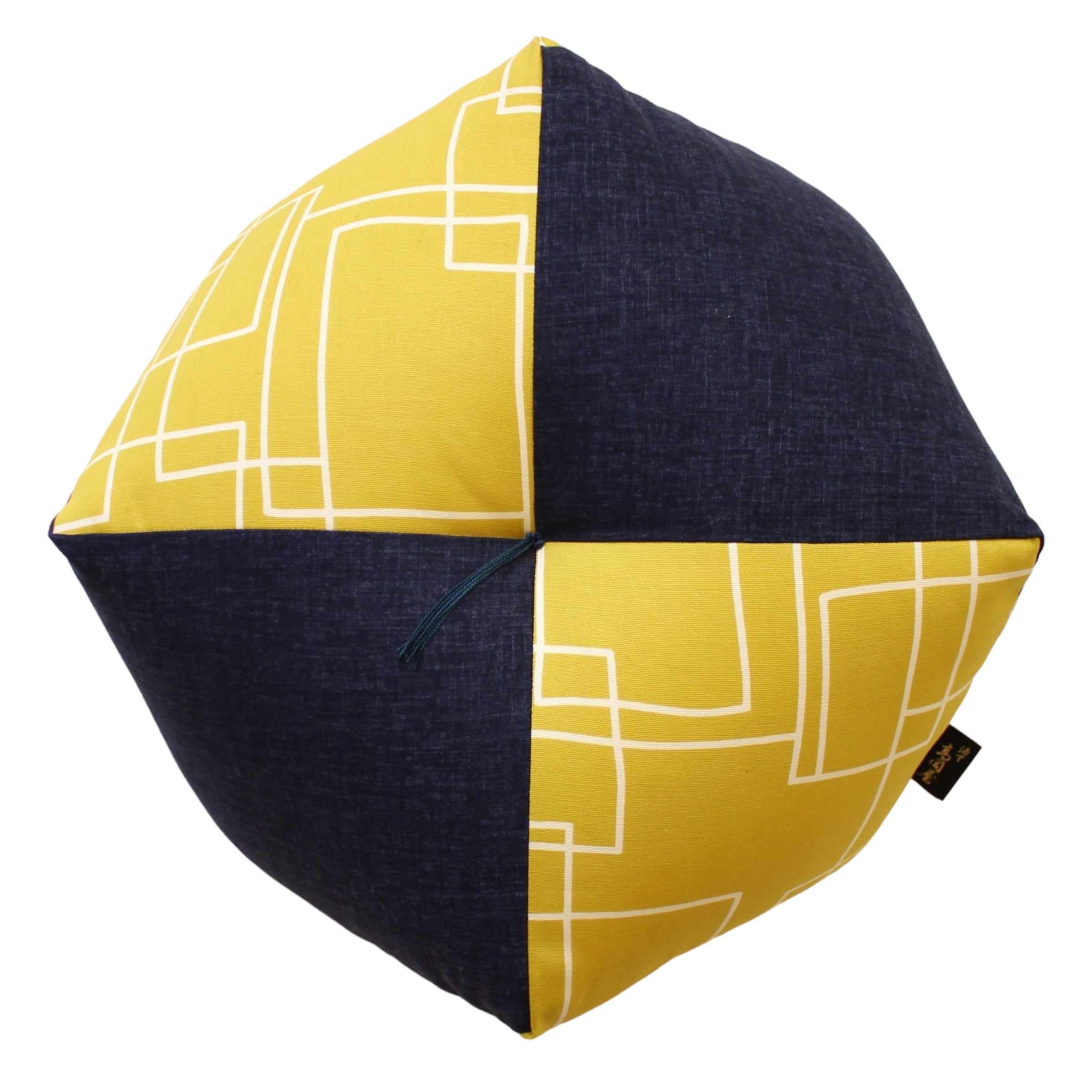
The shape comes from otedama, traditional Japanese beanbags, called ojami in Kyoto. Sewing four panels together was easy; filling them was not. "Japanese cushions were all flat, but the Ojami is three-dimensional." The craftsmen developed their own filling method, adjusting for each fabric's stiffness, a shape no factory could reproduce.


The room we visited was filled with Ojami in every color. "People value individuality in their interiors, so we offer about 2,500 combinations in cotton alone," plus European fabrics, Kyoto Nishijin weaves, traditional dyes and remade obi. Some are made with sashiko embroidery by a disability support center: "Every one is truly one of a kind. Their sense of color and rhythm is a real talent."


A cushion for dads that babies loved
The Senbei cushion was originally made to give fathers more room to relax. Then a friend sent a photo of a baby on it, and everything changed. At one meter across, it is perfect as a changing or play mat. Customers began sending baby photos, and when parents asked for something washable, Takaokaya added a washable cover and water-repellent inner fabric.


In the workshop
Batting is shaped and slipped into the covers with surprising speed. A traditional Kyoto zabuton is filled right to the corners; each Ojami holds about as much batting as a light quilt. "Batting absorbs moisture, so the amount changes with the humidity. Only craftsmen can judge that." The center of each zabuton is tied through with a long needle to keep the filling in place, and each Ojami is closed by hand, stitch by stitch.


Smiles all around
"We want everyone to smile: customers, our makers, and the people who supply our materials." From reducing textile waste to growing abroad, Takaokaya keeps stopping to think for itself. "There's still so much we can do," they said, laughing. Our thanks to Mr. and Ms. Takaoka.