


Made by hirali · Sakai, Osaka
hirali Shiki Fukin – Two-Color Japanese Kitchen Cloth (3 Designs)

Meet the maker
Sakai, Osaka
A textile brand from Takeno Senko, a tenugui maker founded in 1961 in Sakai, Osaka. Using rare roller-printing techniques refined by its...
Choose options
One cloth, two colors

hirali’s Shiki (“four seasons”) fukin is a kitchen cloth dyed in a different color on each side, made possible by hirali’s own dyeing technique. The pattern is the same on both sides, so one cloth gives you two looks: use one side for dishes and the other for wiping, or simply turn it over to suit your mood.
Large, thin and quick-drying
The generous size, about 30 × 59 cm, is the key. Fold it to whatever size you like while you work, then open it up to dry. A layer of absorbent, quick-drying wazarashi cotton gauze is sandwiched between layers of airy kaya (mosquito-net) cloth, so it dries remarkably fast. The gauze grows softer and more pleasant with every wash, so use it often and enjoy how it changes.

Kasane no irome: the Japanese art of layered colors
In Heian-period Japan, court ladies enjoyed the color combinations created where the outer layer of a robe met its lining. This sense of color, kasane no irome, inspires hirali’s two-sided textiles, which bring the beauty of Japan’s seasonal colors into everyday life. The cloth comes in a charming package, making it a lovely small gift.
Designs
- Kaze Hikaru (The Shining Spring Breeze): a haiku season word for spring, when the wind seems to sparkle in the light.
- Aki no Mizu (Autumn Water): a season word for the clear, pure water of autumn.
- Koori Musubu (The Binding of Ice): in Japanese, water that freezes is said to “bind” into ice, a winter season word.
About hirali
Sakai, Osaka, has been a center of wazarashi cotton bleaching since the Edo period. hirali is made by Takeno Senko, a dye works founded there in 1961 that has produced tenugui, yukata and cloth diapers with the roller-printing technique. Knowing every side of wazarashi cloth, the factory creates new textiles for modern life and hands its roller-printing skills on to the next generation.
Specifications
- Size: approx. 30 × 59 cm (11.8 × 23.2 in)
- Material: cotton (wazarashi gauze between layers of kaya mosquito-net cloth)
- Same pattern on both sides, in two different colors
- Made by Takeno Senko in Sakai, Osaka, Japan
Care
- Some color may run at first; wash separately for the first few washes.
- The gauze becomes softer with every wash.
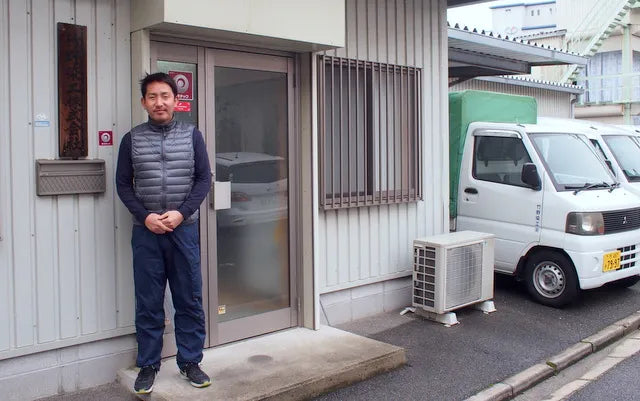
The maker behind this piece
hirali
Sakai, Osaka
A textile brand from Takeno Senko, a tenugui maker founded in 1961 in Sakai, Osaka. Using rare roller-printing techniques refined by its craftsmen, it makes reversible tenugui and gauze goods with a different color on each side.

