Mimatsu Kogei: The Beauty of Wood Grain, from Saga
Wood has been part of Japanese life for as long as anyone can remember, bringing warmth and calm along with function. The Okawa area, spanning southern Fukuoka and Saga, is Japan's largest furniture-making region. There, among the rice fields of Kanzaki, Saga, we visited Mimatsu Kogei, a woodworking studio with three brands of its own: M.SCOOP, NENRIN and GREEN.

From mass production to making what he loves
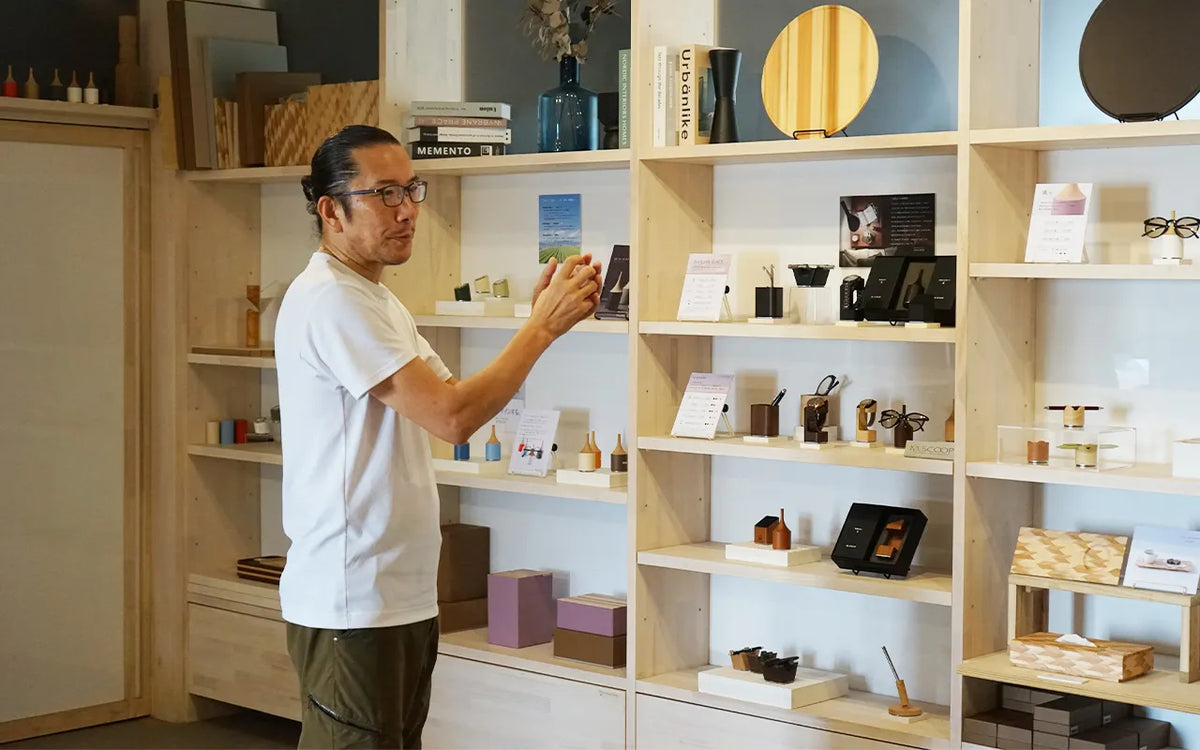
Mimatsu Kogei was founded in 1972 by the father of the current president, Mr. Sanematsu, a former confectioner who started out making table legs for Okawa's furniture makers. The business grew, taking on drawers, handles and frames for wedding chests. As a young man, Mr. Sanematsu worked from 8 a.m. to midnight making parts to order, never knowing where they went. "I worried about where our work was going, and about the future," he says.
In 2006, at 40, he began developing products of his own, and in 2008 launched the M.SCOOP brand. At first it followed buyers' requests, but he soon asked himself whether he should be making things he did not believe in. He rebuilt the brand around things he wanted himself, or would give to someone he cared about, and began dealing with customers directly.

A good place for things that last
He noticed that what he carried to work every day, his phone, watch, glasses and pen, had something in common: he loved them, they did not change with the times, and they were the same all over the world. M.SCOOP makes homes for these things.
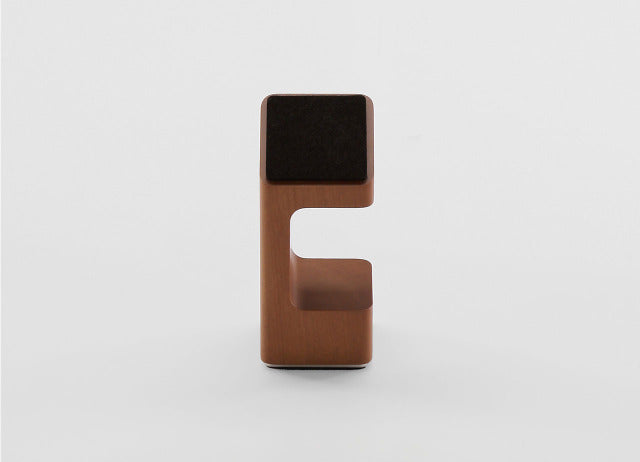
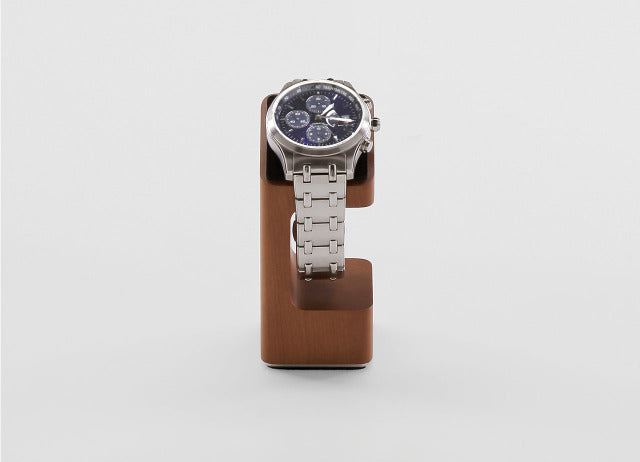
Professional designers create the designs, and he turns them into products. When others in a planning meeting said a watch stand would not sell, he went ahead anyway: "If even a few people feel the same way, that's enough." That watch stand, D.Watcher, is now the brand's bestseller. The glasses stand, meanwhile, was designed to echo the table legs where the company began.

NENRIN: an answer found in Paris
In 2015 and 2016, M.SCOOP exhibited at MAISON&OBJET in Paris. Visitors examined every detail, which gave him confidence, but they also asked a question that stuck with him: why use American wood? Okawa's furniture makers had long imported hardwoods, and some visitors even asked whether trees grew in Japan. It set him thinking about what his own region had to offer, and what "Japanese" really meant.
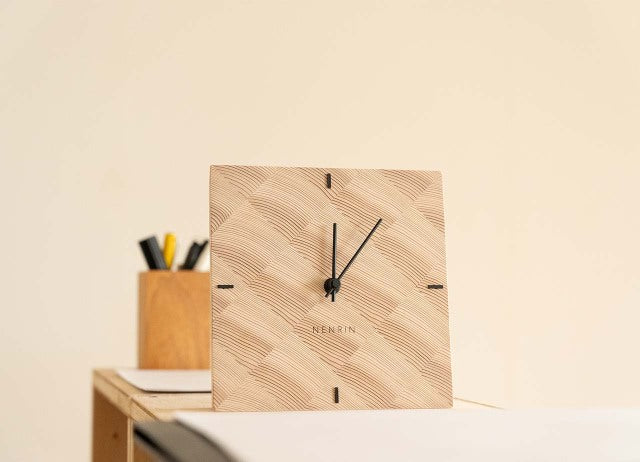
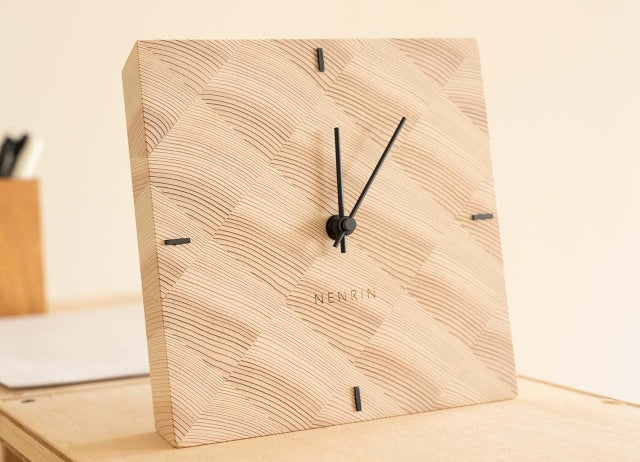
He remembered the tree-ring clocks he had been making and selling since 1998, from cedar grown in Saga, as gifts for occasions like retirement and milestone birthdays. Then a major carmaker asked him to make products every year from cedar grown in its own forest. The logs were small, dense and beautiful, and they inspired a new kind of clock: Japanese cedar cut so that its natural grain forms traditional auspicious patterns. That became NENRIN.

GREEN: joy at your feet
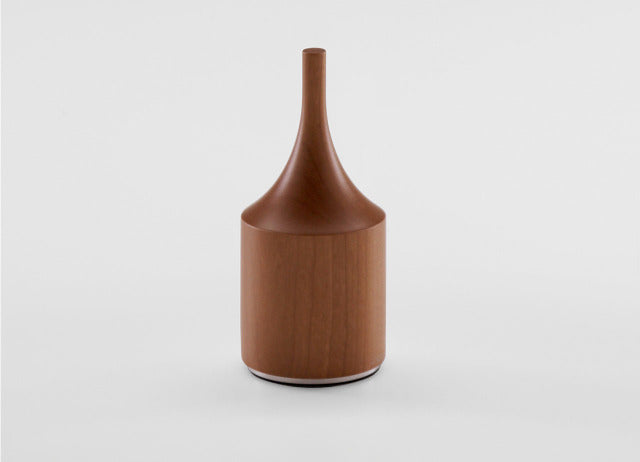
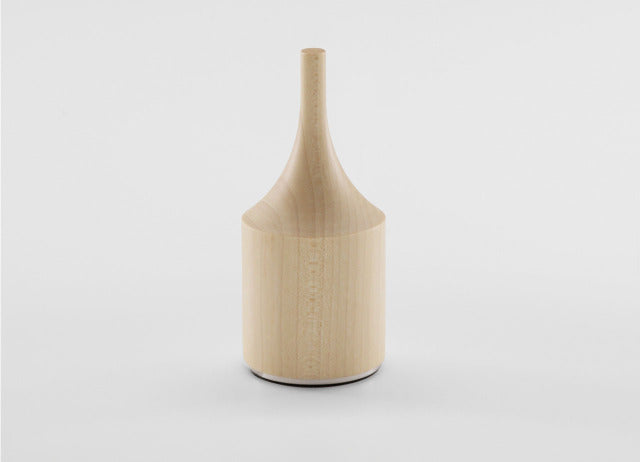
A lover of wildflowers, Mr. Sanematsu created GREEN, single-stem vases that bring the delicate beauty of roadside plants indoors. At trade shows, he sometimes walks city streets picking wildflowers to display. "A man in a business suit carrying wildflowers," he laughs. "Isn't that a nice style?"

Choosing every piece of cedar
After Mr. Sanematsu makes a prototype, his team learns to make it step by step, cutting, gluing and assembling. A piece only becomes a product once it can be made the same way every time, which can take years. He selects every piece of cedar himself, glancing at each block and instantly judging its color and grain, and which face will become which pattern. "Many products bring out the beauty of glass or metal," he says. "I want to bring out the individual character of each piece of wood."

Industrial precision, not one-offs
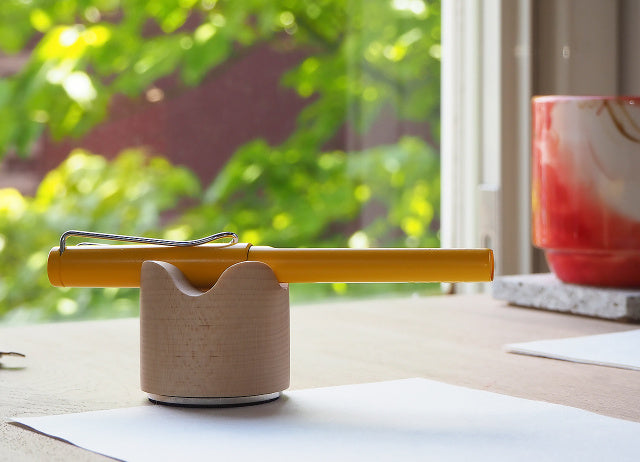
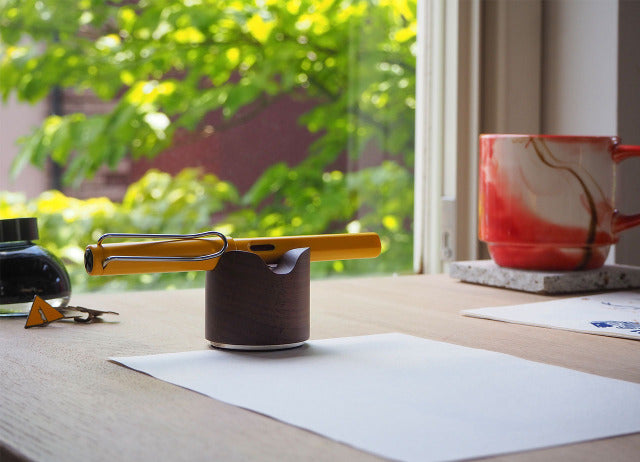
A prototype can be adjusted piece by piece, but a product must be consistent. So the goal is for each piece to be complete straight from cutting, never relying on fixing it later. On the pen stand, keeping a rim just a few millimeters wide perfectly even is the essence of the design, and it takes several steps and careful sanding to get there.

Mr. Sanematsu clearly enjoys his work and believes in what he makes. Far from his days of making parts to order, he now looks to things that do not change, and designs for a lifetime of use, always improving. Our thanks to him for a long and generous visit.