Sonobe Sangyo: Wooden Bowls from Odawara, Made to Return to the Earth
"Naturally, without waste, until it returns to the soil." Sonobe Sangyo, founded in 1949 in Odawara, Kanagawa, does something rare in the specialized world of Japanese woodwork: it handles everything itself, from drying the timber to the final finish. How is its warm, smooth Meiboku bowl made?

Quality supported by nature
The Meiboku bowl is made from Japanese wood, though the company works with about 30 species in all, naming them carefully so Japanese and imported wood can be told apart. Wormholes and knots are usually seen as flaws; here they are treated as nature's design.


Before drying, logs are rough-turned into bowl blanks. Drying a solid block would take five to ten years, but rough-turning shortens the distance to the core, so blanks dry in about six months. "We control the moisture ourselves instead of leaving it to timber suppliers, because we want to make better products," says Mr. Sonobe, who handles design, production planning and sales.


The blanks first dry for three months in the attic, warmed by the sun, then for two weeks to a month in drying rooms. One of the six rooms uses smoke: tar from burning wood chips coats the blanks, so even fast-drying wood will not crack. It smelled deliciously smoky. Finally, they air-dry again for two to three months. The key is good wind, air with just the right moisture, and with the Sakawa River nearby and open rice fields beside the drying area, they get plenty of it.


Skill and nature, working together
Next, the master turns each bowl. Around him lie countless blades: making one product takes about 20 tools, and each craftsman forges his own. Blades are sharpened after every bowl and wear out quickly, so once a month the craftsmen spend time in the forge remaking them.


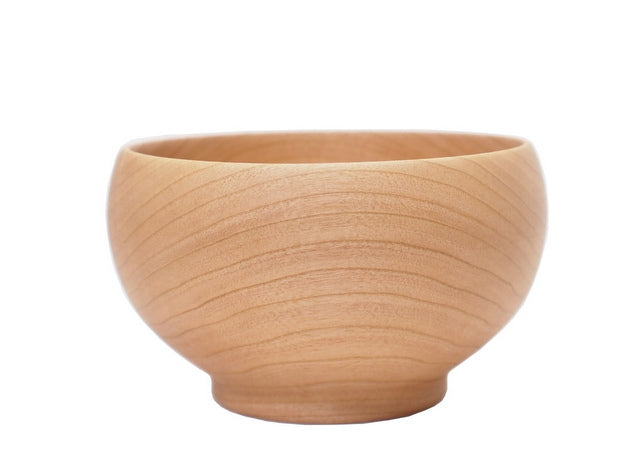
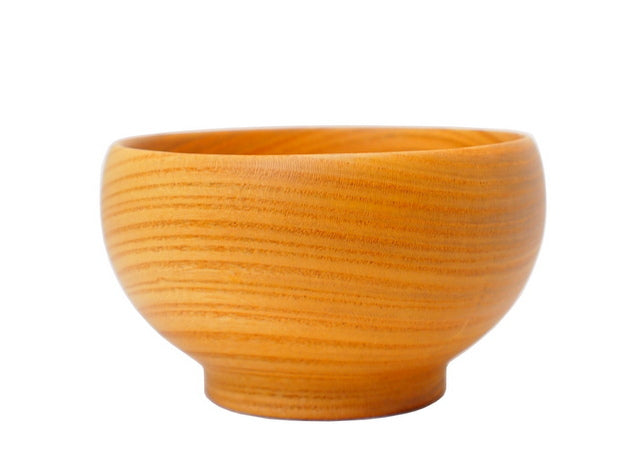
Products are finished in lacquer or urethane. The Meiboku bowl uses clear urethane to show the wood, in four coats, sanded after the third. Already smooth after turning, it grows silkier with every step. Taking about eight months in all, it won a Good Design Award in 1996 and remains the company's best seller. Its rounded form sits well in the hand, perfect for miso soup, Western soups or salads, and each wood has its own color: white beech, yellow zelkova, cherry tinged pink and green.


Eco, starting with the product
The company throws away no wood. Offcuts become charcoal to fuel the forge, and the ash becomes fertilizer. Shavings are used to smoke food at a French restaurant nearby and as bedding for horses at an Odawara ranch. "We've always cycled our wood. We hope people love the product first, and then discover the eco side."

Design that starts with "easy"
Odawara woodcraft dates back about 1,200 years. The company's Nitori plate, a 2019 Good Design Award winner, is inspired by the traditional Odawara Nitori tray. "It's complete once food is on it," Mr. Sonobe says; he starts each design by looking at cookbooks and picturing what will be served. Its Mug Bowl, a sister to the Meiboku bowl, has a handle shaped like a bird's beak that lets your palm cradle it. Holding it, we gasped at how good it felt.


Creating new tradition
Odawara now has only three lacquer craftspeople, the youngest a woman in her forties at Sonobe Sangyo. "I want her to have apprentices," says Mr. Sonobe, who hopes to create a new lacquer tradition, including European-style lacquered plates branded with patterns from around the world.

We spoke with brothers Mr. Sonobe and his younger brother, the president's sons, who share design, planning, production and sales. With successors like these, the company's future looks bright. "We want people to discover the joy you only find by using something." Our thanks to them both.