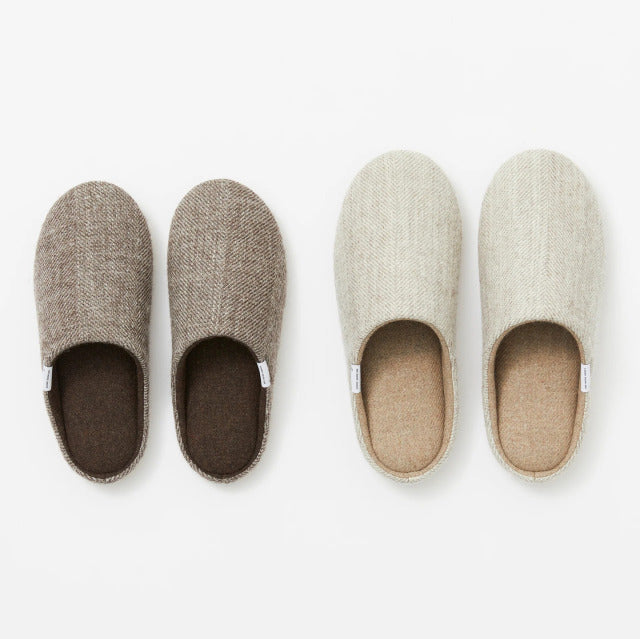
ABE HOME SHOES: Slippers from Japan's Slipper Capital
We visited Abe Sangyo in Kahoku, Yamagata, which makes slippers, babouches and other home shoes under its brand ABE HOME SHOES. Long focused on making products for other companies, it now promotes its own brand with confidence; its canvas babouche has become a hit that supports the company. Many Japanese makers want to launch their own brands, but few succeed. How did Abe Sangyo do it? We spoke with the president, Mr. Abe, and his wife, the managing director.

The history of Kahoku slippers
Kahoku makes more slippers than anywhere else in Japan. In the Meiji era, this farming town made straw sandals, and when a village official invented a sandal-pressing machine, production soared and became a local industry. As sandals fell out of use in the Showa era, makers switched to slippers. "Slippers may look alike, but small details in materials, cushioning, shape and construction make all the difference in comfort," says Mr. Abe.


Cheap imports hit the region hard: from 25 makers at its peak, only a handful remain. To show the difference, the local slipper association is building "Kahoku Slippers" as a regional brand, led by Mr. Abe.
A fight to survive
Abe Sangyo, more than 100 years old, long worked for wholesalers, so its name never appeared on its products. To survive against imports, it had to move from selling skills to selling its name, even at the risk of friction with wholesalers. Around 2007, with partners met through a regional technology center, it began developing its own products.
Mr. Abe is the cautious one; his wife is the bold one. Her encouragement gave him the push to take the first step. Kahoku's history of moving from sandals to slippers shows a spirit of innovation, and having trusted partners nearby helped too. Mr. Abe's openness to outside advice was key: the first product, KINU HAKI, foldable indoor shoes made from luxurious Yonezawa silk, won a Good Design Award in 2009 and still sells steadily at several times the price of ordinary slippers.


Building a company brand
To share their own feelings with users and build a future vision, they created ABE HOME SHOES, born of a wish that people "spend relaxed time when they come home." Its first product, the canvas babouche, packed with the comfort and detail only a factory brand can offer, has become central to the company.
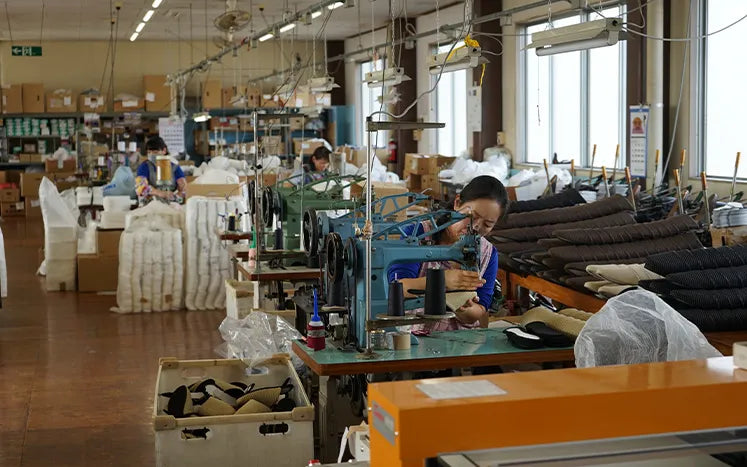
In the factory
Every pair begins with die-cutting: materials are pressed out with cutting dies, three to five per pair, and after years of products for other brands, the dies number in the hundreds.

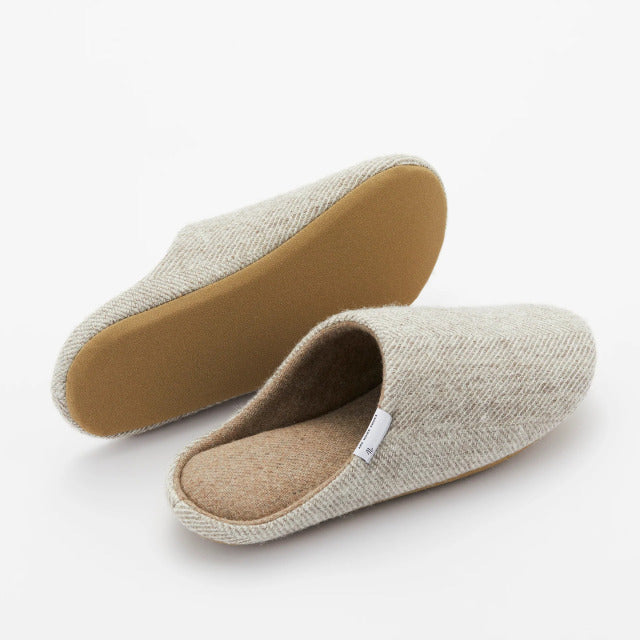
There are two ways to make slippers. In the lasted method, used for classic slippers in schools and offices, the upper is glued to the base in a hot mold under heat and pressure, then cooled in a second mold. In the sewn method, common for home slippers, the footbed is sewn to the upper in a curve, the edges are bound, and the sole is stitched on, with a three-layer cushion at the heel for comfort.


Babouches are sewn inside out: upper to heel, then sole, then footbed, leaving a small opening to turn the shoe right side out and insert the cushion, also layered at the heel. Each pair is shaped, ironed and packed by hand.


Quality you feel after you buy
We do not believe something is good simply because it is made in Japan. But Abe Sangyo showed us the kind of care, hidden in the details, that satisfies people long after they buy: comfort and durability you feel with use. Sharing that value is our job. Our thanks to Mr. and Mrs. Abe for their generous time.