Hergestellt von Nousaku · Takaoka, Toyama
Bendable Tin Chopstick Rest "8": Lucky Figure-Eight Design | NOUSAKU
Der Hersteller
Takaoka, Toyama
Nousaku wurde 1916 in Takaoka gegründet, einer Stadt mit 400 Jahren Gießereitradition, und stellte zunächst Beschläge für buddhistische Hausaltäre her. Heute gießt...
Optionen auswählen
A figure-eight that holds more than chopsticks

About Nousaku
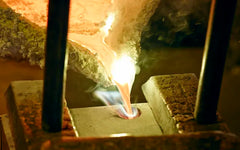
Nousaku (能作) is a foundry founded in 1916 in Takaoka, Toyama, a city whose metal-casting tradition goes back some 400 years. It began by making Buddhist altar fittings and now uses the same casting skills to create tableware and interior pieces in brass and pure tin. Every design starts from the material itself, and each piece is finished by hand by Nousaku's craftspeople.
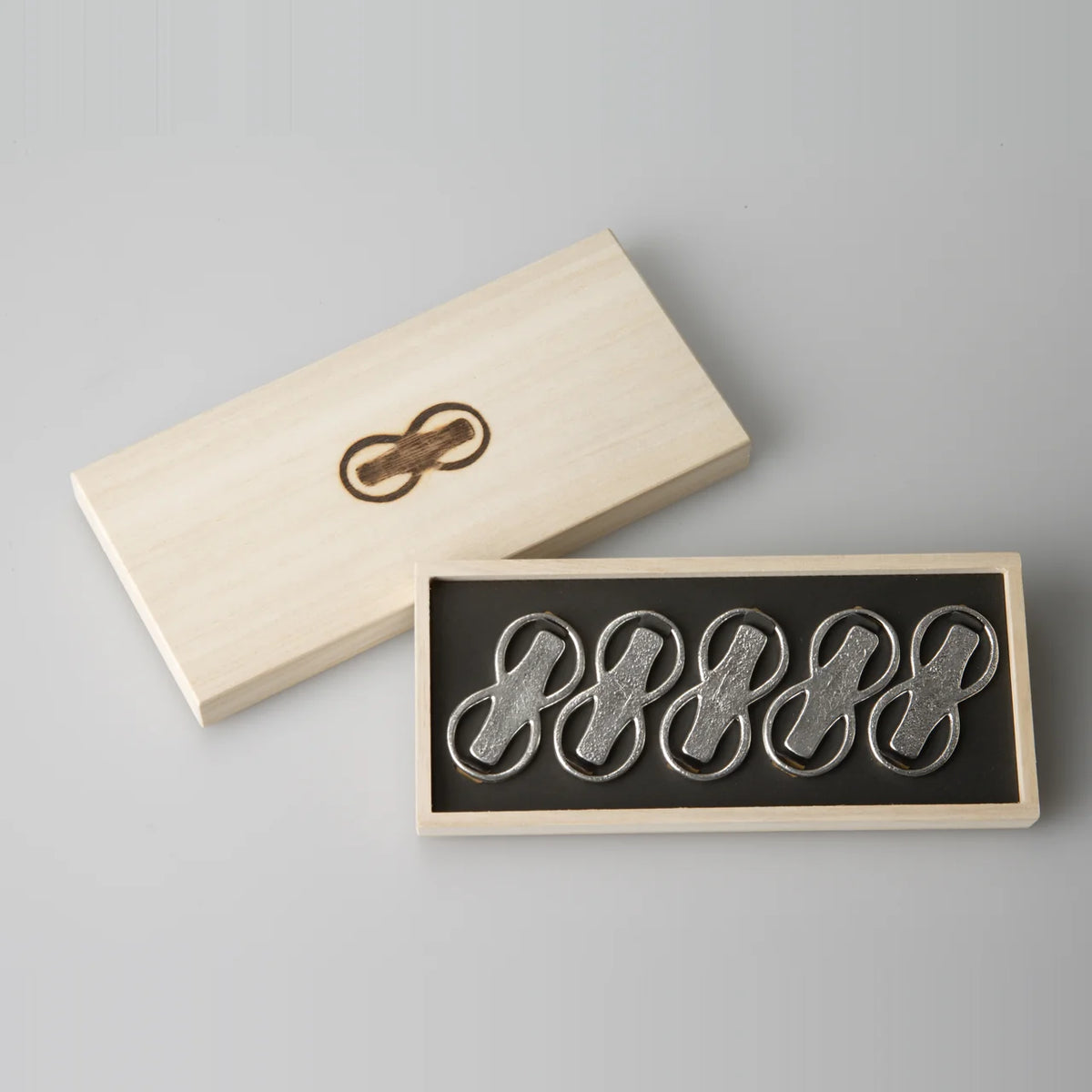
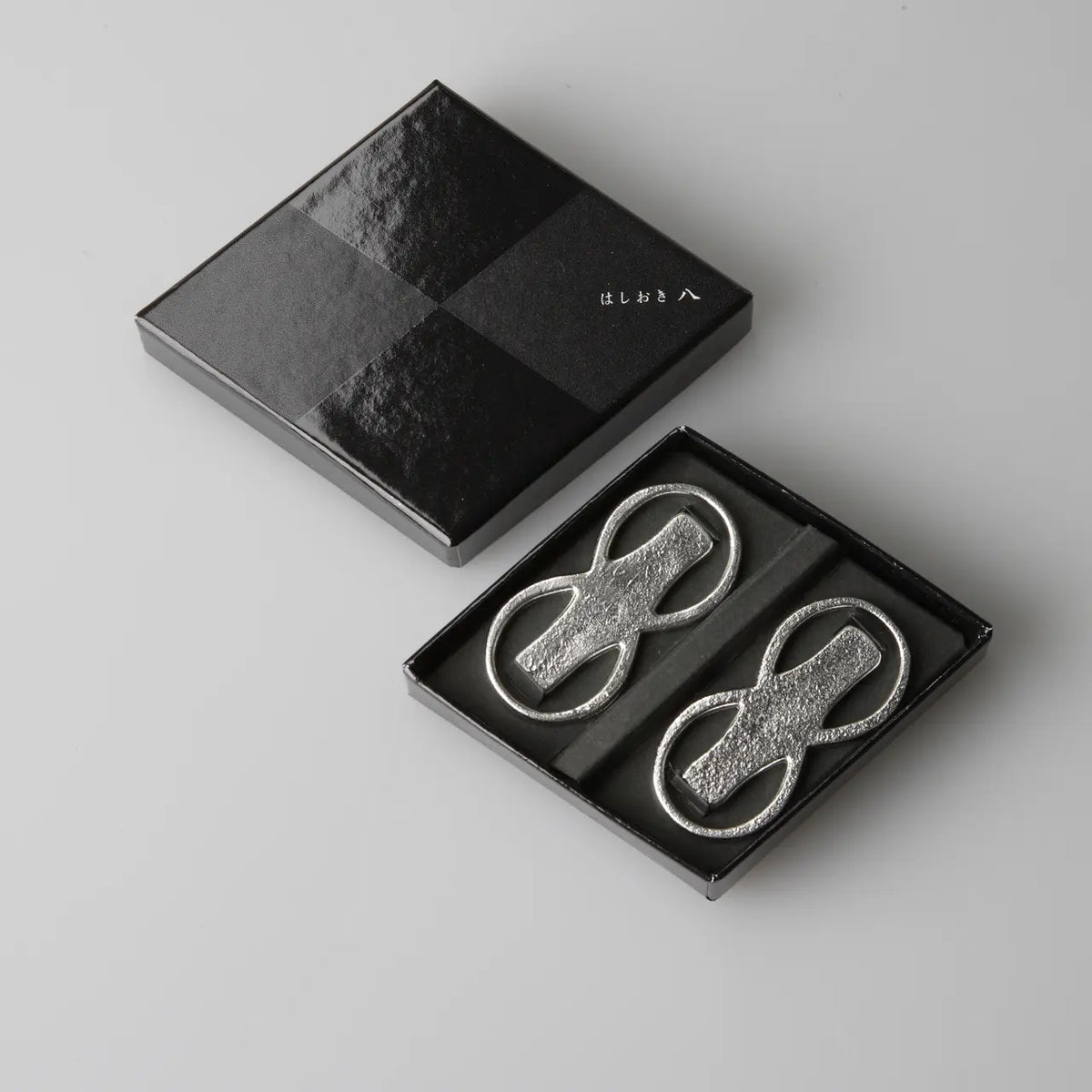
1. A lucky shape
In Japan, 8 is a lucky number: like the character 八, it widens toward the bottom, a sign of growing prosperity. That makes this rest a popular gift for weddings and other celebrations. Turn it on its side and the 8 becomes the symbol for infinity.
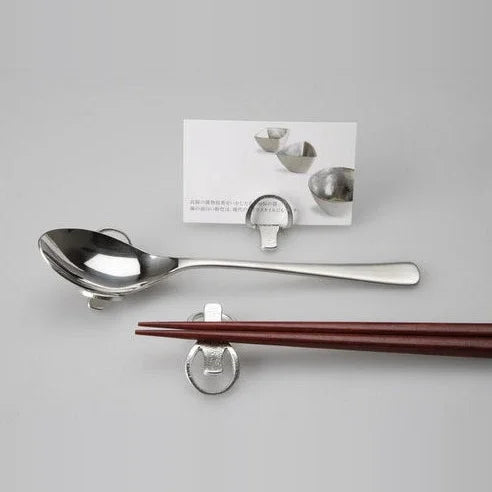
2. Bend it to fit
Made of 100% tin, a metal soft enough to shape by hand. Use it flat as a chopstick rest, or bend it to hold a spoon, fork or other cutlery, a postcard, a place card or a menu.

3. Ready to give
Choose a set of 2 in a gift case, or a set of 5 in a paulownia wood box.
Specifications
- Contents: set of 2 or set of 5
- Size: W 51 × D 25 × H 2 mm (2.0 × 1.0 in) each
- Material: tin 100%
- Packaging: set of 2 in a gift case; set of 5 in a paulownia wood box
- Made in Japan (Takaoka, Toyama)
Care
- Tin is soft enough to bend by hand, but avoid bending the same spot over and over.
- Tin has a low melting point: do not use over a direct flame, in the microwave, dishwasher or dryer.
- Do not put it in the freezer. Extreme cold can cause "tin pest" (discoloration and deformation).
- Wash with a soft sponge and mild dish soap. Do not scrub with abrasive pads or cleanser.
- If the shine dulls, polish it with metal polish, toothpaste or baking soda.
Der Hersteller dieses Stücks
Nousaku
Takaoka, Toyama
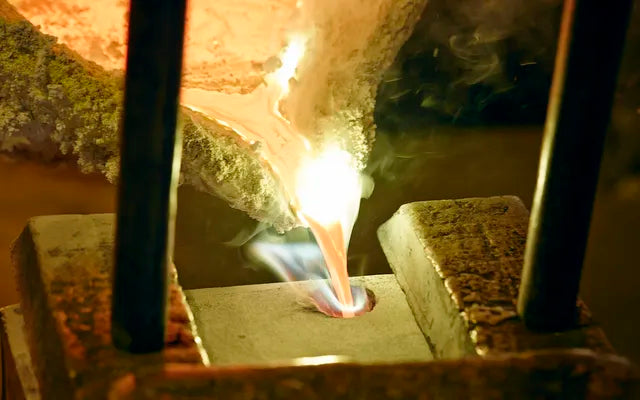
Nousaku wurde 1916 in Takaoka gegründet, einer Stadt mit 400 Jahren Gießereitradition, und stellte zunächst Beschläge für buddhistische Hausaltäre her. Heute gießt das Unternehmen Zinn und Messing zu Geschirr, Windspielen und Wohnaccessoires – mit einem einfachen Ziel: bessere Gussstücke zu fertigen, und zwar gut.