TADAFUSA: Blacksmith Knives from Sanjo, Niigata
Kitchen knives are at the heart of Japan's delicate food culture, and Sanjo in Niigata is one of the country's three great blade-making regions. We visited TADAFUSA, which uses the town's long blacksmithing tradition to make serious kitchen knives, and spoke with president Mr. Sone.


Three essential knives, then one more
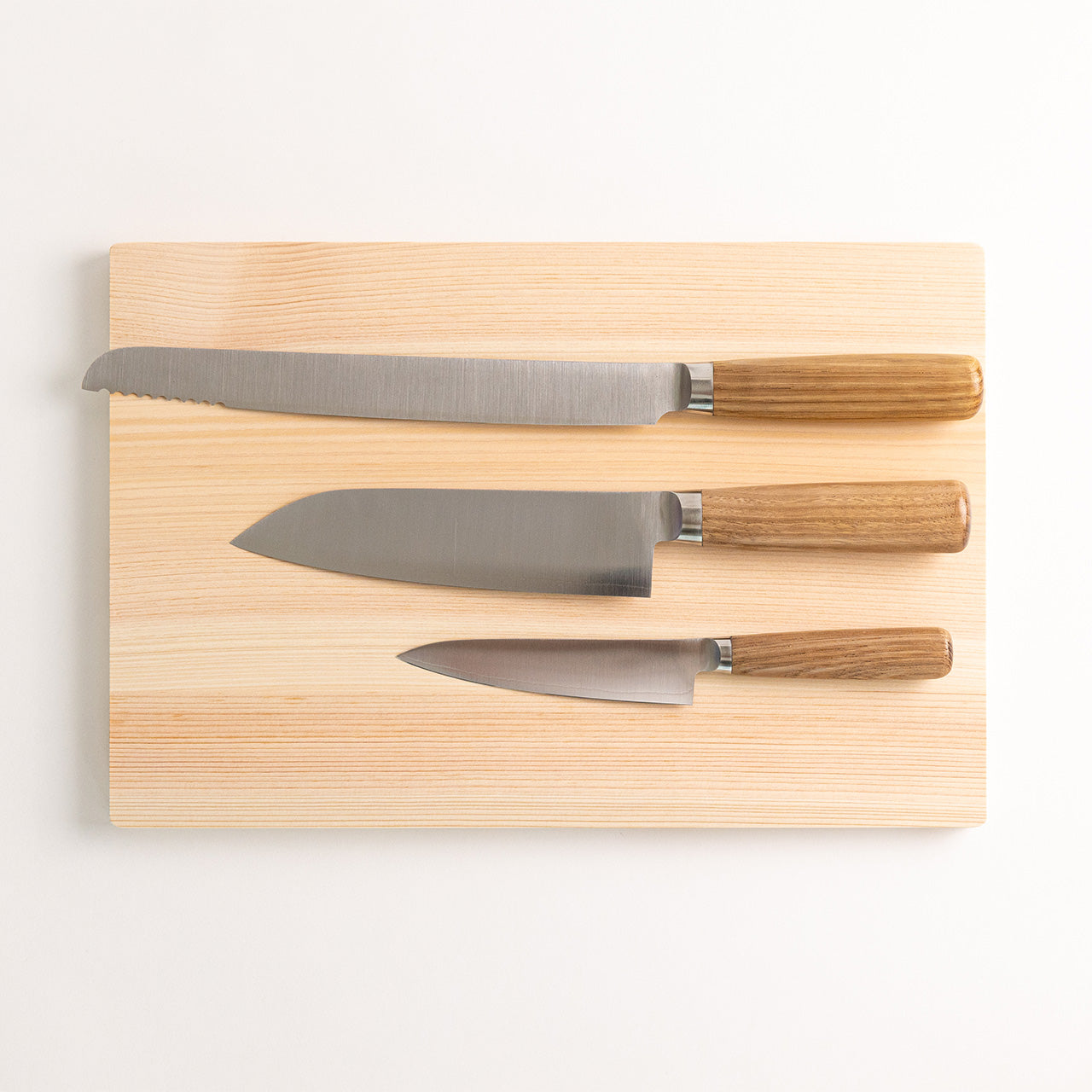
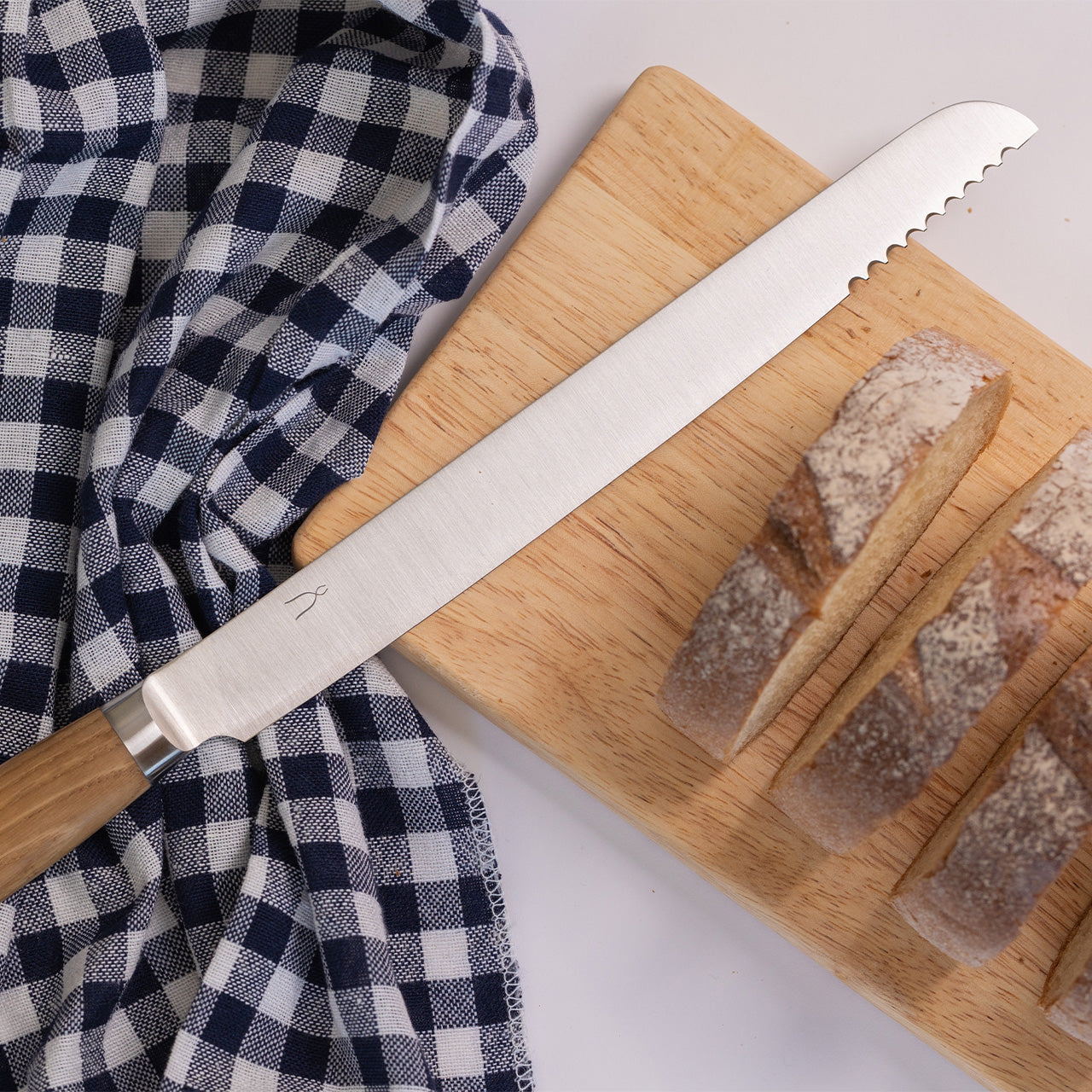
The Hocho Kobo Tadafusa line proposes "three essential knives" that cover almost everything: a bread knife with serrations only at the tip, so you can score the crust and then slice cleanly without crushing; a santoku for meat, fish and vegetables; and a petty knife for peeling and small cuts. The blades are three layers, with a core of sharp, rust-resistant SLD steel clad in stainless, and the rounded handles use TADAFUSA's patented antibacterial carbonized wood. As your cooking improves, four more knives, like a gyuto or deba, are "the next one."

A hard road
TADAFUSA was founded in 1948 by Mr. Sone's grandfather, first making knives for the fishing industry. "Before the brand, business was never good. Then came the burst of the bubble and the financial crisis." Fishing knives had always been steady, until March 2011, when the Great East Japan Earthquake devastated the Sanriku coast, its biggest market.

That same month, a consultancy with the retailer Nakagawa Masashichi Shoten began, leading to the new brand. "The earthquake was the turning point for me. I thought, if I don't do something, the company really will go under." It was a joint effort with the mayor to keep Sanjo's forge fires burning, and the brand became famous across Japan.

The simple lineup was designed so that shops with no knife expertise, such as homeware and fashion stores, could sell knives easily. Retailers multiplied, and with more home cooking during the pandemic, sales hit record highs. But a perfect brand brought an unexpected problem: "If we only make these seven knives, our craftsmen don't grow." So TADAFUSA also takes on varied work for overseas customers.

Two markets, two faces
"Demand in Japan and abroad is completely different." In Japan, customers want knives that resist rust and are easy to care for, and the website is white and gentle. Abroad, sharpness is everything. "A customer told me, 'The essence of a knife is how it cuts. If it rusts, just sharpen it.'" Specialist knife shops still thrive overseas, so the international site is black, with a blacksmith's look. Same quality, opposite branding.

TADAFUSA also offers a paid sharpening service, even for other brands' knives. "We want people to use one knife carefully for a long time." Overseas, it sells only through shops that can sharpen its knives.

Opening the factories
Inspired by the idea that the background of making should show through, Mr. Sone helped start Kouba no Saiten, an open-factory festival across the Tsubame-Sanjo area. Showing people how things are made turned out to be the clearest way to share it, and makers across Japan were inspired to start similar events. The festival also drew young people who wanted to become craftsmen, some moving to the region to do so.


His motto is "learn from the old to understand the new." "The fundamentals of traditional skill matter. But if there's a new way to get there, change the process." Rather than growing big, he wants to build up capacity to hand to the next generation, so they can change without fear.
In the forge
Steel heated to 800–900°C in a gas furnace is hammered into shape: forging, in summer heat that is fierce. Blades are punched out with dies, then craftsmen hammer out every tiny warp. Grinding, repeated many times throughout the process, evens the thickness and shape. After the handle is fitted, several craftsmen polish the grip, corners and joint until all is perfectly smooth.


A diverse town of makers
"I want the world to say, 'If you're stuck, go to Tsubame-Sanjo.' We'll train craftsmen from Japan and abroad, men and women alike: a town where anyone who wants to make things gathers." We had pictured a stern craftsman; instead we met a flexible, forward-looking leader. Our thanks to Mr. Sone and the TADAFUSA team.