

Made by Takaokaya · Kyoto
Ojami Floor Cushion, Hand-Printed Kyoto Fabric by Some no Sakira | Takaokaya
Meet the maker
Kyoto
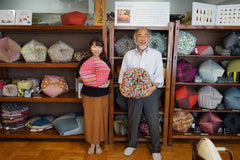
A Kyoto cushion and futon maker founded in 1919. Drawing on generations of futon-making skill, it creates "tools for relaxing," such as...
Choose options
Hand-printed Kyoto fabric with softly blurred colours

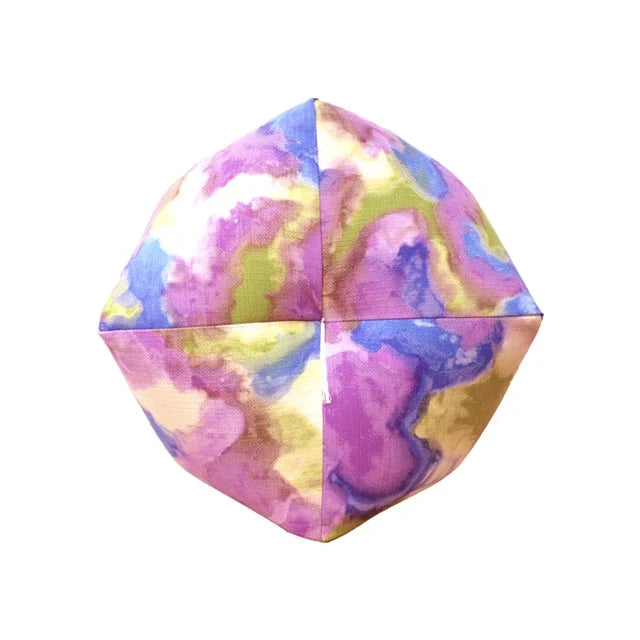
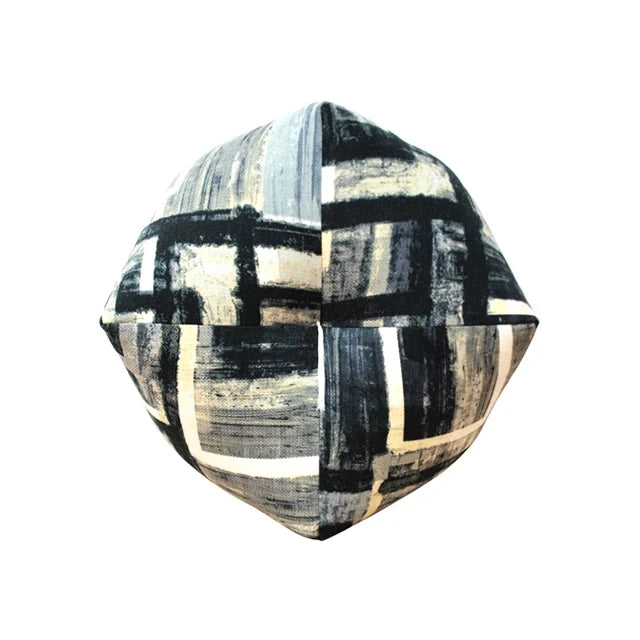
This collaboration with Some no Sakira, a hand-printing studio in Kyoto, uses fabric made with a technique called mizu-bokashi (water blurring), in which the printed lines are deliberately allowed to bleed. The gentle bleeding that only handwork can create gives each pattern deep, painterly colours. Choose from three patterns: Kirara, Lakeside and Mistral, in two sizes.
Each cushion is finished by hand to order and usually ships within about 1 week (2–3 weeks in busy periods).

Why an Ojami cushion?
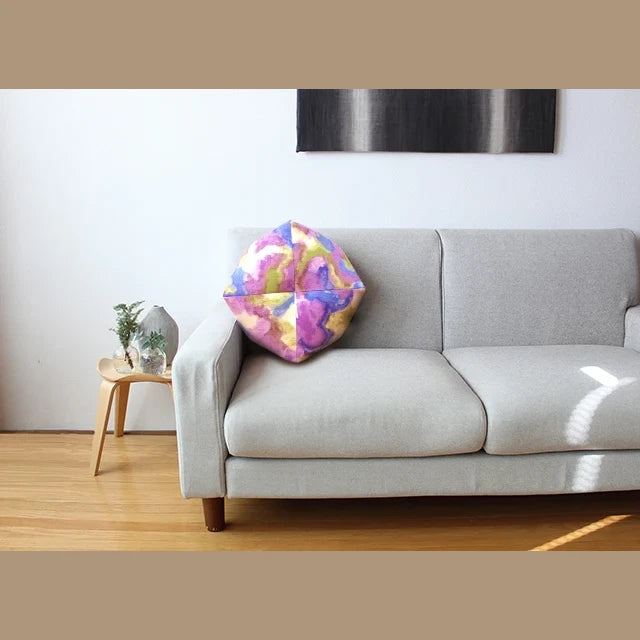
“Ojami” is the Kyoto word for a beanbag, and that is just what this round, plump cushion looks like. It is designed for the way we sit today: on the floor, on a sofa or on a chair.
- On the floor: sit on it and your pelvis tilts forward so your spine settles into a natural curve. People with sore knees or a stiff lower back can sit comfortably for longer.
- On a sofa or chair: tuck it behind your lower back to support your posture and let your muscles relax.
Ordinary floor cushions are soft at first but soon go flat. The Ojami cushion has a three-layer structure: a polyurethane foam core wrapped in cotton wadding and covered with fabric. Each cushion holds as much wadding as a light summer quilt, packed in by hand by futon craftsmen, so it keeps its shape and bounce for a long time.
About Takaokaya
Takaokaya is a futon and cushion maker founded in Kyoto in 1919. Drawing on more than a century of futon-making know-how, it creates “tools for relaxing” for modern homes, each filled and finished by hand in its Kyoto workshop.
Specifications
- Size: M approx. 38 cm (15 in) diameter / L approx. 40 cm (15.7 in) diameter
- Cover fabric: cotton 78%, linen 22% (hand-printed)
- Filling: cotton 70%, polyester 30%; core: polyurethane foam
- Made in Japan (Kyoto)
Care
- Not machine washable and not water washable.
- Wipe light marks straight away with a cloth dampened with water. Do not rub hard, as colours may run.
- You can air it in the sun, but dark colours may fade with long exposure.
- For heavy soiling, consult a professional futon or dry cleaner.
- Because the filling is natural wadding, the cushion will gradually soften and settle with use; plumping it up and airing it helps it recover.
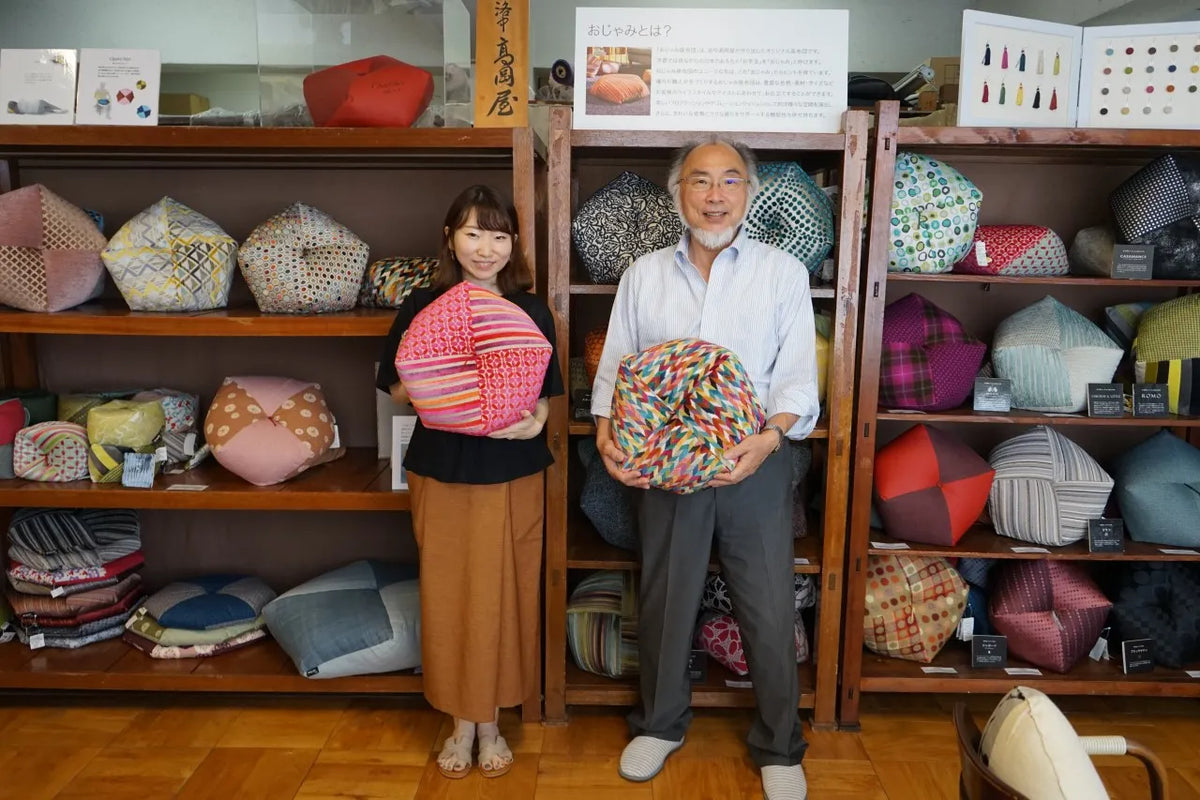
The maker behind this piece
Takaokaya
Kyoto
A Kyoto cushion and futon maker founded in 1919. Drawing on generations of futon-making skill, it creates "tools for relaxing," such as the round, beanbag-shaped Ojami cushion, each filled and stitched by hand.


